Sarah Grey
Some of the best international trips do not require a plane ticket, a week of vacation, or months of planning. For millions of Americans, Canada sits just across the border, close enough that you can have breakfast at home, lunch in another country, and be back for dinner. Lately, more travelers are quietly falling in love with these easy cross-border day trips: the thrill of a passport stamp (or at least a border booth), a new skyline, different money in your pocket, and the feeling of being far from home, all within a few hours of the driveway.
What makes Canadian day trips so appealing is the combination of novelty and ease. You get genuine cultural contrast, from French-speaking Quebec City to the Pacific Rim energy of Vancouver, without the cost or exhaustion of a long-haul journey. Border crossings along the northern border are numerous and efficient, the roads are excellent, and the cities are built for visitors. This guide covers eleven Canadian destinations that work beautifully as day trips from the United States, plus the practical border knowledge you need to make the crossing smooth.
Border basics: what Americans need to know
Before we tour the cities, let us get the logistics right, because nothing ruins a day trip like a paperwork problem at the border. Under the Western Hemisphere Travel Initiative, U.S. citizens crossing into Canada by land or sea need a valid passport book, passport card, or enhanced driver’s license. Air travel requires a passport book. Children have slightly relaxed rules for land crossings, but when in doubt, bring the passport. Canadian border officers may also ask about the purpose of your visit, how long you are staying, and what you are bringing, so have straightforward answers ready.
Timing matters enormously. Weekend mornings and holiday afternoons bring the longest lines at popular crossings like the Peace Arch south of Vancouver, the Rainbow Bridge at Niagara Falls, and the Ambassador Bridge at Detroit. Crossing early, before 8 a.m., or later in the evening usually saves significant time, and several border agencies publish live wait times online. Canada’s ArriveCAN app, once mandatory, is now optional, but it can still speed up processing at some crossings. On money: Canada uses the Canadian dollar, credit and debit cards are accepted nearly everywhere, and you will get a better exchange rate from your bank than from a border currency booth. Finally, declare everything you buy; same-day trips carry no U.S. duty-free allowance for alcohol or tobacco, and honesty at the booth is always the fastest policy.
Vancouver: mountains, ocean, and city in one frame

Vancouver sits just north of Washington State, roughly a 2.5 to 3 hour drive from Seattle via Interstate 5 and the Peace Arch crossing, and it compresses an astonishing variety of scenery into one visit. Stanley Park, a 400-hectare urban rainforest, anchors the city with its 9-kilometre seawall walk, totem poles at Brockton Point, and views across Burrard Inlet to the North Shore mountains. From there it is a short hop to Granville Island, where the public market overflows with fresh seafood, baked goods, and local crafts.
A perfect Vancouver day trip runs like this: cross the border early, walk or cycle part of the seawall, browse Granville Island for lunch, then ride the glass elevator up the Vancouver Lookout or stroll the shops of Gastown, the city’s oldest neighborhood, with its famous steam clock. Vancouver consistently ranks among the world’s most livable cities in global surveys, and one afternoon there makes it easy to understand why. Just remember that the return crossing into the U.S. can be slow on weekend evenings, so build in a buffer.
Victoria: a British-flavored island escape

Victoria, the capital of British Columbia, sits on Vancouver Island and feels like a corner of England that drifted across the Pacific. Americans reach it by ferry: the Black Ball Ferry runs from Port Angeles, Washington, in about 90 minutes, while the Victoria Clipper catamaran makes the trip from downtown Seattle in under three hours. Both crossings are scenic in their own right, with chances to spot seals, eagles, and sometimes whales.
Once ashore, the compact downtown rewards walkers. The Inner Harbour is framed by the domed Parliament Buildings and the grand Fairmont Empress hotel, famous for its traditional afternoon tea. The Royal BC Museum covers natural and human history with world-class exhibits, and the legendary Butchart Gardens, 55 acres of floral display beds in a former limestone quarry about 30 minutes north, is worth the detour in any season. Victoria’s gentle pace, hanging flower baskets, and waterfront paths make it the most relaxing day trip on this list.
Toronto: big-city energy close to Buffalo

Toronto is about 100 miles from Buffalo via the Queen Elizabeth Way, making it an easy 1.5 to 2 hour drive, and it delivers the full big-city experience. The CN Tower, at 553 metres, held the title of the world’s tallest free-standing structure for more than three decades after its completion in 1976, and its glass-floor observation deck still draws gasps. Below it, the city spreads out in distinct, walkable neighborhoods, each with its own character.
For a single day, focus on the waterfront and downtown core. St. Lawrence Market, named one of the world’s great food markets by travel writers, is ideal for lunch. The Distillery District’s Victorian industrial architecture now houses galleries, boutiques, and cafes. Hockey fans can make a pilgrimage to the Hockey Hall of Fame, while the Royal Ontario Museum and the Art Gallery of Ontario satisfy culture seekers. Toronto’s celebrated multiculturalism shows up on every plate, from dim sum in Chinatown to Little Italy’s espresso bars, and many visitors cite the food alone as reason to return.
Niagara Falls: the classic cross-border spectacle

Niagara Falls straddles the U.S.-Canada border, but ask most travelers and they will tell you the Canadian side offers the superior view. The great Horseshoe Falls, the largest of the three waterfalls, sits primarily on the Ontario side, and the panoramic perspective from Table Rock and the clifftop walkway is genuinely more immersive. From Buffalo it is roughly 30 minutes to the border; from much of upstate New York, it is an easy half-day journey.
Beyond simply gazing at the falls, the Canadian side packs in attractions: the Journey Behind the Falls tunnels that lead to observation decks beside the thundering water, the Hornblower cruise that sails into the mist (the Canadian counterpart to the Maid of the Mist), and the illuminated falls after dark, when colored lights play across the water. Clifton Hill’s cheerful tourist strip, the Butterfly Conservatory, and the wineries of nearby Niagara-on-the-Lake round out the day. It remains one of North America’s most visited natural attractions for good reason.
Montreal: a taste of Europe without the jet lag

Montreal is the closest thing to Europe you can reach on a tank of gas. About six hours from New York City via Interstate 87 and within easy reach of Vermont and upstate New York, this French-speaking metropolis blends Old World charm with North American ease. Old Montreal’s cobblestone streets, 18th-century stone buildings, and the magnificent Notre-Dame Basilica, completed in 1829 in Gothic Revival style, genuinely earn the city’s frequent comparisons to Paris.
Food is the other great reason to go. Montreal’s bagels, boiled in honey-sweetened water and baked in wood-fired ovens at institutions like St-Viateur and Fairmount, inspire fierce loyalty. Poutine, Schwartz’s smoked meat, and the farmers’ bounty of Jean-Talon Market showcase a food culture that punches far above its weight. Climb (or take the short drive up) Mount Royal for the classic city panorama, browse the boutiques of Saint-Laurent Boulevard, and linger over coffee in a Mile End cafe. A day here feels like a long weekend anywhere else.
Quebec City: a walled city from another century
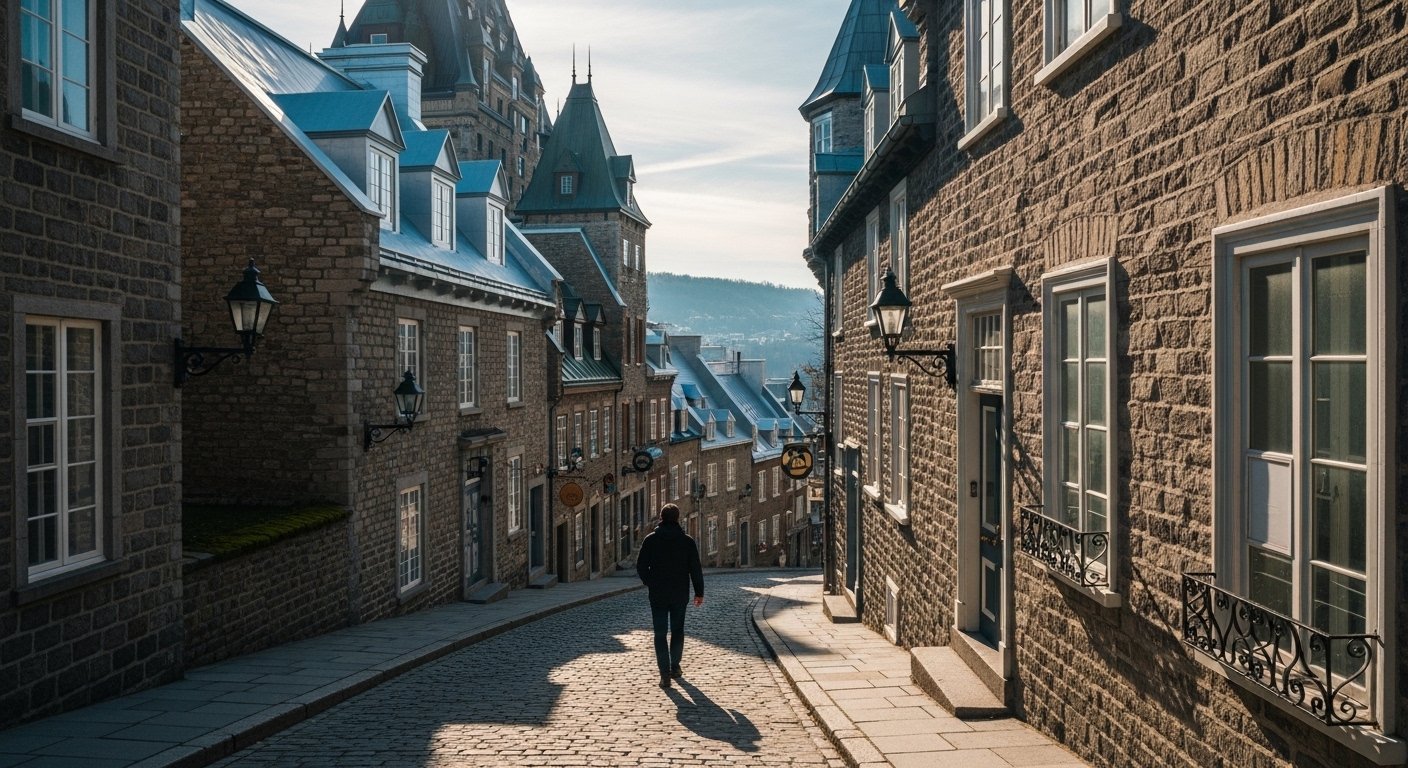
Quebec City is the only walled city north of Mexico, and its historic district, designated a UNESCO World Heritage Site in 1985, feels lifted from another century. The towering Chateau Frontenac, opened in 1893 and often called the most photographed hotel in the world, presides over the Terrasse Dufferin boardwalk and the St. Lawrence River. French is the language of daily life here, street signs and menus included, which deepens the sense of having traveled much farther than you have.
From northern New England and upstate New York, Quebec City is a full but feasible day trip; many visitors prefer to make it an overnight to savor the evening atmosphere. Wander the Upper Town’s ramparts and the Lower Town’s Petit-Champlain quarter, ride the funicular between them, and browse artisan shops along cobblestone lanes. The city draws millions of visitors a year, yet it never feels rushed. For Americans craving maximum cultural contrast per mile driven, nothing on this list beats it.
Windsor: the easiest international trip you will ever take

Windsor sits directly across the Detroit River from Detroit, connected by the Ambassador Bridge and the Detroit-Windsor Tunnel, and the crossing takes minutes. The Ambassador Bridge, opened in 1929, is one of the busiest international border crossings in North America, yet the trip itself is so short that Windsor may be the simplest international day trip on the continent. You can literally see one country’s downtown from the other’s riverfront.
What to do with a day in Windsor? The riverfront sculpture park offers the classic photo: Detroit’s skyline across the water. Ouellette Avenue and the downtown core have a lively bar and restaurant scene, Caesars Windsor anchors the entertainment district, and the city’s multicultural neighborhoods serve excellent Middle Eastern, Italian, and Asian food. Windsor’s famous pizza style, with its shredded pepperoni and canned mushrooms, is worth trying at a local institution. Minimal planning, minimal driving, maximum novelty per minute: that is the Windsor formula.
Calgary: urban Alberta and the Rockies’ doorstep

Calgary is farther from the border than most entries here, but for Americans in Montana it is a realistic day trip via the Sweetgrass-Coutts crossing, and it doubles as the gateway to the Canadian Rockies. The city itself deserves attention: the Calgary Tower’s glass-floor observation deck surveys the prairies meeting the mountains, Stephen Avenue’s historic sandstone blocks house shops and restaurants, and the Bow River pathway system offers miles of easy cycling.
Every July, the Calgary Stampede, billed as the Greatest Outdoor Show on Earth, turns the city into a ten-day festival of rodeo, chuckwagon races, concerts, and pancake breakfasts. And the Rockies begin about 90 minutes west: Banff National Park’s turquoise lakes and towering peaks make an unforgettable extension if your day trip stretches into a long weekend. Calgary blends cowboy heritage, modern energy, and mountain access in a way no American city quite replicates.
Ottawa: the capital’s grand landmarks

Ottawa, Canada’s capital, lies within reach of northern New York and combines grand national landmarks with an unusually relaxed, walkable core. Parliament Hill, with its Gothic Revival Centre Block and soaring Peace Tower, is the centerpiece; free guided tours explain the country’s political history. The Rideau Canal, a UNESCO World Heritage Site, slices through downtown, and in winter its 7.8-kilometre skateway becomes the world’s largest skating rink.
A day-tripper’s Ottawa should include the National Gallery of Canada, guarded by the giant spider sculpture Maman, the lively ByWard Market for lunch, and a stroll along the canal to Dow’s Lake. Many of the national museums offer free or discounted admission at certain times, which makes Ottawa one of the most budget-friendly capitals to visit. The city’s bilingual character, clean streets, and compact layout make it easy to see a great deal in a single day.
Halifax: maritime soul on the Atlantic

Halifax requires more commitment than most trips on this list, but for New Englanders it is reachable: a long drive through Maine and New Brunswick, or the seasonal ferry from Bar Harbor, Maine, to Yarmouth, Nova Scotia. The reward is one of Canada’s most characterful small cities. The waterfront boardwalk, one of the longest downtown boardwalks in the world, threads past historic ships, shops, and some of the country’s best seafood restaurants.
The Maritime Museum of the Atlantic tells Halifax’s seafaring story, including its connection to the Titanic, whose victims are buried in the city’s cemeteries. The star-shaped Citadel fortress offers harbor views and a living-history program, while Peggy’s Cove, about 45 minutes away, delivers the iconic lighthouse-on-granite photograph. Come hungry: Halifax’s donairs, fresh lobster, and craft breweries are local legends. It is the farthest-flung day trip here, and arguably the most memorable.
Winnipeg: the prairie surprise

Winnipeg is the underdog of Canadian cities, and that is exactly its charm. About two hours north of Grand Forks, North Dakota, via Interstate 29, it offers big-city culture without big-city crowds or prices. The Canadian Museum for Human Rights, opened in 2014 as Canada’s first national museum outside the capital region, is an architectural landmark whose alabaster tower and powerful exhibits anchor any visit.
The Forks, where the Red and Assiniboine rivers meet, has been a gathering place for six thousand years and now hosts a year-round market hall, skating trails in winter, and riverside paths. The Exchange District’s early-20th-century warehouses house galleries and design studios, and the city’s food scene, from French bakeries in St. Boniface to inventive prairie cuisine, keeps improving. Winnipeg rewards travelers who look past the obvious, which is precisely why Americans are quietly adding it to their lists.
Making the most of a single day
The golden rule of cross-border day trips is to pick one anchor experience and build around it. Trying to see all of Toronto or Montreal in eight hours leads to exhaustion; choosing the CN Tower plus St. Lawrence Market, or Old Montreal plus a bagel pilgrimage, leads to a great story. Start early, park once, and walk as much as possible. Download offline maps in case your phone plan charges for Canadian roaming, or grab a short-term travel pass from your carrier before you leave.
Eat at least one meal that you cannot get at home, whether that is poutine in Montreal, fresh salmon on Granville Island, or a donair in Halifax. Bring a small daypack with layers, because Canadian weather near the water or mountains changes fast, and keep your passport, car documents, and a payment card in one accessible place for the border booths. With a little planning, these quiet little international escapes become the trips you talk about for years.