 Sarah Grey
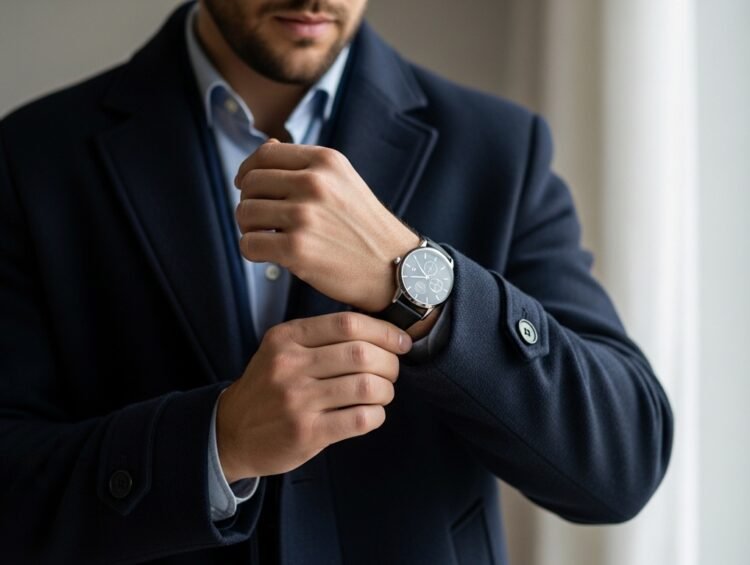
Winter dressing is an exercise in layers, texture, and quiet detail. Heavy coats, chunky knits, scarves, and boots swallow up most accessories, which leaves the watch as one of the few pieces of personal style still visible to the world. A cuff pulled back to check the time reveals a flash of dial and case, and that small moment says a lot about the man wearing it. That is why cold-weather watch choices deserve real thought: the right rotation covers formal evenings, everyday office wear, and rough outdoor weekends without forcing you to overthink your wrist each morning.
This guide walks through seven watch categories that, together, form a complete winter rotation. You do not need to own all seven at once, and you certainly do not need to spend a fortune. The goal is to understand what each type of watch does, when it shines in winter, and how to wear it well with heavier fabrics and layered outfits.
Why winter changes the watch game
Summer watches live on bare wrists, but winter watches have to fight for attention. Shirt cuffs get thicker, sweater sleeves bulk up, and jacket cuffs can bury a slim watch entirely. That changes the practical rules in a few ways. First, case size matters more: a watch between 38 and 42 millimeters tends to sit comfortably under a coat cuff while still being visible when you want it to be. Anything much smaller can disappear under a chunky knit, while oversized cases snag on jacket linings and look clumsy against fine tailoring.
Second, straps earn their keep in winter. Leather pairs beautifully with wool, cashmere, and tweed, while steel bracelets handle rain, sleet, and slush without complaint. Rubber and nylon straps also come into their own for outdoor days. Third, legibility matters because winter light is often flat and grey. High-contrast dials with strong lume are genuinely useful on dark December afternoons. Keeping these principles in mind, let us look at the seven watches that cover every winter scenario.
1. The classic dress watch
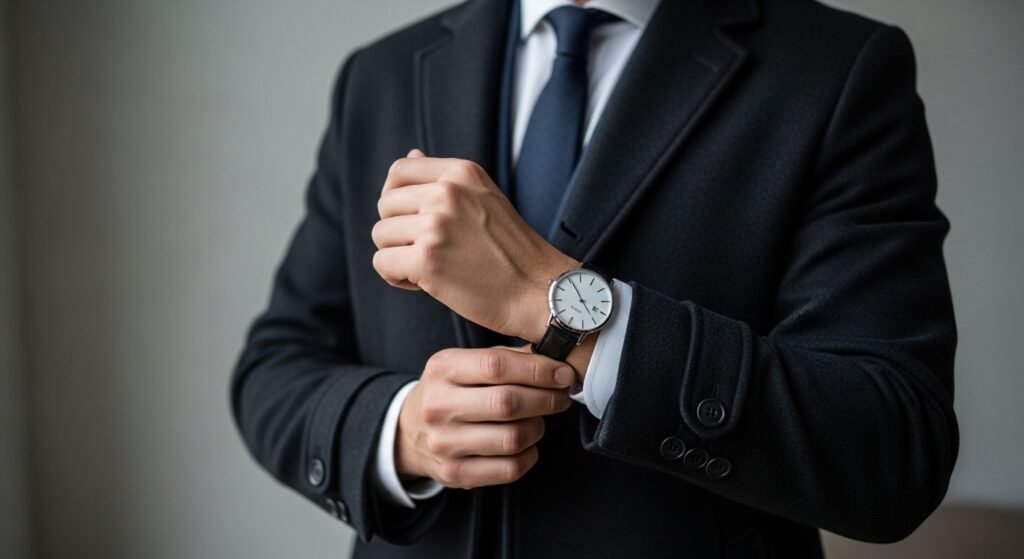
Every man needs one watch that looks right with a suit or a smart overcoat, and that is the dress watch. The formula has barely changed in a century: a slim case, a clean uncluttered dial, minimal complications, and a leather strap. In winter, the dress watch earns its place at holiday parties, weddings, business dinners, and any evening that calls for an overcoat and polished shoes. A thin case, ideally under 10 millimeters, slides neatly under a dress shirt cuff and a coat sleeve, which keeps the whole silhouette elegant.
When choosing one, look for a dial in white, silver, cream, or deep black, with simple baton or Roman numeral markers. A dark brown or black leather strap is the most versatile choice and pairs naturally with winter fabrics like flannel, cashmere, and worsted wool. Avoid oversized cases and busy dials; the whole point of a dress watch is restraint. You do not need a famous Swiss name on the dial to get this right either. Plenty of well-made quartz and automatic dress watches from respected Japanese and European brands deliver the look for a few hundred dollars, and they will serve you for decades with basic care.
2. The reliable dive watch
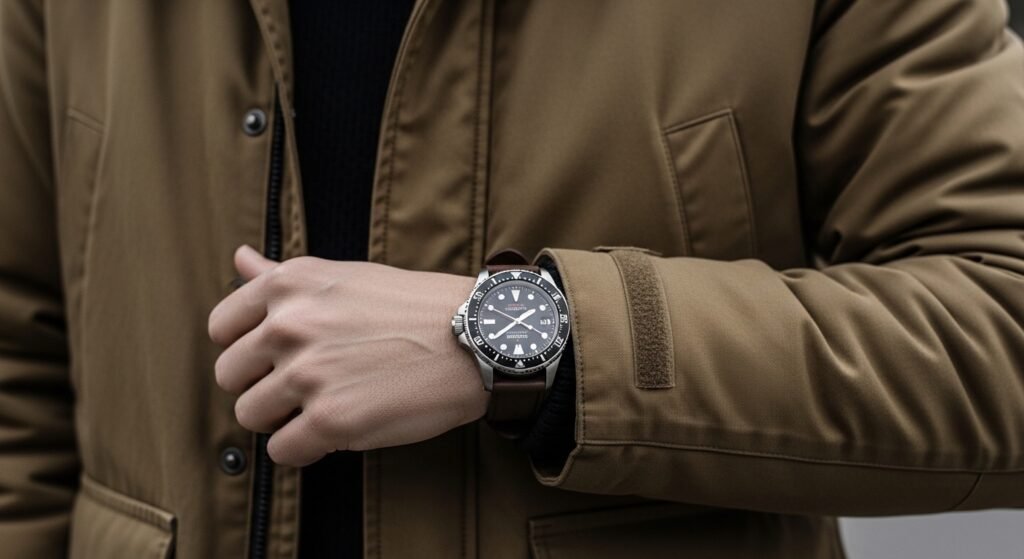
Dive watches were engineered for the ocean, but their toughness makes them ideal winter companions. A proper diver offers water resistance of at least 200 meters, a unidirectional rotating bezel, luminous markers you can read in the dark, and a screw-down crown that shrugs off moisture. Winter throws rain, sleet, snow, and road salt at everything you own, and a dive watch simply does not care. That resilience is why so many men reach for a diver as their default cold-weather watch.
Styling-wise, the dive watch is the perfect counterweight to heavy winter clothing. Its bold case and strong presence hold their own against thick jackets, heavy boots, and chunky scarves that would visually swallow a delicate dress watch. Wear it with a steel bracelet for a classic look, or swap to a rubber strap for genuinely foul weather. Icons like the Seiko Prospex line, the Orient Mako, and the Citizen Promaster have made this category affordable, while the Rolex Submariner and Omega Seamaster define the luxury end. Whatever your budget, a dive watch is the workhorse of a winter rotation.
3. The rugged field watch
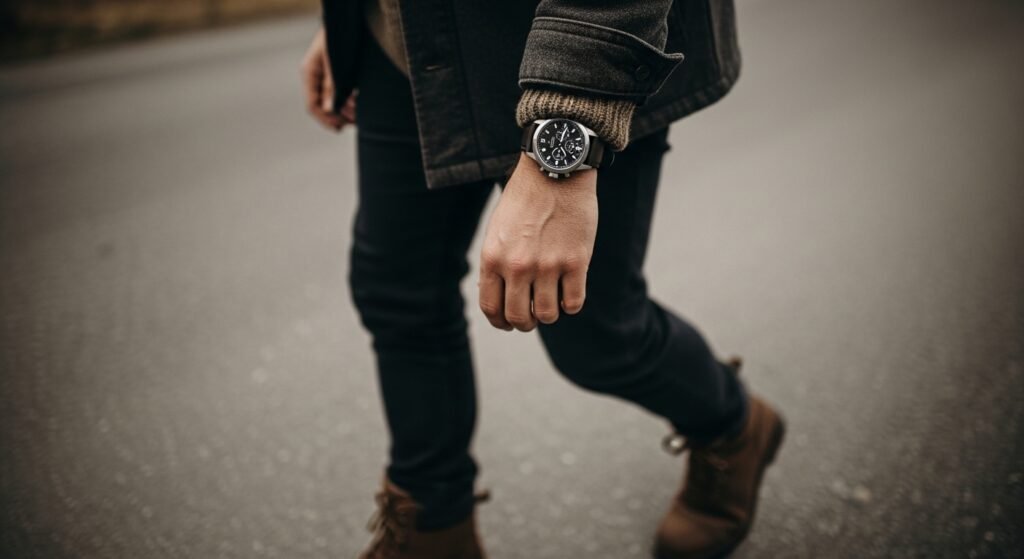
Field watches descend directly from military-issue timepieces, and their design brief has always been simple: be legible, be tough, and stay out of the way. Large Arabic numerals, a matte dial that kills glare, and a sturdy case make field watches superb winter companions for hiking, travel, and everyday outdoor life. They pair naturally with flannel shirts, waxed jackets, denim, and work boots, which is essentially the unofficial uniform of cold weekends.
What makes the field watch special in winter is its strap versatility. The classic pairing is a canvas or nylon strap, which handles snow and sweat far better than leather and dries quickly. Many field watches also have modest 36 to 40 millimeter cases that fit comfortably under gloves and jacket cuffs. Legends like the Hamilton Khaki Field, the Timex Expedition, and the Casio MQ series prove you can get into this category at almost any price. A field watch will not win a black-tie contest, but for the other ninety percent of winter life, it is close to perfect.
4. The sporty chronograph
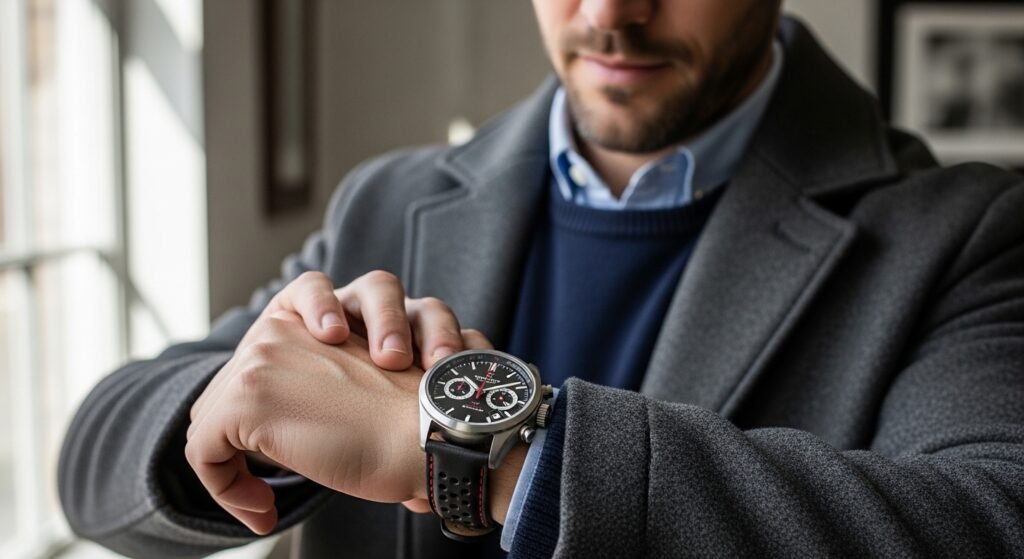
Chronographs add a dose of mechanical intrigue to the wrist. Originally built as stopwatches for racing drivers, pilots, and sportsmen, they feature sub-dials that measure elapsed seconds, minutes, and hours, plus the pushers on the side of the case that operate them. In winter, the chronograph’s busy, technical dial texture plays beautifully against the smooth surfaces of coats and knitwear. It is the watch equivalent of a well-worn leather boot: functional, characterful, and effortlessly masculine.
Practically speaking, chronographs are among the most versatile watches you can own. They work with smart-casual office outfits, weekend denim, and travel wardrobes alike. The one caveat is thickness: chronograph movements are inherently chunky, so try the watch under your actual coat cuff before committing. Affordable standouts include the Seiko Speedtimer, the Citizen Eco-Drive chronographs, and the Dan Henry 1962, while the Omega Speedmaster and TAG Heuer Carrera anchor the luxury tier. Wear it on steel for everyday use or leather when you want to dress it up slightly.
5. The everyday steel bracelet watch

If you could only own one watch for winter, a steel bracelet watch would be the sensible pick. Stainless steel handles moisture without staining or degrading, which matters when you are constantly moving between heated interiors and freezing streets. Condensation, wet cuffs, and slushy splashes are simply non-issues. A steel bracelet also dresses up or down with unusual ease: it looks sharp with a blazer and perfectly natural with a sweater and jeans.
The sweet spot is a simple three-hand design with a date window, in a 38 to 41 millimeter case, on a well-finished bracelet with solid end links. This describes some of the most beloved watches ever made, from the Rolex Datejust and Omega Aqua Terra at the top end to the Seiko 5 Sports, Tissot PRX, and Citizen Tsuyosa at accessible prices. One practical winter tip: make sure the bracelet has some micro-adjustment or a half-link option, because wrists shrink slightly in the cold and a bracelet that fit perfectly in summer can feel loose by January.
6. The minimal casual watch
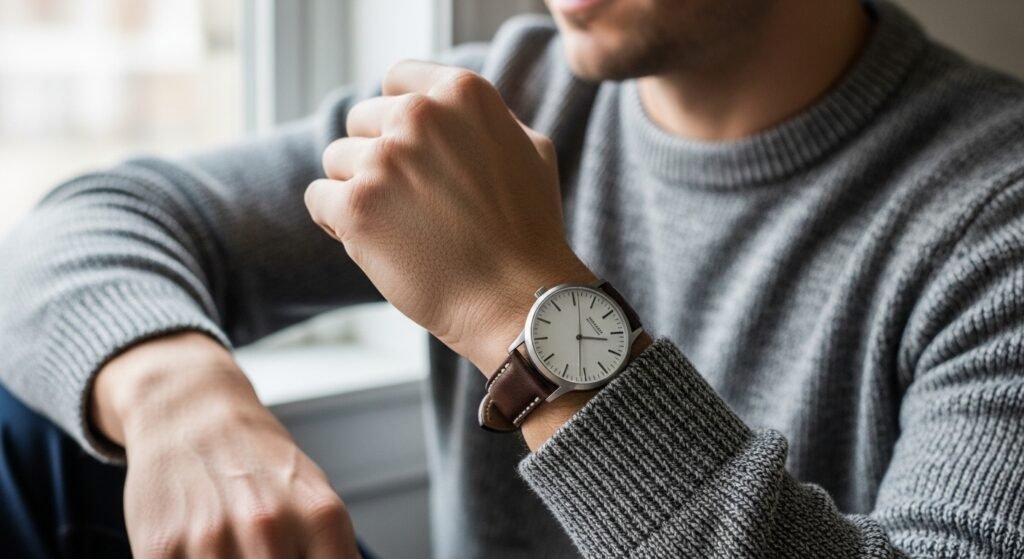
Not every winter day calls for a statement. The minimal casual watch, with its clean dial, slim profile, and unfussy design, is the quiet achiever of the rotation. It pairs beautifully with the soft textures of winter: chunky knit sweaters, brushed flannel, corduroy, and relaxed tailoring. Because the design is so restrained, it never clashes with patterns or bold outerwear, which makes it the easiest watch to reach for on a busy morning.
This category is also where budget-friendly options shine brightest. Better value lies with the Timex Marlin reissue, Braun-inspired designs, and the endless range of clean quartz watches from Skagen and Nordgreen. Look for a light-colored dial for contrast against dark winter clothing, a comfortable leather or mesh strap, and a case under 40 millimeters. Keep one of these on standby and you will always have an appropriate, effortless option.
7. The statement piece
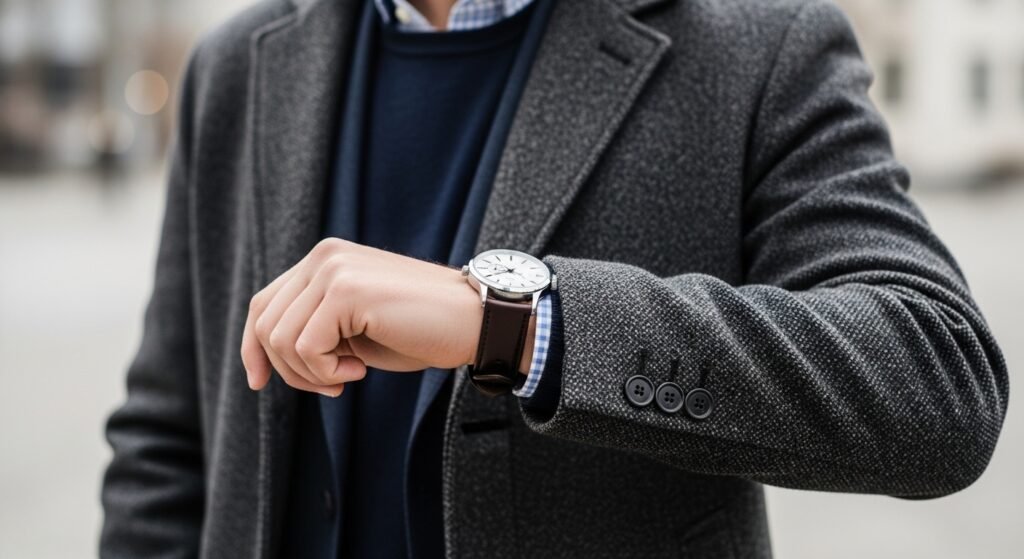
Finally, every rotation benefits from one watch with genuine personality. The statement piece is the watch you wear when you want to be noticed: a bold diver with a colored bezel, a vintage chronograph with a patinated dial, a bronze-cased watch that develops character with age, or a GMT with its extra hand and colorful 24-hour bezel. Winter is actually the ideal season for a statement watch, because the rest of your outfit tends toward dark, muted tones, which lets one confident accessory do all the talking.
The key rule with statement watches is to let them stand alone. If the watch is loud, keep the rest of the wrist bare and the outfit simple. A bright orange dial or an unusual case shape does not need competition. Many collectors find that their statement piece becomes their signature: the watch friends associate with them and the one they reach for when they want to feel their best. It does not have to be expensive; it just has to feel unmistakably like you.
Matching watches to winter fabrics
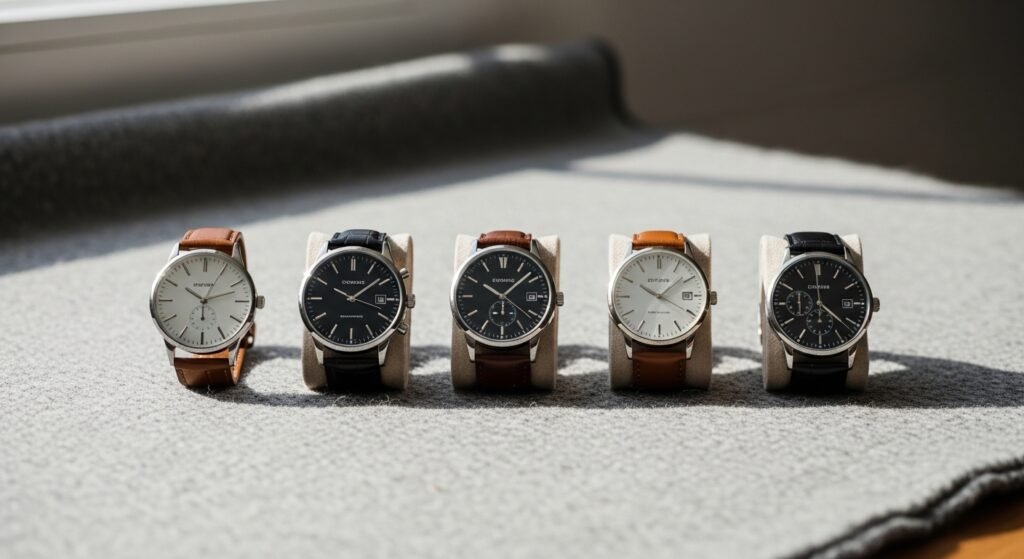
Winter wardrobes revolve around a handful of fabrics, and each has a natural watch partner. Wool suiting and flannel pair best with leather straps in dark brown or black; the matte texture of the strap echoes the matte finish of the cloth. Cashmere and fine merino knits suit slim dress watches and minimal designs, because anything chunky fights with the softness of the fabric. Heavy outerwear like parkas, peacoats, and waxed canvas jackets calls for bolder watches: divers, field watches, and chronographs with enough presence to balance the bulk.
Denim and corduroy sit in the middle and accept almost anything, which is why the everyday steel watch and the field watch earn their keep on weekends. One combination to avoid is a delicate dress watch with very rugged outerwear; the visual mismatch makes both look wrong. When in doubt, match the ruggedness of the watch to the ruggedness of the outfit and you will rarely go wrong.
Sizing and fit tips for cold weather
Fit deserves special attention in winter because your wrist and your clothing both change. Cold temperatures cause wrists to shrink slightly, so a bracelet or strap that fit perfectly in August may feel loose in January. If your watch slides around, have a link removed or punch an extra hole in the leather strap. A watch should sit snugly enough that it does not spin freely, but loosely enough to slide a finger underneath.
Case thickness matters as much as diameter when coats enter the picture. A watch over 13 millimeters thick will constantly catch on jacket cuffs, while something in the 9 to 12 millimeter range glides through. If you wear French cuffs or thick sweater cuffs, favor watches with shorter lug-to-lug distances so the case sits centered on the wrist rather than overhanging it. These small adjustments make the difference between a watch that feels like part of the outfit and one that fights it all day.
Caring for your watches through winter
Winter is hard on watches, so a little maintenance goes a long way. The biggest enemy is rapid temperature change: moving from a freezing street into a heated room causes condensation inside the case if the seals are worn, so have water resistance checked annually if you wear a watch in wet conditions. Salt is the second enemy; road salt and sea spray corrode bracelets and cases, so rinse steel watches with fresh water after exposure and dry them thoroughly.
Leather straps suffer most in winter. Repeated soaking and drying makes leather crack, so consider switching your dress watch to a fresh strap for the season or rotating to steel and rubber on wet days. Store watches you are not wearing in a dry place away from radiators, since prolonged heat dries out lubricants and leather alike. For automatic watches, wearing the piece regularly keeps the movement healthy through the months when you might otherwise leave it in a drawer.
Building the rotation on a budget
You do not need seven luxury watches to follow this guide. A smart budget rotation might look like this: a Timex or Casio minimal watch for casual days, a Seiko 5 Sports as the everyday steel piece, a Casio Duro or Orient diver for rough weather, and an affordable quartz dress watch for formal evenings. That four-watch lineup can be assembled for less than the price of a single mid-range Swiss piece, and it covers every scenario in this article.
Buy pre-owned where it makes sense, prioritize versatile pieces over novelty, and add one watch at a time as you discover what you actually wear. The best winter rotation is not the most expensive one; it is the one where every watch earns its place and no morning starts with indecision. Start with the categories that match your life, and let the collection grow naturally from there.