 Sarah Grey
Picture this: you are settled into your seat, ready for a few hours of peace, when the passenger across the aisle starts watching videos at full volume on their phone speaker. No headphones. No shame. Just TikToks blaring into the shared air of the cabin. It is one of the most universally hated behaviors in modern travel, and airlines are finally treating it as more than bad manners. United Airlines updated its contract of carriage to explicitly address audible entertainment devices, giving cabin crews clearer authority to shut it down. Here is what changed, why it matters, and how to make sure you never become the cautionary tale.
The Silent Rule Change
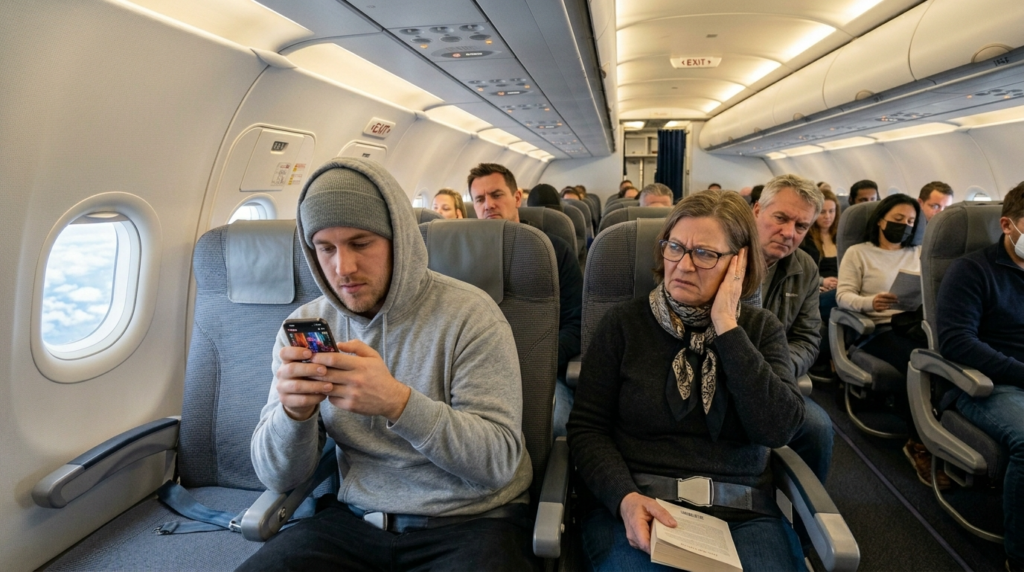
Airlines rarely announce contract of carriage updates with fanfare. The changes appear quietly in the legal documents you agree to when you buy a ticket, which almost nobody reads. United’s update clarified that passengers must use headphones or earbuds when playing audio or video on personal electronic devices. It sounds obvious, but spelling it out in the contract gives flight attendants explicit backing when they ask someone to plug in or mute up.
Why formalize something so basic? Because asking nicely was not working. Flight crews reported increasing confrontations with passengers who refused to use headphones, and without a clear contractual rule, enforcement was inconsistent. Putting it in the contract of carriage transforms a courtesy request into an enforceable requirement. When the rule is written down, the crew’s authority is unambiguous, and the passenger’s obligation is clear.
A Matter Of Shared Space
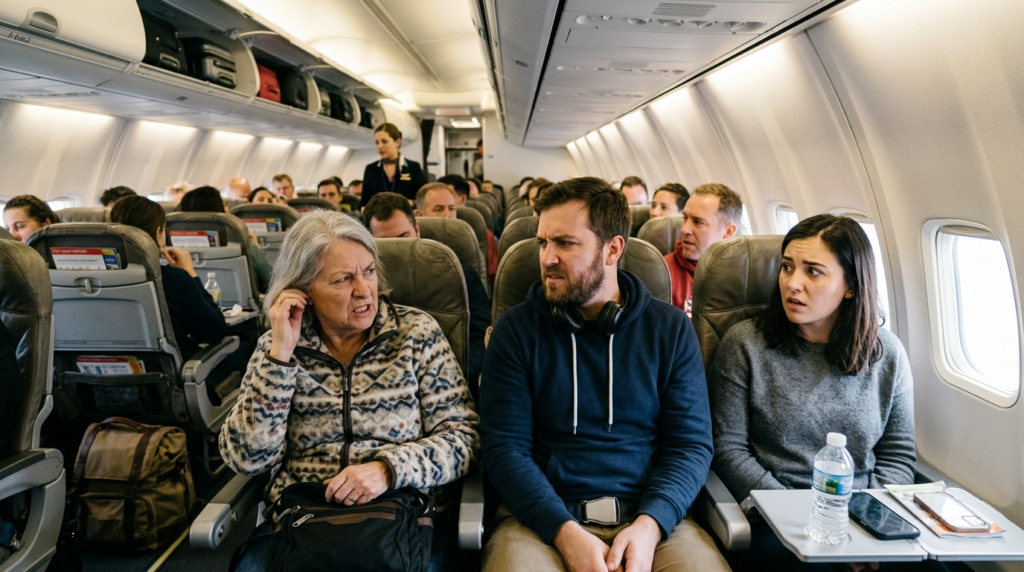
An airplane cabin is one of the most intimate shared spaces in modern life. Strangers sit inches apart for hours, breathing the same air, hearing the same engine drone. In that environment, one person’s phone speaker does not stay personal. Sound carries across rows, and there is no escape: you cannot walk away, close a door, or ask the walls to be thicker. Your entertainment becomes everyone’s entertainment, whether they consented or not.
This is why the headphone rule resonates so strongly with the public. Surveys consistently rank audible devices among the top passenger annoyances, alongside seat reclining disputes and armrest hogging. The cabin is a commons, and commons require cooperation. Headphones are the smallest possible courtesy with the largest possible payoff: your fellow passengers get their quiet, and you get your content. Everyone wins for the price of a pair of earbuds.
It is worth remembering that the cabin crew did not create this tension; they are stuck managing it. Flight attendants consistently say that device-noise disputes are among the most draining parts of the job, because they force crew members into the role of etiquette police instead of safety professionals. Every time a passenger complies voluntarily, it saves the crew a confrontation and saves fellow travelers the discomfort of listening to someone else’s argument about why the rule should not apply to them.
The Headphone Requirement Explained
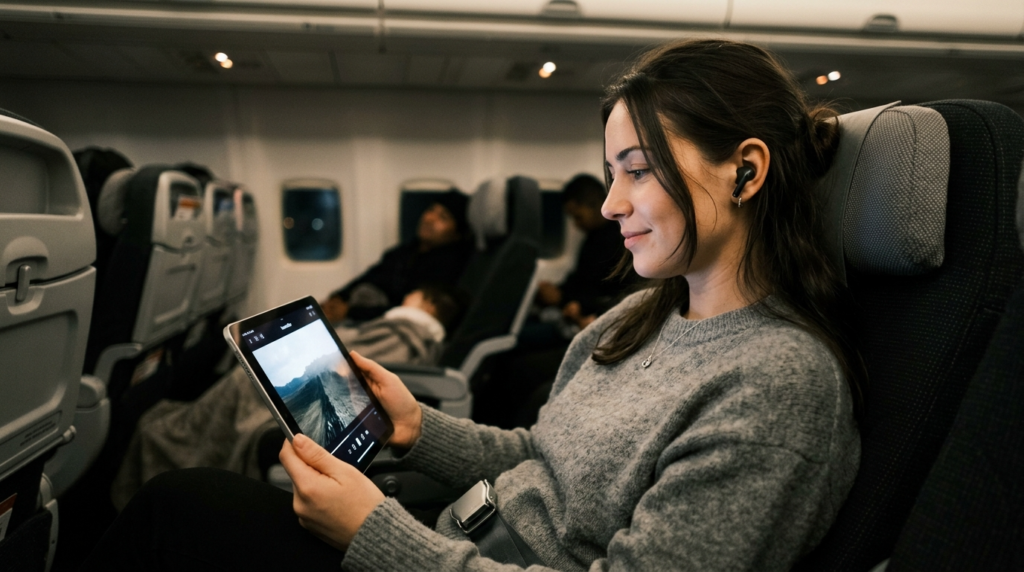
The updated rule is straightforward: any audio or video played on a personal device must be listened to through headphones or earbuds, or kept muted. This covers videos, music, games, video calls, and speakerphone conversations. The volume should also be reasonable; headphones at maximum volume that leak into neighboring seats can still draw a crew request to turn it down.
For travelers, compliance is trivially easy. Pack earbuds in your personal item, not your overhead bag, so they are accessible from the moment you sit down. Wired earbuds are the most reliable since they need no charging and work with every seatback system via the standard jack. If you prefer wireless, make sure they are charged before boarding, and remember that Bluetooth must be off during takeoff and landing on some airlines. The prepared traveler never has an excuse.
The Right Gear Makes It Easy
The best headphone strategy for flying is redundancy. Keep a cheap pair of wired earbuds permanently in your carry-on as a backup, even if you normally use premium wireless headphones. Wired earbuds weigh nothing, cost almost nothing, never need charging, and plug directly into seatback entertainment systems. When your fancy headphones die mid-flight, and they will, the backup pair saves you from becoming the person you swore you would never be.
If you invest in one travel upgrade, make it noise-cancelling headphones. They do double duty: they keep your audio private and they dramatically reduce cabin noise fatigue, which is a real contributor to how drained you feel after a flight. The constant low-frequency drone of jet engines is exhausting over several hours, and good noise cancellation makes the entire journey more restful. It is the rare purchase that makes you both a better neighbor and a more comfortable traveler.
Relatability In The Sky
Ask frequent flyers about their worst flight experiences and the speakerphone offender comes up every time. There is something uniquely maddening about involuntary listening: your brain cannot help but track the audio, which makes it impossible to read, rest, or think. Researchers who study noise and cognition have found that unpredictable, intelligible background speech is among the most distracting sounds for concentration. A stranger’s video is not just annoying. It measurably degrades everyone else’s ability to focus.
The social contract of the cabin depends on mutual restraint. Everyone gives up a little freedom so everyone can coexist. Reclining gently, keeping elbows in, using headphones: these are the tiny sacrifices that make shared travel bearable. The passengers who violate them are not just rude. They are defecting from the cooperation that the whole system depends on. That is why the backlash is so strong, and why airlines are codifying what used to be common sense.
No Exceptions For Kids
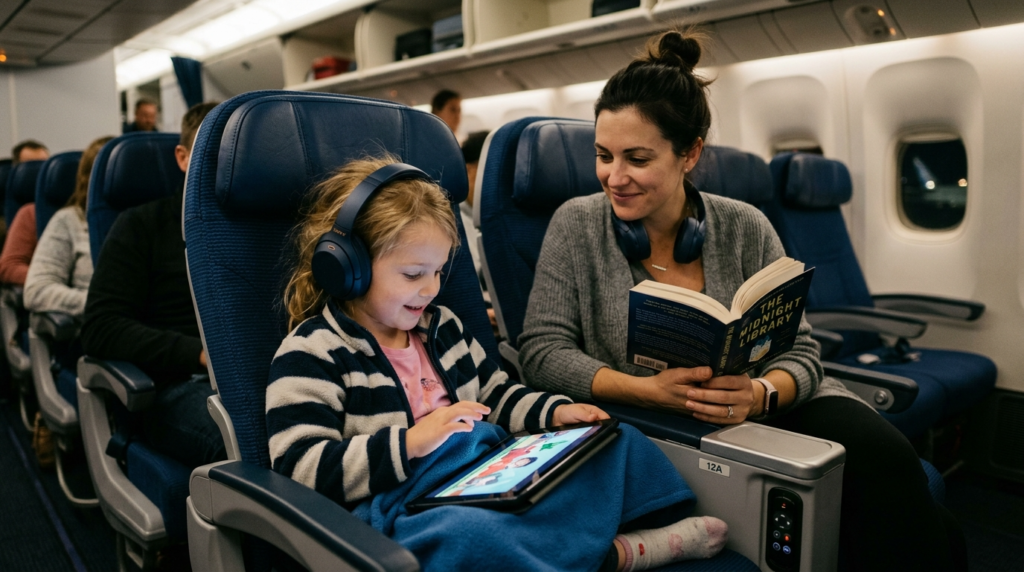
The rule applies to everyone, including children with tablets. Parents, this one is on you: a toddler watching cartoons at full volume is just as disruptive as an adult’s TikTok feed, and the contract makes no exception for age. Flight crews can and do ask parents to provide headphones for their kids or mute the device.
Traveling parents should pack kid-sized headphones, which fit small heads comfortably and often include volume limiters that protect young ears. Practice wearing them at home before the trip so they are not a novelty to be ripped off mid-flight. Download content in advance so the entertainment works in airplane mode. A prepared parent with a headphone-wearing kid is every cabin’s favorite passenger. An unprepared one is everyone’s problem.
The Technical Breach Of Contract
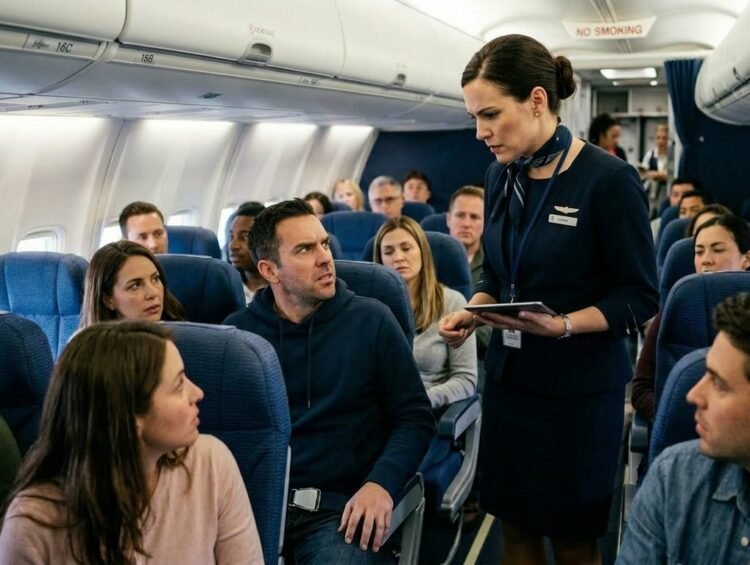
Here is the part most travelers miss: when you buy a ticket, you agree to the airline’s contract of carriage, a legal document that governs the relationship. Violating its terms is a breach of that agreement, and the contract gives the airline remedies ranging from warnings to removal. The headphone rule is now part of that enforceable framework on United, which means refusing to comply is not just rude. It is a contractual violation.
This matters because it changes the crew’s position. Previously, asking a passenger to use headphones was a customer service request that could be debated. Now it is enforcement of a written rule, and continued refusal can be treated as noncompliance with crew instructions. Federal regulations require passengers to follow crewmember instructions, and interfering with crew duties carries serious penalties. The escalation path from a simple request to a real consequence is shorter than most people realize.
How Other Airlines Handle It
United is not alone. American Airlines, Delta, and Southwest all have rules requiring headphones for audible devices, though the specifics and the enforcement energy vary. Delta’s contract of carriage has long addressed disruptive behavior broadly, and its crews are known for firm, polite enforcement. Southwest, with its open-seating free-for-all, relies heavily on the social pressure of two hundred witnesses. The industry trend is uniform: the speakerphone era is ending everywhere, not just at one airline.
International carriers are often stricter. Many Asian and Middle Eastern airlines have long-standing cultural expectations of quiet cabins, and their crews enforce device rules with little tolerance for debate. If you think a US crew’s request is firm, try ignoring one on a long-haul international flight. The global direction is the same: your audio stays in your ears, full stop. Learning this habit on domestic flights prepares you for everywhere else.
Potential Financial Consequences
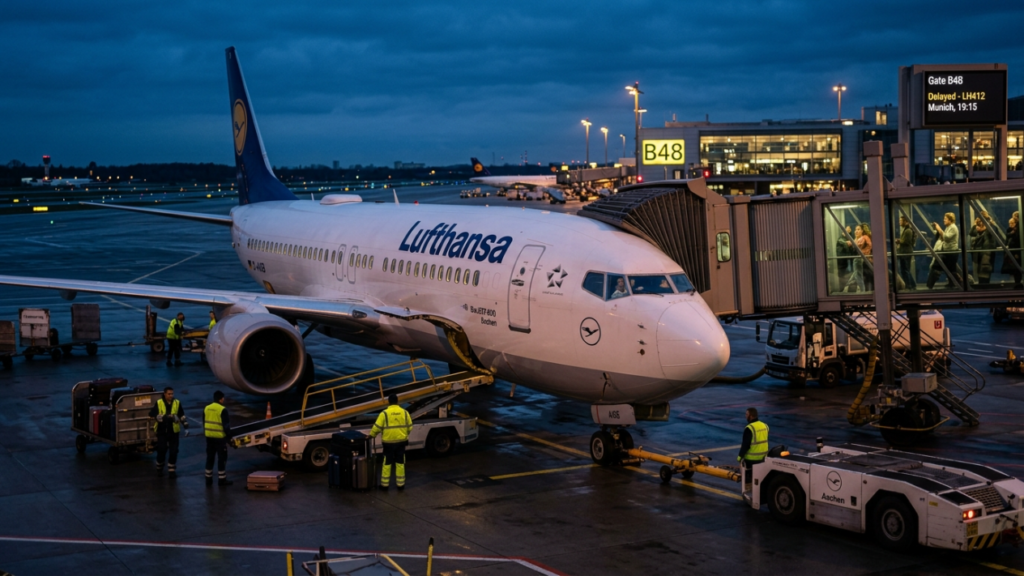
Being removed from a flight is expensive in ways that go far beyond embarrassment. A removed passenger typically forfeits the value of that flight segment, must arrange and pay for alternative transportation, and may face rebooking fees. If the disruption delays the flight, the airline can pursue the passenger for costs in extreme cases. And disruptive behavior can land you on an airline’s internal no-fly list, banning you from future travel with that carrier.
Federal consequences are even steeper. The FAA can propose civil penalties up to tens of thousands of dollars per violation for unruly passenger behavior, and the agency has pursued five-figure fines aggressively in recent years. Criminal referral is possible for the most serious disruptions. All of this over a pair of earbuds that costs less than the airport sandwich. The economics of noncompliance are brutally one-sided.
Beyond the money, there is the permanent record. Removal incidents generate reports, and reports follow you. Gate agents can see flags on reservations. Other airlines share security information. A single viral video of a removal can do lasting damage to a person’s reputation and even employment. The few minutes of defiance that feel satisfying in the moment can echo for years. No video is worth that trade.
Looking Toward The Future
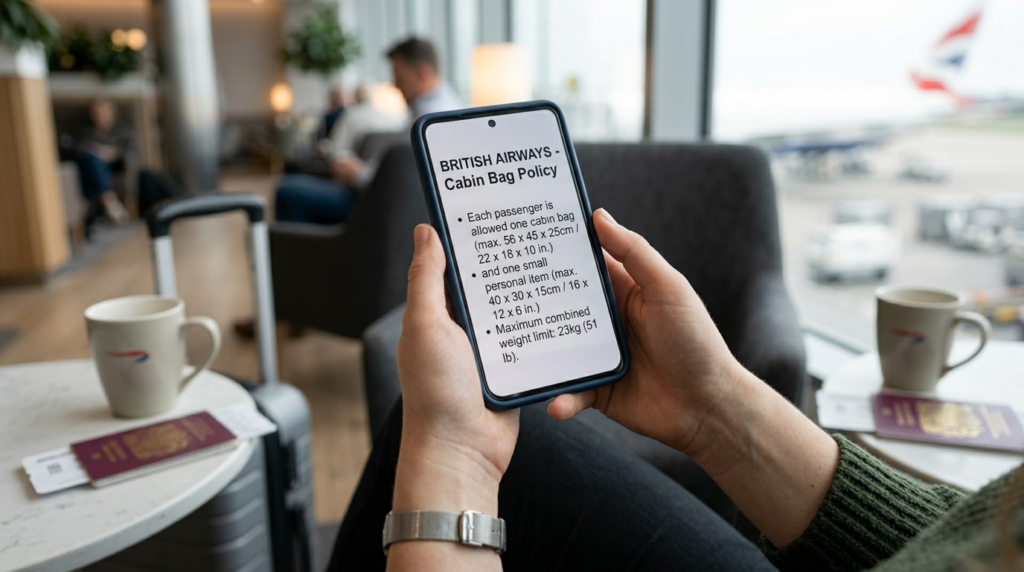
United’s move is part of a broader trend: airlines are getting more explicit about cabin behavior as flying gets more crowded and personal devices get more central to the experience. Other carriers have similar rules, and industry groups continue to refine guidance on everything from device use to reclining etiquette. The cabin of the future will likely have clearer rules, better enforcement technology, and less tolerance for the behaviors that make shared travel miserable.
The lesson for travelers is simple and timeless: the best passenger is the one nobody notices. Use your headphones. Keep your volume reasonable. Recline gently. Treat the cabin as the shared space it is. These are not burdensome rules. They are the minimum price of admission to one of humanity’s great collective experiences: hurtling through the sky in a metal tube with two hundred strangers, all agreeing to be decent to each other. Pack the earbuds. Enjoy the flight.