 Sarah Grey
What is the most valuable thing in life? A big house, endless money, every luxury money can buy? Ask yourself honestly, and a quieter answer usually rises to the surface: happiness. It is the invisible force behind our hardest work, our biggest dreams, our daily routines. We chase goals not for the goals themselves but for the satisfaction and joy we believe they will bring.
But here is the secret that happy people seem to understand: lasting happiness rarely comes from the big milestones. It comes from small, repeated moments, the ordinary texture of daily life. Research on well-being consistently shows that our everyday habits shape our mood far more than major life events, which we tend to adapt to surprisingly quickly.
The good news is that happiness is not a talent you are born with or a prize reserved for the lucky. It is a practice. Small, intentional habits, repeated daily, can genuinely shift how you feel. They rewire your attention toward what is good, steady your emotions, and build a quiet resilience that carries you through hard days.
Explore these ten simple daily habits. None requires money, special equipment, or a transformed life. Each one is a small light you can turn on today.
Practice gratitude daily

When you pause to appreciate what you already have, something shifts inside. Gratitude redirects attention from what is missing to what is present, and that shift brings a deep, quiet satisfaction to the heart.
This is not just feel-good advice. Studies on gratitude consistently link the practice to higher life satisfaction, better sleep, and even stronger immune function. People who regularly note what they are thankful for report feeling more optimistic and less burdened by stress.
Start small. Each morning or evening, write down three specific things you are grateful for. Not generic entries, but vivid ones: the warmth of your coffee, a text from a friend, the way sunlight fell across your desk. Specificity makes gratitude real.
Over time, this simple habit trains your brain to notice good things automatically. You begin to catch small joys in real time instead of scrolling past them. That is gratitude’s quiet power: it does not change your circumstances, it changes how you see them.
Take breaks for yourself

Working without pause is a reliable recipe for stress and disappointment. Your mind is not a machine; it needs rest the way your muscles need it between workouts. Breaks are not laziness. They are maintenance.
Even short pauses help. Step away from your desk for five minutes. Stretch. Look out a window. Take a slow walk around the block. These micro-breaks lower cortisol, restore focus, and return you to your work with fresh eyes.
Use breaks for something genuinely restorative, not just a different screen. Scrolling social media rarely recharges anyone. A cup of tea in silence, a few deep breaths, or a moment in sunlight does far more.
Protect your breaks the way you protect your appointments. Schedule them if you must. The work will still be there when you return, and you will meet it with more patience, creativity, and calm.
Stay physically active

Daily movement is one of the most powerful mood habits there is. Exercise releases endorphins, the brain’s natural feel-good chemicals, and reduces stress hormones. The effect on mood can be almost immediate.
You do not need an intense gym routine. A brisk 20-minute walk, a short yoga session, dancing in your kitchen, gardening, all of it counts. Consistency matters far more than intensity when it comes to mood benefits.
Movement also improves sleep, sharpens thinking, and builds self-confidence. When you keep promises to your body, you quietly prove to yourself that you are someone who follows through, and that feeling spills into everything else.
Find activity you actually enjoy, because the best exercise is the one you will do again tomorrow. Walk with a friend, try a beginner class, or simply stretch while your coffee brews. Small and steady wins.
Connect with loved ones

When you feel demotivated and joy seems distant, the people who love you can make you feel valued again. Human connection is one of the strongest predictors of happiness researchers have ever found. Stronger than wealth, fame, or achievement.
Connection does not require grand gestures. A phone call to your mom. Coffee with a friend. A long hug from someone who knows you. Quality time, even brief, reminds you that you belong and that you matter.
In busy seasons, relationships are often the first thing we neglect and the thing we miss most. Protect them deliberately. Put the dinner on the calendar. Send the text. Show up, even imperfectly.
And let people in when you are struggling. Vulnerability deepens bonds. The friends who sit with you in hard moments often become the ones you laugh hardest with later. Joy shared is joy multiplied.
Let go of negativity

Negativity is heavy. Whether it comes from your own looping thoughts or from the people around you, it drains energy and clouds everything. Letting go of it is one of the kindest things you can do for yourself.
Start with your inner voice. Notice when it turns harsh or hopeless, and gently question it. Is this thought true? Is it helpful? Often the answer is no, and simply naming the thought loosens its grip.
Then look at your environment. You cannot always avoid difficult people, but you can limit their influence. Spend more time with people who encourage you, who laugh easily, who believe good things are possible. Energy is contagious.
Letting go is a daily practice, not a one-time decision. Some days the negativity creeps back, and that is normal. Meet it with the same tools: notice, question, redirect. Peace is built one redirected thought at a time.
Set small personal goals
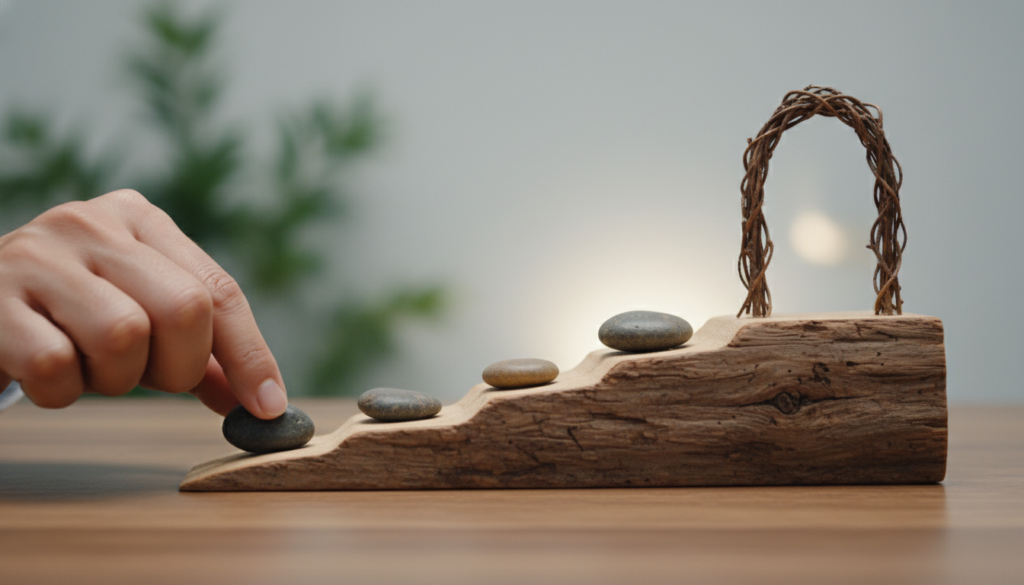
Big dreams are wonderful, but they can feel overwhelming. Small, achievable goals are where confidence is actually built. Each completed goal is proof that you can grow, and that proof fuels lasting positivity.
Keep goals tiny and specific. Read ten pages a day. Walk for fifteen minutes. Save a small amount each week. Learn one new recipe. Small goals are easy to start, and starting is the hardest part.
Track your progress visibly. Check off days on a calendar. Keep a simple journal. Watching a streak grow is deeply motivating, and on hard days it reminds you how far you have come.
Celebrate the wins, even the small ones. Finished the book? Tell someone. Hit the savings target? Acknowledge it. Celebration teaches your brain that effort leads to reward, which makes the next goal easier to begin.
Live in the present

Most stress lives in the future: what might go wrong, what needs doing, what is uncertain. But your actual life is happening right now, in this moment. Presence is where peace lives.
Practicing presence does not require meditation retreats. It can be as simple as truly tasting your food, feeling your feet on the ground during a walk, or listening fully when someone speaks instead of planning your reply.
When worry pulls you forward, gently return. Notice five things you can see, four you can hear, three you can touch. This simple grounding exercise pulls your mind back to the only moment you can actually live in.
The present is also where joy hides. The future is uncertain and the past is gone, but right now there is breath, light, and possibility. People who learn to inhabit the present report feeling calmer, more confident, and genuinely happier.
Do things you enjoy

No matter how busy you are, carve out time for what you love. An hour for yourself is not selfish; it is essential. Hobbies, play, and simple pleasures refill the energy that responsibilities drain.
Rediscover what delights you. Painting, cooking, music, hiking, reading, gardening, gaming, whatever makes time disappear for you. These are not frivolous extras. They are part of a full life.
If you have forgotten what you enjoy, experiment. Try the class. Borrow the instrument. Take the day trip. Curiosity is the doorway back to joy, and you are allowed to be a beginner.
Protect this time fiercely. Put it on your calendar like any important appointment. When you regularly do things that make you feel calm and genuinely happy, everything else gets easier.
Take care of your sleep

Everything feels harder when you are tired. Sleep is the foundation of mood: when your body is rested and full of energy, you feel happy and calm throughout the day. When it is not, even small problems feel enormous.
Aim for seven to nine hours, and keep a consistent schedule. Going to bed and waking at similar times trains your body clock, making it easier to fall asleep and wake up refreshed.
Build a wind-down routine. Dim the lights an hour before bed. Put the phone away. Read, stretch, or take a warm shower. These signals tell your brain that rest is coming, and it responds.
Treat sleep as non-negotiable, not as the thing you sacrifice for productivity. Well-rested people think clearer, feel steadier, and handle stress better. Protecting your sleep is protecting your happiness.
Be kind to yourself
Kindness is not only for others. You deserve it too. The way you speak to yourself shapes how you feel, and most of us are far harsher with ourselves than we would ever be with a friend.
Notice your self-talk. When you make a mistake, do you attack yourself or comfort yourself? Try responding the way you would to someone you love: with understanding, patience, and encouragement to try again.
Self-kindness is not self-pity and it is not an excuse to avoid growth. It is the steady, supportive voice that says: you are doing your best, you are allowed to be imperfect, and you are worthy of care exactly as you are.
Protect your inner peace like the treasure it is. Rest when you need rest. Say no when you need to. Forgive yourself for the hard days. The kinder you are to yourself, the more genuine happiness you have to share with the world.
Start Small, Feel the Difference
You do not need to adopt all ten habits tomorrow. Pick one, the one that spoke to you most while reading, and try it for a week. Small beginnings lead to lasting change.
Happiness is not a destination you arrive at one day. It is a daily practice, built from ordinary moments handled with intention. Turn on one small light today, and watch how it brightens everything around it.
Be patient with yourself along the way. Some days will feel easier than others, and that is perfectly normal. What matters is returning to these habits again and again, trusting that small steps, taken daily, create a genuinely happier life.