
 Sarah Grey
We tend to waste our lives staring at the mirror and asking ourselves why we have our dad’s stubborn chin or why we laugh in that particular way our mother did. Genetics is a fascinating puzzle, and a complicated one, but researchers are uncovering new pieces of it every single day. We used to believe inheritance was only about eye color or height. Recent studies, however, suggest our parents pass down far more than physical appearance. The pattern of our lives is a beautiful blend of genetics and experience: how we handle stress, whether we crave salty snacks at midnight, even the way we laugh at a joke. None of this means we are simply copies of our parents. Environment, choices, and habits matter enormously. But understanding the genetic threads woven through our personalities can be surprisingly liberating. It explains quirks we thought were personal failings and talents we never thought to credit. Here are the surprising traits science says you may well have inherited from your mother and father.
The Mystery Of Your Morning Energy

Some people bounce out of bed at dawn, bright-eyed and ready to conquer the day, while others need three cups of coffee before they can form a sentence. It turns out your chronotype, whether you are a morning lark or a night owl, has a meaningful genetic component. Researchers have identified specific gene variants linked to circadian rhythm that tend to run in families. If both your parents were early risers who hummed while making breakfast at 6 a.m., there is a decent chance you inherited that same internal clock. That does not mean night owls cannot adjust their schedules. Light exposure, consistent bedtimes, and daily habits can shift your rhythm. But your baseline setting was likely written into your DNA before you were born. So the next time you are wide awake at sunrise while your partner sleeps until noon, you can thank, or blame, your parents’ genes.
Why You Crave Certain Comfort Foods

Whether you reach for bitter dark greens or cannot resist anything sweet may not be entirely your own decision. Scientists believe sensitivity to different flavors, sweetness, bitterness, saltiness, is partly inherited through taste-receptor genes passed down from our parents. That is why one sibling can adore black coffee while another finds it unbearably bitter. Beyond taste buds, our tendency to seek comfort in food during emotional moments may also have familial roots. Studies on eating behavior show that patterns of emotional eating often cluster in families, shaped by both genes and the food culture we absorbed at the dinner table. Understanding this can take the shame out of cravings. You are not weak-willed for wanting your grandmother’s mac and cheese on a hard day. You are, quite literally, wired for it.
The Way You Manage Daily Stress

When everything goes wrong, do you stay eerily calm or spiral into panic? There may be a biological reason for your default response. While environment and life experience play enormous roles, research suggests a natural predisposition toward calmness, or reactivity, can be inherited. Variations in genes that regulate cortisol, the body’s primary stress hormone, differ from person to person, and those variations are passed down through families. Children of parents who handle pressure with steady nerves often show similar resilience, even when raised apart. The encouraging news is that stress management is also a skill. Meditation, exercise, and therapy can reshape how your brain responds to pressure, regardless of your genetic starting point. Your inheritance sets the baseline, but your habits write the rest of the story.
Your Natural Sense Of Direction

If you are the person who never needs a map to know which way is north, you might owe your parents a debt of gratitude. Spatial awareness and navigational skill appear to run in families. Studies of twins have found that the ability to mentally rotate objects, read maps, and maintain a sense of direction has a heritable component. Identical twins are far more similar in these abilities than fraternal twins. Scientists point to the hippocampus, the brain’s navigation center, whose structure and function are influenced by genetics. Of course, practice matters too. Taxi drivers famously develop enlarged hippocampi from years of navigating city streets. But that effortless internal compass some people seem born with? That is very likely a gift from mom or dad.
Your Unique Style Of Humor

Quick wit, dry irony, slapstick silliness. Our sense of humor feels deeply personal, yet it may be partly inherited. Researchers studying twins have found that identical twins raised apart still share remarkably similar senses of humor, suggesting genes play a real role in what we find funny. Part of it is cognitive. The speed of verbal processing and pattern recognition that make a joke land are influenced by brain wiring we inherit. But nurture matters enormously here too. We develop much of our comedic sensibility by hearing jokes at the dinner table, absorbing our parents’ timing, references, and attitude toward laughter itself. So if your sarcasm sounds exactly like your father’s, it is probably both nature and nurture working together, the genetic quickness plus a lifetime of his example.
How You Experience Physical Pain

Pain tolerance varies dramatically from person to person, and science says it is not simply a matter of mental toughness. Genetic differences in how our nervous systems detect and transmit discomfort signals mean some people genuinely feel pain more intensely than others. Variants in genes like COMT, which affects how the brain processes pain signals, are inherited, which is why pain sensitivity often runs in families. If your mother winced at a stubbed toe while your father shrugged off a broken finger, you may have inherited one of those settings. This matters beyond curiosity. Understanding your genetic pain profile can help doctors tailor pain management. It also deserves compassion. The next time someone dismisses another person’s pain as exaggeration, remember their nervous system may literally be wired differently.
The Tendency To Be A Risk Taker

Some people are drawn to skydiving, spontaneous road trips, and career leaps, while others find deep contentment in a good book and a predictable routine. That appetite for novelty and risk has a genetic signature. Researchers have linked variants in dopamine-receptor genes, particularly DRD4, to thrill-seeking behavior, and these variants are passed from parent to child. Dopamine is the brain’s reward chemical, and people whose receptors are less easily satisfied tend to chase bigger, bolder experiences to get the same rush. If your father was the type to quit his job and start a business on a hunch, your own restlessness may come from the same source. Neither setting is better. The world needs both bold explorers and careful planners. Knowing your wiring just helps you channel it wisely.
Your Quality Of Sleep Each Night

If you toss and turn night after night, a bad mattress may not be the only culprit. Sleep architecture, how much time you spend in deep sleep versus light sleep, how easily you fall asleep, whether you are a snorer, tends to look strikingly similar between parents and their biological children. Twin studies confirm that insomnia, sleep duration, and even preferred sleep timing have substantial heritability. Genes influencing melatonin production and the brain’s sleep-wake circuitry are handed down like family heirlooms. The good news is that sleep hygiene can improve almost anyone’s rest. Consistent schedules, dark rooms, and limited screen time before bed work regardless of your genetic blueprint. You may have inherited your father’s restless nights, but you do not have to keep them.
The Way Your Skin Ages Over Time
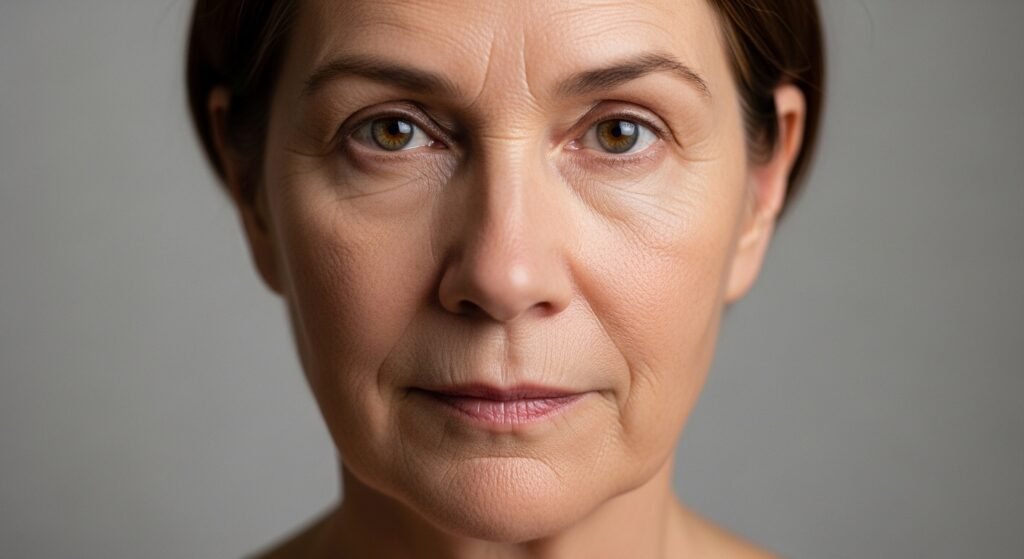
Sunscreen is non-negotiable for everyone, but how your skin holds onto its elasticity, when fine lines appear, and how evenly your tone ages tends to mirror your parents. Look at old family photos. If your mother had smooth skin well into her fifties, there is a good chance you inherited those same resilient collagen genes. Conversely, if your father developed deep forehead lines early, you may want to start preventive skincare sooner. Researchers estimate that up to 60 percent of skin aging variation is genetic, governing collagen density, antioxidant capacity, and how skin responds to UV damage. The remaining 40 percent is lifestyle, sun protection, smoking, diet, and skincare, which means your habits still have enormous power. Genetics loads the dice, but daily choices roll them.
The Strength Of Your Memory

Some people never lose their keys and can recall a face from a decade ago, while others walk into a room and forget why. Cognitive researchers believe the genetic structures we are born with influence memory retention. The efficiency of the hippocampus and prefrontal cortex, the brain regions central to forming and retrieving memories, varies with inherited gene variants. Studies of twins show that working memory capacity and even the risk of age-related memory decline have heritable components. But memory is also highly trainable. Mnemonic techniques, regular mental exercise, physical activity, and good sleep all strengthen recall regardless of your starting point. If forgetfulness runs in your family, consider it an early invitation to build brain-healthy habits, not a verdict.
Your Physical Flexibility And Range

If you can touch your toes without effort while others struggle to reach their knees, you may have inherited a particular kind of connective tissue. Genes governing collagen structure determine how elastic your ligaments and tendons are, and that baseline flexibility is passed down through families, which is why dancers and gymnasts so often have parents who were naturally limber. Biology sets the natural range within which your muscles and joints operate as a unit. That said, flexibility responds beautifully to training. Consistent stretching can dramatically expand anyone’s range of motion over time. Your genes decide your starting line, not your finish line. Whether you inherited your mother’s dancer-like suppleness or your father’s stiffness, a regular mobility practice will move you forward.
None of this is destiny. Genes influence, but they rarely dictate, and the most empowering part of this science is realizing how much room remains for choice. Understanding what you inherited does not excuse unhealthy patterns. It explains them, which is the first step to changing the ones you want to change and appreciating the ones you love. The next time you catch yourself laughing like your mother, stressing like your father, or craving the exact snack your grandmother always kept in her pantry, smile. You are carrying your family’s story in your cells, and you get to decide how the next chapter reads.