Sarah Grey
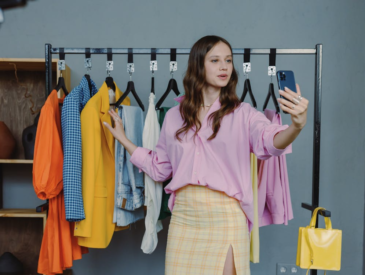
It always starts the same way. I am lying in bed at midnight, phone six inches from my face, watching a creator do one of those hypnotic transition videos where she snaps her fingers and goes from sweatpants to a full runway look. The outfit is perfect. The lighting is perfect. The comment section is full of people saying they ran to buy the exact pieces. And before I know it, I have three tabs open and a cart full of things I absolutely do not need. TikTok has more than a billion monthly active users, and somewhere in that endless scroll, I convinced myself that I could pull off every single viral fashion trend. So I did what any reasonable person would do: I actually tried them. All of them. Here is the honest truth about what worked, what flopped, and what made me question my judgment in a grocery store parking lot.
The Oversized Blazer Struggle

The oversized blazer might be the most reposted garment in TikTok fashion history. Creators pair a boxy thrifted blazer with bike shorts or a mini skirt, add loafers, and suddenly they look like they run a creative agency in Copenhagen. The corporate-core and office-siren aesthetics dominated feeds through 2024, and the blazer was their crown jewel. I found a great secondhand one, rolled the sleeves the way the tutorial showed, and looked in the mirror expecting main-character energy.
What I got instead was the distinct impression of a child playing dress-up in her father’s suit. The problem is proportion. On a five-foot-nine creator shot from a low angle with a wide lens, an oversized blazer reads as intentional and editorial. On me, in the fluorescent lighting of my hallway, it read as lost luggage. The shoulders swallowed me whole, the sleeves ate my hands no matter how I rolled them, and the whole thing wrinkled the second I sat down. I learned that the blazer trick only works when the blazer is oversized in a tailored way, meaning it is still cut for your frame, just roomy. A genuinely huge blazer on a smaller body is not a look. It is a cry for help from the lost-and-found.
The Extreme Crop Top Dilemma

There is crop top, and then there is the TikTok crop top, which appears to be roughly the size of a bookmark. In styled mirror selfies, these micro tops look incredible: confident, summery, straight out of a Y2K revival editorial. The Y2K comeback has been one of the longest-running TikTok fashion cycles, pulling low-rise jeans, baby tees, and butterfly clips back from the early 2000s. So I bought the tiny top. I put it on. I took the mirror selfie. And honestly, the selfie looked great.
Then I tried to live my actual life in it. Reaching for something on a high shelf became a full event. Sitting down required a strategic tuck. A light breeze turned into a wardrobe situation. Within two hours of a normal Saturday running errands, I was tugging at it constantly and wishing I had worn literally anything else. The verdict: extreme crop tops are a photography outfit, not a life outfit. They exist for the fifteen seconds of a video, and the creators wearing them change out of them the moment the camera stops. If you want the look with actual comfort, a standard cropped length that hits just above high-waisted jeans gives you ninety percent of the vibe with none of the anxiety.
DIY Ribbon Accents Everywhere

The coquette aesthetic took over TikTok in a massive way, and its signature move was tying tiny satin bows onto everything: sleeves, socks, handbag handles, hair, even jeans belt loops. Balletcore fed into the same moment, with leg warmers and wrap tops everywhere. It is undeniably cute in photos. The bows photograph beautifully, they cost almost nothing, and the whole trend felt like a refreshing break from the minimalist quiet luxury era that came before it. I bought a spool of pink satin ribbon and went to town.
Here is what the videos do not show: ribbons untie themselves. Constantly. I tied bows on my sleeves in the morning and by lunch they were sad little strings dangling at angles. The bow on my bag caught on a door handle. The ones in my hair slid out by mid-afternoon. Ribbon as a fashion accent has the structural integrity of a wish. It looks adorable for the photo and then immediately begins its journey back to being a tangled mess in your pocket. My compromise now: ribbon details that are actually sewn or printed onto garments, which give the same coquette sweetness without requiring hourly maintenance from someone who has things to do.
The Bedazzled Everything Phase

Somewhere along the way, TikTok decided that subtlety was over and everything should sparkle. Bedazzled jeans, rhinestone-covered tops, crystal-encrusted phone cases, glittery shoes: the maximalist pendulum swung hard after years of beige minimalism. The mob wife aesthetic of early 2024, with its leopard print and gold jewelry, was part of the same appetite for unapologetic glamour. I found a pair of jeans with rhinestone detailing along the pockets and felt genuinely excited. They caught the light beautifully in my bedroom.
In daylight, at a coffee shop, I felt like a disco ball that had escaped from a wedding venue. There is a fine line between festive sparkle and costume, and head-to-toe bedazzling crosses it somewhere around the second rhinestone. The other problem is practical: rhinestones snag on everything, they fall off in the wash no matter how carefully you treat them, and sitting on certain surfaces becomes a strategic decision. I have kept exactly one sparkly piece, a top I wear for evening events, and retired the rest. One statement sparkle per outfit is the rule. TikTok’s version, which is roughly forty statement sparkles per outfit, is for the camera only.
Platform Shoes That Trip

Nothing completes a TikTok outfit like a pair of absurd platform shoes. The chunkier the better, the higher the better. Creators stomp around in four-inch platforms like they were born six inches taller, pairing them with mini skirts for that perfect leg-lengthening effect. In photos, the proportions look incredible. I ordered a pair and felt powerful just unboxing them. Then I stood up.
Walking in ultra-high platforms on real-world terrain is a extreme sport. Sidewalks have cracks. Parking lots have gravel. Stairs become a negotiation. I made it approximately one block before my ankles filed a formal complaint, and I spent the rest of the outing walking like a newborn giraffe while my friend pretended not to notice. Podiatrists have genuinely warned about the ankle instability and foot strain that extreme platforms cause, and I can now personally confirm they are not being dramatic. A moderate platform of one to two inches gives you the cool silhouette without the injury risk. Anything beyond that is footwear for sitting down in, ideally somewhere with good lighting for photos.
Sheer Layers In Daylight

Sheer everything had a huge TikTok moment: mesh tops over bralettes, sheer skirts over slip dresses, translucent layers that look effortlessly cool on camera. The trick, according to every styling video, is layering. A sheer top over the right base layer is supposed to look artsy and intentional rather than unfinished. I bought a black mesh long-sleeve top and layered it over a camisole, exactly like the tutorial. In my mirror, under warm indoor light, it looked genuinely great.
Then I walked outside. Daylight is the enemy of sheer clothing. What looked moody and artistic indoors became, in direct sunlight, significantly more revealing than I had planned for a Tuesday. I spent the day hyper-aware of every sunbeam and strategically positioning myself in shade like a vampire with errands. The lesson is that sheer layering is extremely lighting-dependent, and TikTok creators are almost always filming in controlled indoor light. If you want to wear sheer in the real world, the base layer needs to be something you would be comfortable wearing completely on its own, because in the wrong light, that is essentially what is happening.
The Cargo Pants Overload

Cargo pants came roaring back with the Y2K and streetwear revivals, and TikTok’s version went maximalist: the baggier the better, the more pockets the better, ideally in a parachute silhouette that pools around chunky sneakers. The styling videos make them look effortlessly cool, all streetwear attitude with a fitted top to balance the volume. I found a pair with what I can only describe as a dozen pockets and felt very prepared for any small-item storage emergency.
The reality of extreme cargo pants is mostly about weight and noise. A dozen pockets means a dozen flaps, buttons, and zippers, and the whole garment becomes surprisingly heavy. They swish when you walk. Sitting down involves arranging approximately four square feet of fabric. And despite all those pockets, I still carried a bag, because digging my phone out of a thigh pocket located somewhere near my knee is not a practical retrieval system. A streamlined cargo with two to four well-placed pockets gives the same utilitarian vibe without turning your lower half into a parachute. Sometimes less storage is more style.
Neon Colors In Winter

One of TikTok’s bolder declarations was that neon is not just for summer. Creators started styling highlighter greens, electric pinks, and safety-cone oranges against gray winter backdrops, and the contrast looked striking on camera. The brat summer of 2024, named for Charli XCX’s album with its slime-green cover, pushed acidic brights even further into the mainstream. The philosophy is hard to argue with: winter dressing gets dreary, and a jolt of color is genuinely cheering.
I tried a neon green sweater in February and learned that there is a difference between a jolt of color and a visual alarm. In photos, it popped beautifully against the snow. In person, at the office, I felt like a highlighter pen that had achieved sentience. People could see me coming from three hallways away. The color also clashed with absolutely everything I owned, which meant the sweater needed its own dedicated supporting wardrobe. I have since learned to do winter brights the sustainable way: one neon accessory, like a scarf or beanie, against an otherwise neutral outfit. All the cheer, none of the search-and-rescue visibility.
The Scarf As A Top

The silk-scarf-as-a-top might be TikTok’s most seductive vacation hack. Every summer, videos circulate showing how to fold and tie a large square scarf into a halter top, a bandeau, or an asymmetric one-shoulder situation. It looks impossibly chic: European holiday energy, zero packing space required, infinitely adjustable. I packed a scarf for a weekend trip feeling extremely clever about my capsule wardrobe.
A scarf tied into a top is, structurally speaking, a napkin with ambition. It shifts when you move. It loosens when you sit. It requires retying approximately every forty-five minutes, preferably in private. Eating lunch became a two-handed operation where one hand was always on scarf duty. By dinner I had changed into a normal shirt and felt profound relief. The scarf top is a brilliant concept for a thirty-minute photo shoot on a beach, which is, not coincidentally, the only context in which you ever see it. For actual vacation days involving walking, eating, and living, pack the real top.
Mismatching Patterns On Purpose

Pattern clashing is one of those trends that separates the fashion girls from the rest of us, at least according to TikTok. Stripes with florals, polka dots with plaid, checks with animal print: the styling videos insist that clashing is the new matching, and that confidence is the only accessory you need. Maximalist creators pull this off spectacularly, and the outfits genuinely look artistic and joyful. Emboldened, I paired a striped top with a floral skirt and waited for the compliments.
What I learned is that successful pattern mixing is actually a precise science disguised as chaos. The creators who nail it are following rules they never mention: keeping the patterns in the same color family, varying the scale so one print is large and the other small, or anchoring everything with solid neutrals. My attempt followed none of these rules, and the result did not read as intentional. It read as getting dressed in the dark. When I tried again following the actual principles, one bold pattern plus one subtle pattern in shared tones, it worked beautifully. The trend is real, but the tutorial skipped the homework.
Tiny Sunglasses Functionality

The micro-sunglasses trend, those impossibly narrow nineties frames popularized by everything from The Matrix to early-2000s celebrity culture, refuses to die on TikTok. Every few months a new wave of creators rediscovers them, and they do look undeniably cool: a little bit futuristic, a little bit mysterious, very editorial. I bought a pair for almost nothing and felt instantly cooler putting them on. The mirror approved. The mirror, however, was indoors.
Step outside and the flaw becomes obvious: tiny sunglasses cover almost none of your eyes. The sun streams cheerfully in from above, below, and both sides, and you end up squinting harder than if you wore nothing at all. They are, functionally speaking, decorative. Ophthalmologists consistently recommend sunglasses with real UV protection and adequate coverage, and micro frames fail on the coverage front no matter how good the lenses are. I still wear mine for overcast days and indoor events, where they function as the accessory they truly are. For actual sunshine, I reach for frames that cover my actual eyes. Revolutionary, I know.
Fuzzy Accessories In Summer

Some trends make you wonder if TikTok is running a social experiment, and the fuzzy-accessories-in-summer trend is one of them. Faux-fur bucket hats, fuzzy tote bags, fluffy slides: all heavily promoted during heatwaves, all looking adorable in air-conditioned bedrooms. The texture trend crossed over from winter cozy aesthetics into summer styling, and creators made it look like the most natural thing in the world. I bought a fuzzy bucket hat because the videos made it look irresistible.
Wearing faux fur on your head in eighty-five-degree heat is a special kind of regret. Within twenty minutes outdoors, my head was a sauna, the hat was damp, and I understood viscerally why seasonal dressing exists. Fuzzy accessories are also maintenance-heavy: the texture collects dust, traps odors, and looks progressively sadder with each wear. The hat now lives in my winter box, where it belongs and where it is genuinely cute. Some trends are not bad trends; they are just in the wrong season. TikTok’s algorithm does not care about the weather outside your window, but your sweat glands do.
What I Actually Learned
After trying twelve viral trends, here is my honest conclusion: TikTok fashion is optimized for the camera, not for life. The trends are styled for fifteen-second videos shot in perfect lighting, often by creators who change out of the outfit the moment filming stops. That does not make the trends worthless. Buried inside almost every viral look is a genuinely good idea: the blazer’s polish, the ribbon’s sweetness, the cargo’s utility, the neon’s joy. The trick is translating the idea down to about thirty percent intensity for real life.
The other thing I learned is to spot the difference between a trend and a trap. A trend works with your body, your climate, and your actual day. A trap looks amazing on someone else’s feed and falls apart the moment you try to sit down, walk a block, or eat lunch. Before buying into the next viral thing, I now ask myself three questions: Can I sit in it? Can I walk in it? Will it survive until dinner without maintenance? If the answer to any of those is no, it is a costume, not an outfit, and there is nothing wrong with admiring costumes from a comfortable distance in normal clothes.