 Sarah Grey
For years, foundation was non-negotiable. I would not answer the door without it, let alone leave the house. It was armor, camouflage, and security blanket in a bottle. Then one exhausted morning, running late with no time for the full routine, I skipped it. Just moisturizer and sunscreen. I spent the whole day waiting for someone to ask if I was sick. Nobody did. In fact, a coworker told me my skin looked great. That accident turned into an experiment, and the experiment turned into a permanent change. Here is what actually happened to my skin when I quit foundation, and why I never looked back.
The Initial Feeling Of Vulnerability

The first week without foundation feels like walking around without a coat in winter. Every red spot, every uneven patch, every dark circle feels spotlighted. This is not because your skin suddenly looks worse. It is because you have spent years seeing your face only through a filter of coverage, and the unfiltered version takes adjustment. Psychologists call this the spotlight effect: we wildly overestimate how much other people notice our perceived flaws.
Here is the truth that got me through week one: nobody is examining your skin. People are thinking about their own faces, their own days, their own worries. The vulnerability is entirely internal, and it fades faster than you expect. By week two, I stopped checking mirrors anxiously. By week three, I forgot I was not wearing foundation at all. The discomfort was the feeling of a habit breaking, not a real problem.
The Natural Glow Returns Gradually

Heavy mattifying foundations suppress your skin’s natural luminosity by design. They absorb oil, flatten texture, and create a uniform matte surface. Remove the mattifier and your skin’s own oils return to the surface, creating the natural glow that no highlighter truly replicates. For the first time in years, my skin looked like skin: alive, with dimension and light.
This is not the same as looking oily. There is a difference between a healthy glow and excess shine, and it took my skin about two weeks to find the balance. Once it did, the result was better than any dewy foundation I had ever bought, because it was real. If shine bothers you in the T-zone, a light dusting of translucent powder just there preserves the glow everywhere else. Your skin knows how to look good. Foundation was just muting it.
Redness Might Start To Fade

This was the surprise I did not expect. My baseline redness, the pink cheeks and flushed nose I had been covering for years, actually decreased after I stopped wearing foundation daily. The reason makes sense in hindsight: daily application and removal is mechanical stress. Brushes, sponges, and fingers dragging across the face, followed by cleansers strong enough to dissolve long-wear formulas, irritate sensitive skin a little more each day.
Removing that daily irritation cycle let my skin calm down. The redness I thought was my natural complexion was partly a reaction to the routine itself. Dermatologists note that over-cleansing and over-exfoliation are among the most common causes of persistent facial redness. If your redness never improves despite gentle skincare, consider whether your makeup routine is part of the problem. Mine was.
Hydration Levels Find A Balance
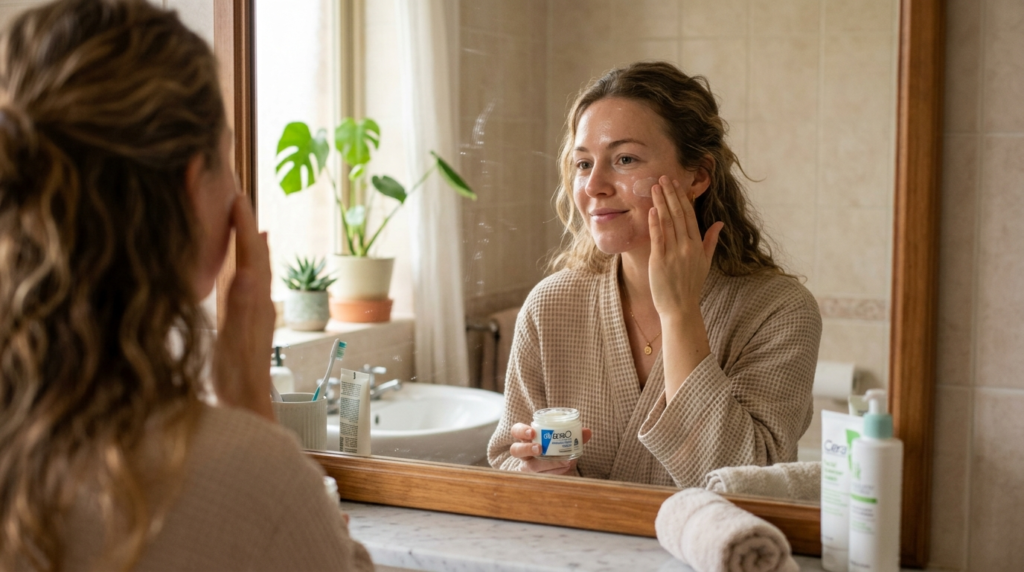
Without foundation, my skincare routine got simpler and my skin got more hydrated. Previously, I layered moisturizer under makeup that contained mattifying agents, then wondered why my skin felt tight by afternoon. The foundation was fighting my moisturizer all day. Removing it let the hydration actually work.
I shifted my focus and budget from coverage to care: a good moisturizer with ceramides to support the skin barrier, and a hydrating serum underneath. The skin barrier, the protective lipid layer that keeps moisture in and irritants out, functions better without a daily layer of product sitting on top of it. My skin stopped feeling tight, flaky patches disappeared, and makeup-free days no longer required rescue masks. Hydration turned out to be the coverage I actually needed.
Textural Improvements Over Time
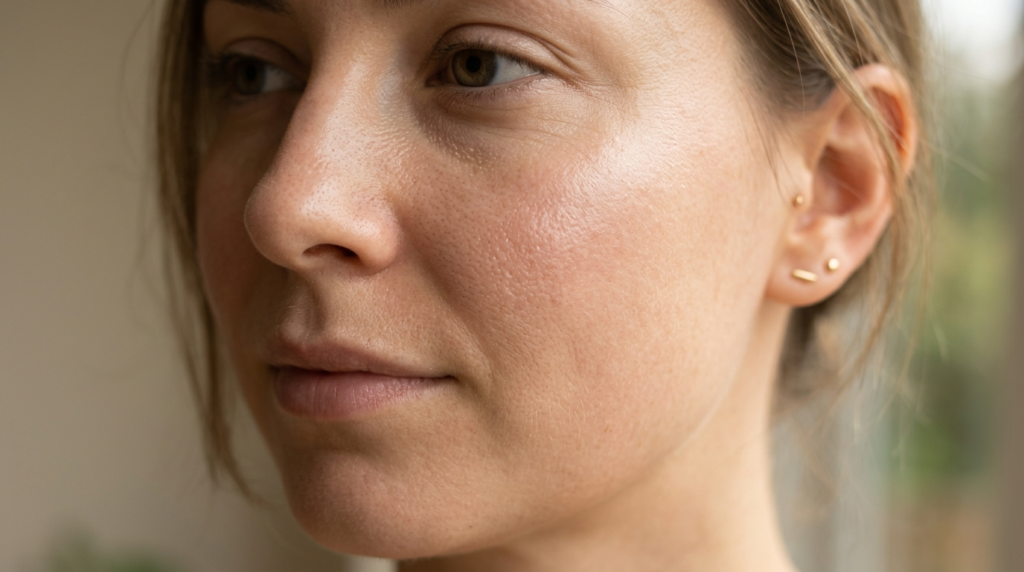
Tiny bumps, clogged pores, and uneven texture often look worse under foundation, not better, because makeup settles into every irregularity and emphasizes it. Without the daily layer, my skin texture improved steadily over several weeks. Fewer clogged pores meant fewer bumps, and the smoother surface reflected light more evenly, which is the real secret behind the glow.
Part of this was the gentler cleansing. Long-wear foundations require serious removal, and the double cleansing and strong removers I used were stripping my skin nightly. With nothing to dissolve, a single gentle cleanse sufficed, preserving the barrier that keeps texture smooth. If your skin texture never improves despite treatments, the heavy makeup and the harsh removal might be working against each other in a cycle. Breaking the cycle broke the problem.
Saving Precious Morning Minutes

Foundation was the longest step in my morning routine: primer, application, blending, setting, checking in different lights. Eliminating it gave me back fifteen to twenty minutes every single day. That is over ninety hours a year, more than two full work weeks, returned to my life. I used the time for slower mornings, actual breakfast, and leaving the house without rushing.
The time savings compound beyond the morning. No midday touch-ups, no worrying about transfer onto clothes or phones, no emergency blotting. Travel got easier: fewer products to pack, no foundation shade to match in different lighting, no melting in heat. The logistical freedom of a foundation-free life is hard to appreciate until you experience it. It is one of those changes that gives back far more than it takes.
Less Frequent Deep Cleansing Needed
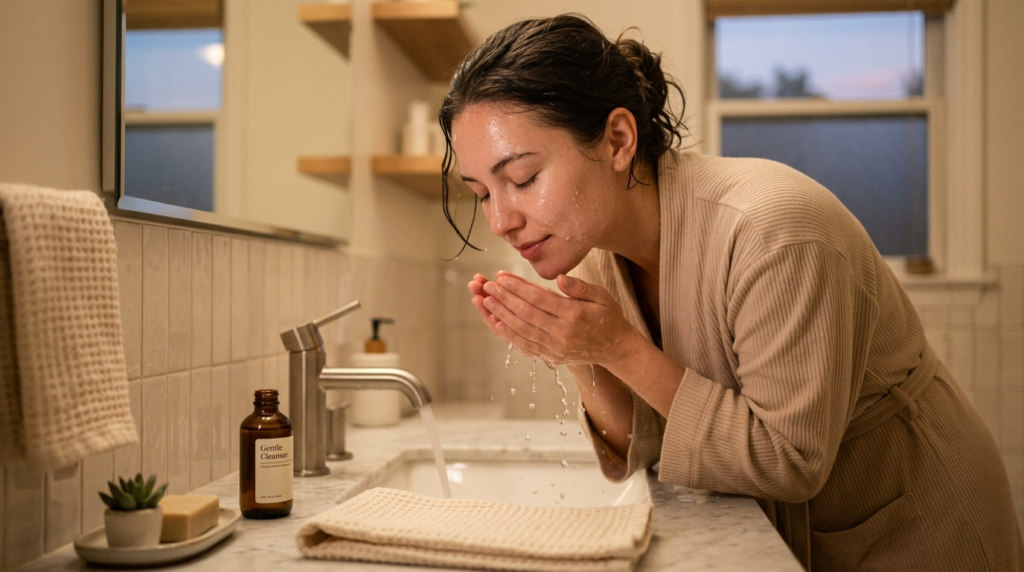
Long-wear and waterproof foundations are engineered to stay put through sweat, oil, and time, which means removing them requires equally aggressive cleansing: oil cleansers, micellar water, double cleansing, sometimes all three. This nightly stripping routine was quietly damaging my skin barrier, leaving it vulnerable and reactive. Without foundation to dissolve, my evening cleanse became a single gentle wash.
The gentler routine transformed my evenings. Less time at the sink, less product used, less irritation. My skin stopped feeling tight after washing, which had been my normal for so long I thought it was just how skin felt. It is not. Clean skin should feel comfortable, like nothing at all. If your face feels stripped after cleansing, the problem might not be your cleanser. It might be what you are trying to remove.
The Rise Of Tinted Sunscreen Alternatives
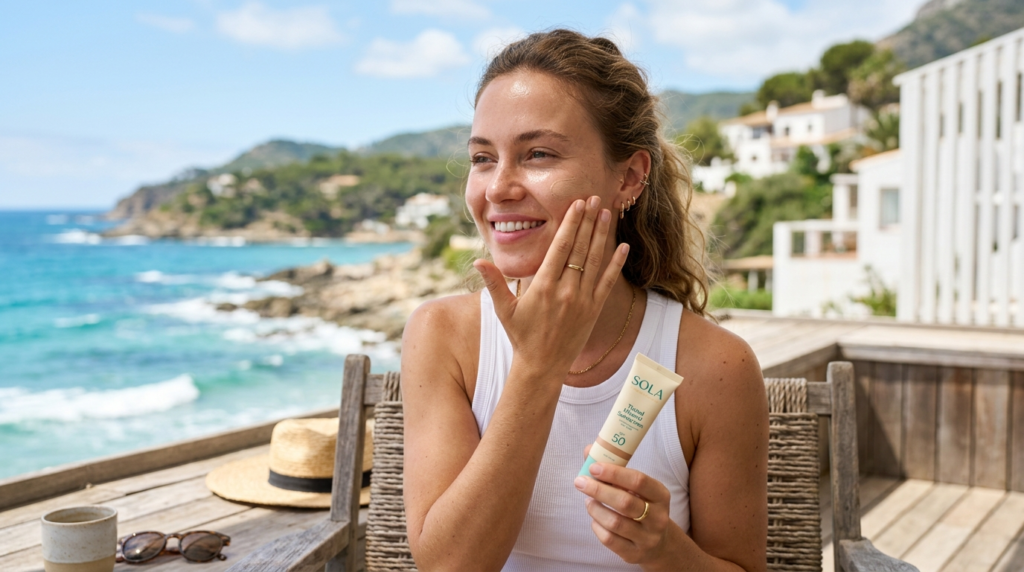
Quitting foundation does not mean going without any coverage or protection. Modern tinted sunscreens are the perfect middle ground: they provide sun protection, which is non-negotiable for skin health, plus a hint of tint that evens out tone without the weight of foundation. Mineral formulas with iron oxides even protect against visible light, which contributes to hyperpigmentation.
On days when I want a little more polish, tinted sunscreen plus strategic concealer on any spots gives me everything foundation did, with a fraction of the product. The skinimalism trend, which champions fewer, better products, has pushed brands to make genuinely excellent multitaskers. Find a tinted SPF you love and the foundation bottle becomes obsolete. Protection plus a little blur is all most skin needs.
Confidence Beyond The Coverage

The deepest change was not physical. It was the slow realization that my face, unfiltered, was fine. For years, foundation had been a prerequisite for feeling presentable, which meant I had outsourced my confidence to a product. Removing it forced me to confront the belief underneath: that my natural face was a problem to be solved. It was not.
This is not an argument against makeup. Makeup is fun, creative, and empowering when it is a choice. The problem is only when it becomes a requirement, when bare skin feels like a flaw rather than a default. Quitting foundation reset my baseline. Now when I wear makeup, it is because I want to, for fun or for an occasion, not because I cannot face the day without it. That shift, from need to choice, changed my relationship with my reflection.
Better Absorption Of Skincare Products
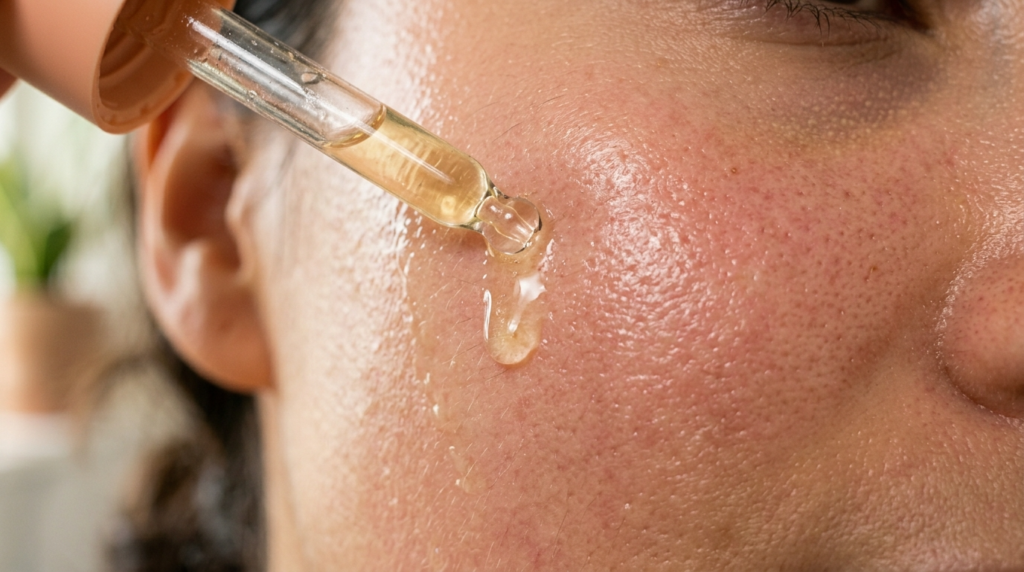
Here is a practical benefit nobody talks about: without a daily layer of foundation, your skincare actually works better. Active ingredients like vitamin C, niacinamide, and retinoids penetrate more effectively into clean, uncoated skin. Previously, I was applying expensive serums and then sealing them under silicone-heavy primers and foundations, which may have limited their absorption during the day.
My daytime skincare finally started pulling its weight. The vitamin C serum I had used for months with mediocre results suddenly seemed more effective, likely because it was no longer competing with layers of product. If you invest in good skincare, it makes sense to give it the best chance to work. Twelve hours of bare, treated skin does more than twelve hours of treated skin under a mask of coverage.
Lower Risk Of Breakouts
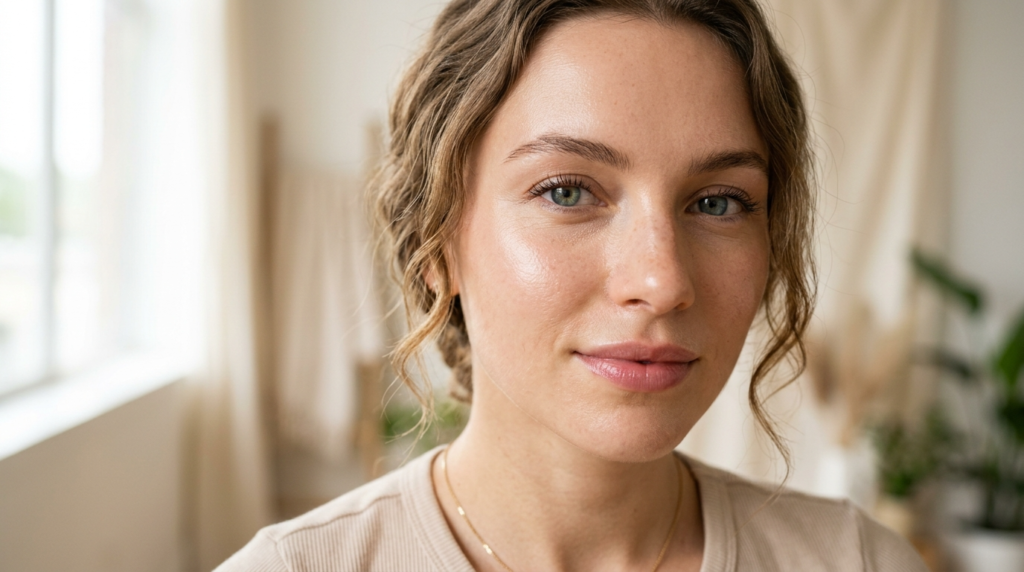
Dermatologists have long recognized acne cosmetica, breakouts caused or worsened by cosmetic products. Heavy, comedogenic foundations can clog pores, especially when worn for long hours in heat or during exercise. Brushes and sponges harbor bacteria if not cleaned religiously, and few people clean them as often as they should. Removing the daily foundation habit eliminated a major breakout trigger from my life.
My hormonal breakouts did not disappear entirely, because foundation was never the root cause, but the constant low-grade congestion along my jawline and forehead cleared significantly. If you are prone to breakouts and wear full coverage daily, try a foundation-free week as an experiment. You might discover, as I did, that the product you bought to hide the problem was helping to cause it. Sometimes the best concealer is no concealer at all.
Your Skin Was Never The Problem
A year after quitting foundation, my skin is healthier than it was during a decade of full coverage: calmer, clearer, more hydrated, and more even than it ever looked under makeup. But the real transformation was not in my pores. It was in the quiet confidence of knowing my face is fine as it is. The beauty industry sells solutions to problems it helps create, and the heaviest product in my old routine was the belief that I needed it.
If you are curious, try it as an experiment, not a commitment. One week, moisturizer and sunscreen only. Notice what happens to your skin, your mornings, and your mind. You can always go back; the foundation will be waiting. But you might find, as I did, that the best thing you ever did for your skin was to stop covering it up and start taking care of it instead.