 Sarah Grey
Evenings are for washing the day away — literally. After hours in city air, screen glare, and the general hustle, my skin feels like it has run a marathon. It took me years of trial and error to land on a night routine that actually works, and the biggest lesson was this: consistency matters more than any single miracle product. I stopped chasing viral trends and started paying attention to what my skin actually responds to. A calm, consistent bedtime routine did not just transform my complexion — it changed how I wind down entirely. Here is the exact night routine that gave me clear, glowing skin, step by step.
Starting With A Gentle Oil Cleanser

Everything starts with a truly clean canvas. Sunscreen, makeup, and the day’s grime do not come off properly with a quick splash of water — and sleeping in them is one of the fastest ways to clogged pores. An oil-based cleanser dissolves all of it gently, without stripping your skin raw before the real cleanse even begins. Massage it into dry skin for a full minute; that extra time makes a real difference in how clean your skin feels.
If you wear heavy makeup or waterproof sunscreen, consider this your non-negotiable first step. Oil cleansers work on the simple principle that like dissolves like — the oil in the cleanser binds to the oils, waxes, and silicones on your face and rinses them away. Follow with a gentle water-based cleanser for the classic double cleanse, and your skin will be perfectly prepped for everything that follows.
Choosing Lukewarm Over Steaming Hot

A steaming hot shower feels amazing after a long day, but your face pays the price. Very hot water strips the natural oils that keep your skin barrier healthy, leaving it tight, red, and more reactive. Lukewarm water cleanses just as effectively without the damage. It took me an embarrassingly long time to accept this, but switching to lukewarm was one of the single biggest improvements I made.
If you cannot resist a hot shower, wash your face at the sink separately with comfortably warm water instead. Your skin should never look flushed or feel tight after cleansing — those are signs the water was too hot or the cleanser too harsh. Lukewarm keeps your barrier intact, which means less redness, less sensitivity, and products that actually absorb instead of stinging.
Patting Dry With A Clean Towel

How you dry your face matters more than you think. Roughly rubbing a regular bath towel across your skin creates micro-irritation, especially around the delicate eye area. Instead, press a clean, soft towel gently against your face to absorb the water. I keep a stack of small, clean face towels and use a fresh one every couple of days — it is a small habit that cut down on my breakouts noticeably.
Even better: leave your skin slightly damp rather than bone-dry. The next steps in your routine — toner, essence, serum — absorb significantly better on damp skin. Think of your skin like a sponge: a slightly damp sponge soaks up product, while a dry one lets it sit on top. Pat gently, do not rub, and move on while your face is still dewy.
Applying Hydration While Still Damp

Timing is everything with hydration. Applying a hydrating toner or essence to slightly damp skin helps lock in that surface moisture and gives the humectant ingredients — like hyaluronic acid and glycerin — water to actually hold onto. Without dampness underneath, these ingredients can paradoxically pull moisture out of your skin instead of adding it. This one timing tweak made my products work twice as well.
I like to layer two thin applications of a hydrating toner rather than one thick one — it absorbs better and leaves that plump, dewy feeling. Press it in with your palms instead of swiping with a cotton pad, which wastes product and creates friction. Your skin should feel bouncy and comfortable, never sticky or tight, before you move to the next step.
The Role Of A Soothing Serum

Serums are the workhorses of a night routine — concentrated treatments that target your specific concerns. Whether you want brightness, calm, or deep hydration, there is a serum for it. At night I reach for soothing, reparative formulas with ingredients like niacinamide, centella, or panthenol, which support the skin while you sleep. A few drops pressed into the skin go a long way; more is not better with concentrated actives.
The key is choosing one hero serum rather than layering five competing treatments. When I simplified down to a single well-chosen serum, my skin calmed down within two weeks. If you are dealing with redness or sensitivity, a soothing serum at night is the fastest way to wake up with a more even, comfortable complexion. Let it absorb for a minute before sealing everything in.
Giving Active Ingredients Their Space

It is tempting to use every powerful ingredient every night, but that is a fast track to irritation. Strong actives — retinoids, exfoliating acids, vitamin C — work best when given their own nights. I rotate: a retinoid two nights a week, a gentle exfoliating acid one night, and soothing, barrier-focused care on the rest. This rhythm gave me all the benefits with none of the redness and peeling I used to get from overdoing it.
On active nights, keep the rest of the routine minimal — cleanser, active, moisturizer, done. On recovery nights, skip the actives entirely and focus on hydration and barrier repair. Your skin does its heaviest repair work while you sleep, and it does it best when it is not also fighting irritation. Patience with actives pays off enormously over months.
Sealing Everything In With Moisturizer

A good night moisturizer is like a warm blanket for your face — it seals in all the hydrating layers underneath and prevents them from evaporating while you sleep. At night I go richer than I would in the morning: a cream with ceramides, squalane, or shea butter that keeps my barrier happy for eight hours. If your skin feels tight by morning, your night cream is not doing enough.
Do not forget your neck and the backs of your hands — they age just as visibly as your face and deserve the same care. I take whatever is left on my palms and press it into my neck and chest. On very dry nights, a thin layer of a sleeping mask or facial oil over moisturizer adds extra insurance. You should wake up with skin that feels supple, not parched.
Using A Silk Pillowcase For Comfort

Switching to a silk or satin pillowcase was the kind of upgrade I wish I had made years earlier. The smooth fabric creates far less friction than cotton, which means less tugging on your skin and less frizz and breakage for your hair. It also absorbs less of your expensive night products, so more of them stays on your face where they belong.
Silk pillowcases are also naturally cooler and less irritating for sensitive or acne-prone skin. Wash yours weekly — a dirty pillowcase can undo a lot of good skincare work. It is a small luxury that pays for itself in better mornings: smoother hair, calmer skin, and fewer sleep creases pressed into your cheeks.
Resisting The Urge To Pick
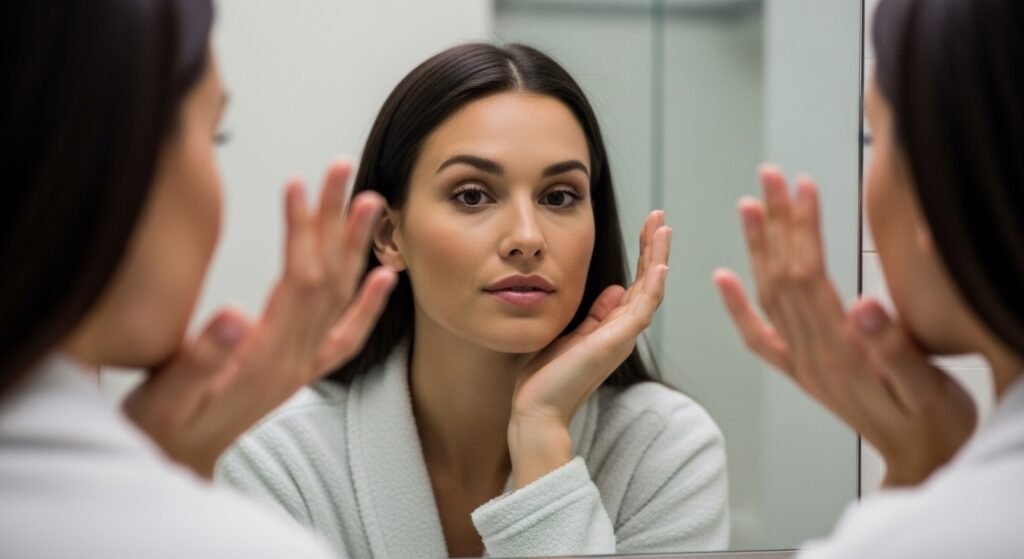
Nothing sabotages clear skin faster than picking. I know how hard it is to leave a spot alone, but touching it almost always makes things worse — more inflammation, longer healing, and a much higher chance of scarring. When I finally broke the habit, my breakouts started clearing in days instead of weeks. A hydrocolloid patch is the perfect substitute: it keeps your fingers off, protects the area, and speeds up healing overnight.
The same goes for resting your chin in your hands or touching your face while scrolling in bed — it transfers bacteria and irritates the skin. Keep your hands busy or keep a patch on the tempting spot. Your future self, looking at smooth, unscarred skin in the mirror, will thank you for the restraint.
The Importance Of Enough Sleep

They call it beauty sleep for a reason — the hours you are asleep are when your body does its deepest repair work, skin included. Collagen production peaks overnight, inflammation calms down, and your skin barrier rebuilds itself. No serum can compensate for chronic sleep deprivation; I have tested this theory extensively, and the dark circles always win. Seven to nine hours is the real foundation of glowing skin.
A consistent wind-down helps as much as the hours themselves. I dim the lights, put my phone away, and let my skincare routine be the signal to my brain that the day is over. Sleeping on your back, if you can manage it, also prevents pillow-pressure wrinkles. Treat sleep as the final — and most important — step of your night routine.
Keeping The Routine Simple

Here is the truth the beauty industry does not want you to hear: a short routine you actually follow beats a twelve-step routine you abandon after a week. My best skin came when I stripped everything back to the essentials — cleanse, hydrate, treat, moisturize — and did them every single night without fail. Fewer products also means fewer chances of irritation and a much clearer picture of what is actually working.
Choose a handful of quality products you genuinely enjoy using, because the best routine is the one you will stick with. If a step feels like a chore, cut it. Your skin does not need complexity; it needs consistency. Every product in my routine earned its place by proving itself over weeks, not by promising miracles on the label.
Listening To What Your Skin Needs

Your skin is not the same every day, so your routine should not be either. Some evenings my skin is dry and thirsty; other nights it is balanced and just needs the basics. Learning to read those signals — tightness means more moisture, oiliness means lighten up, redness means back off the actives — was the final piece of the puzzle. Flexibility beats rigidity every time.
Pay attention to how your face feels at the end of each day and adjust accordingly. Seasonal changes, stress, travel, and hormones all shift what your skin needs. The people with the best skin are not the ones with the most products — they are the ones who listen. Start tonight: cleanse gently, hydrate well, keep it simple, and let your skin tell you the rest.