 Sarah Grey
Fine hair is beautiful, but it plays by its own set of rules. It thrives on lightness, movement, and strategic shape, and the wrong haircut can work against every one of those qualities, leaving hair looking flat, thin, and tired instead of soft and full. Worse, a cut that drags fine hair downward can pull the whole face down with it, subtly adding years to your look without you ever realizing the haircut is the culprit.
The encouraging news is that most of these problems are entirely fixable, often with small, smart adjustments rather than a dramatic chop. Here are nine popular haircuts that tend to weigh down fine hair and age the face, an honest look at why each one causes trouble, and exactly what to ask your stylist for instead. Knowledge is the first step toward better hair days, and your hairdresser will thank you for arriving informed.
Super Long One-Length Cuts
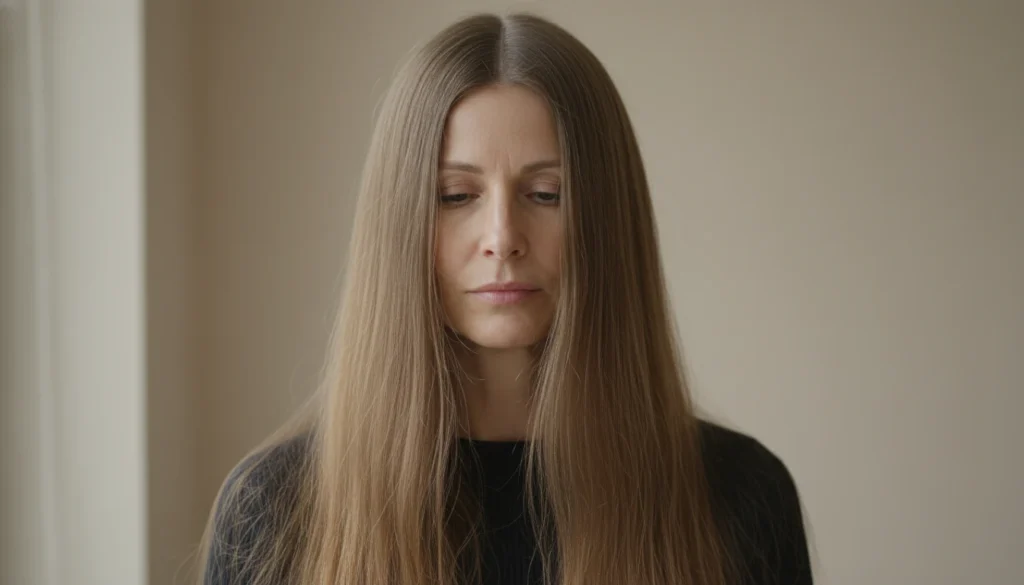
Very long hair with no layers whatsoever is the heaviest possible choice for fine strands. Gravity becomes the enemy: the weight pulls everything downward, flattening the roots against the scalp, stretching the face visually longer, and leaving the ends looking thin, wispy, and straggly. Instead of the luxurious, flowing length you imagined, you get lankness, and the viewer’s eye travels down rather than lifting up toward your features.
The fix does not require sacrificing all of your hard-earned length. Ask for long, soft face-framing layers beginning at the chin or collarbone, which remove bulk and weight from the bottom while creating flattering movement around the face. Even invisible internal layering, where shorter pieces hide beneath the surface, can take significant weight off the ends. Length works beautifully for fine hair, but only when the cut is engineered to move.
Blunt Bobs at Chin Level
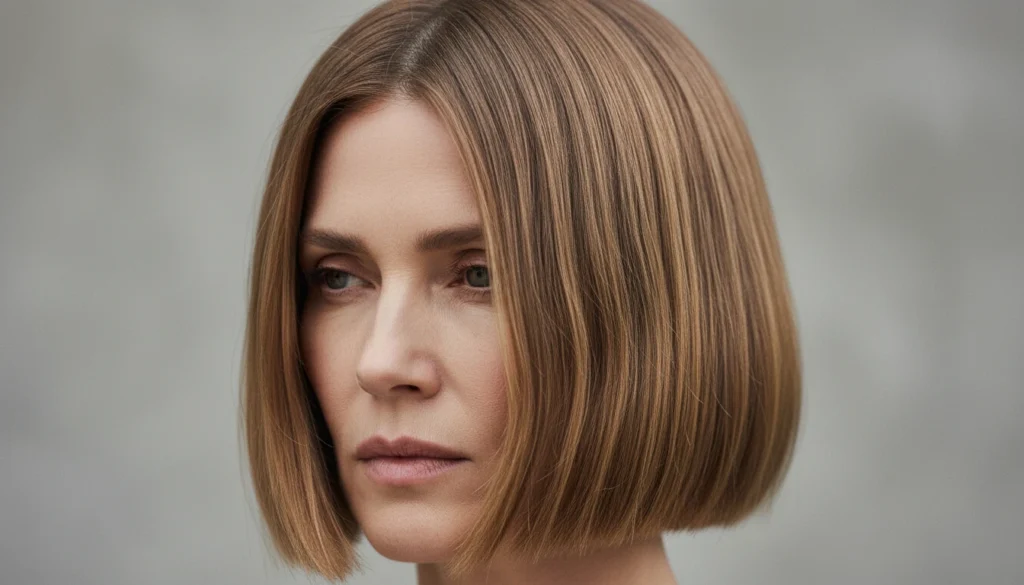
A razor-straight bob that ends exactly at the jawline can be surprisingly unforgiving on fine hair. With no texture, graduation, or softness, the cut forms a solid geometric block that emphasizes the jaw, hollows the cheeks by harsh contrast, and reads as severe rather than chic. Fine hair simply lacks the density to fill out such a precise shape, so the style collapses inward and sits flat.
Soften the geometry instead of abandoning the bob. Ask your stylist to texturize the ends with point-cutting, add subtle undercutting beneath for natural swing and movement, or shift the length just slightly above or below the chin to change where the eye lands. A bob with softened edges, piecey ends, and a little root lift keeps all the sophistication of the shape while flattering the face instead of framing it like a box.
Heavy All-Over Layers
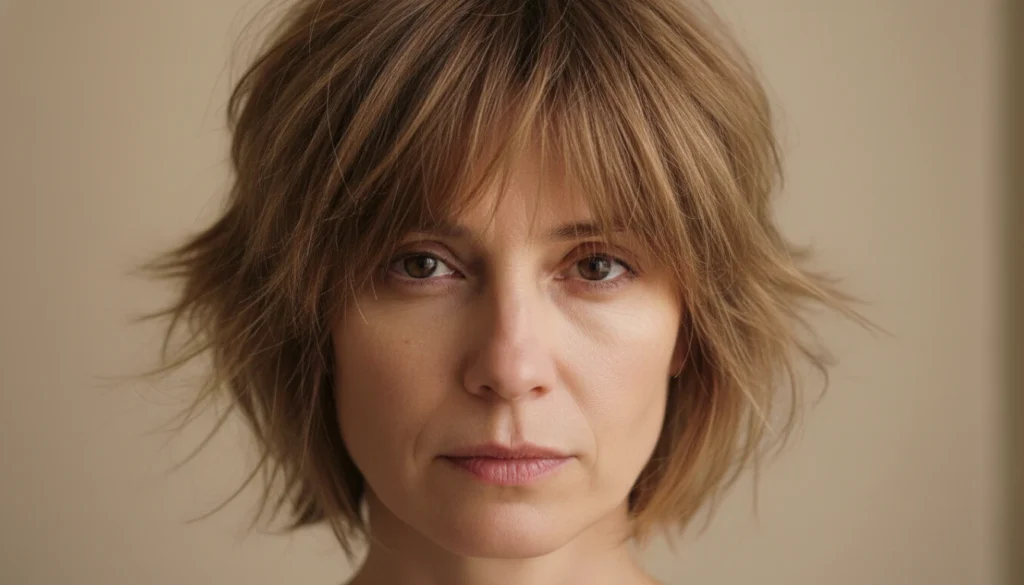
It sounds contradictory, but too many layers can actually be worse than none at all for fine hair. Aggressive, choppy layering removes the very density that fine hair desperately needs, leaving the crown full but the ends wispy, thin, and see-through. The result looks stringy rather than voluminous, draws attention to any thinning at the temples, and can make hair appear even finer than it is.
The sweet spot for fine hair is long, minimal, strategic layering: just a few face-framing pieces and subtle length variation through the ends, with layering that begins below the chin rather than at the crown. This approach preserves the perimeter’s precious fullness while adding exactly the movement fine hair craves. Tell your stylist you want body and swing, not layers, and an experienced cutter will know precisely what you mean.
Flat Blowouts Without Volume
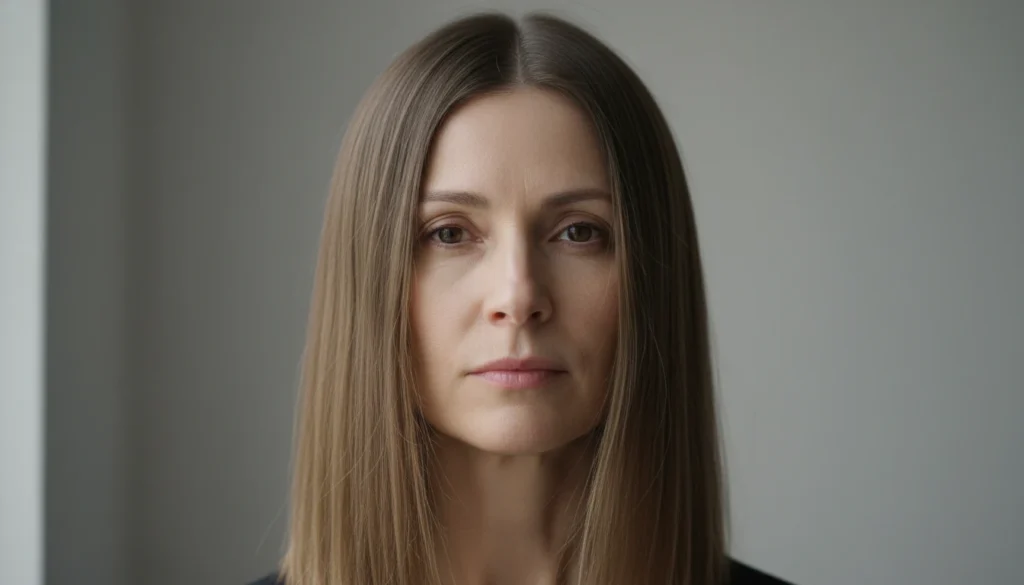
Ironing fine hair stick-straight and flat against the head is the fastest possible way to make it look thinner than it is. Without any root lift, the hair clings to the scalp, revealing the part line and scalp beneath, while the lengths hang like heavy curtains that visually narrow the face. Sleek can absolutely be chic, but flat reads as tired and aging.
Build volume into every single blowout as a non-negotiable step. Apply a lightweight mousse or root-lifting spray to damp roots before drying, blow-dry upside down or with a round brush lifting firmly at the crown, and finish with a blast of cool air to set the lift in place. The goal is polish with air in it: smooth, glossy lengths, buoyant roots, and a face framed by soft movement rather than flat drapes.
Thick, Blunt Bangs
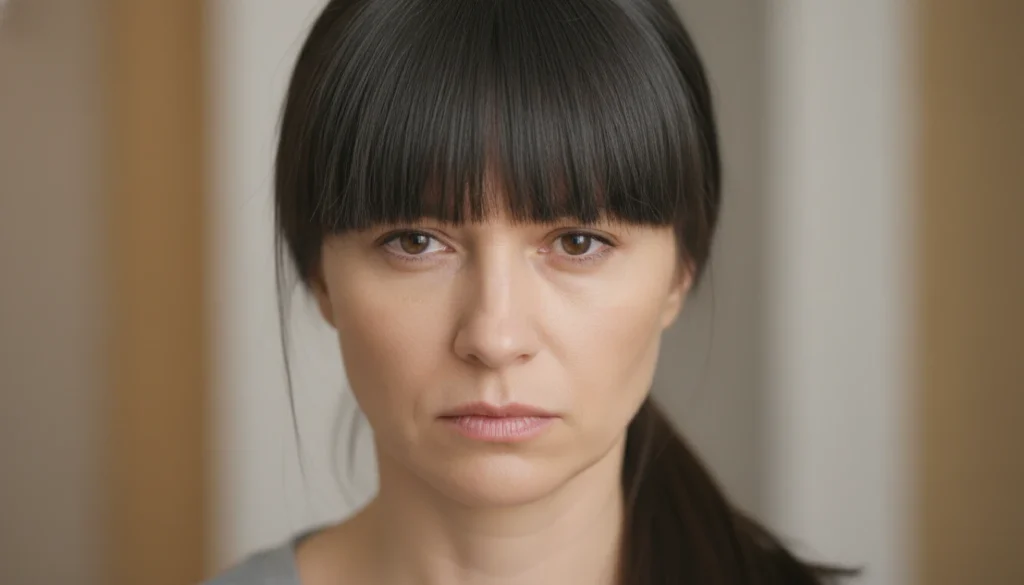
Heavy, straight-across bangs demand a density that fine hair simply does not possess. They lie flat and lifeless against the forehead, emphasize any lines there by creating a harsh horizontal border, and steal precious volume from the rest of the hair, since so much hair must be pulled forward to create the fringe. The result often reads as severe and heavy rather than youthful and fresh.
Swap the heavy curtain for softness and air. Wispy side-swept bangs, curtain bangs that part gently in the middle, or a long fringe that melts into face-framing layers all open up the eyes and the face while using far less hair. Lightness around the forehead is universally flattering, and it keeps the focus where it belongs: on your features, not your fringe.
Shoulder-Length One-Length Styles
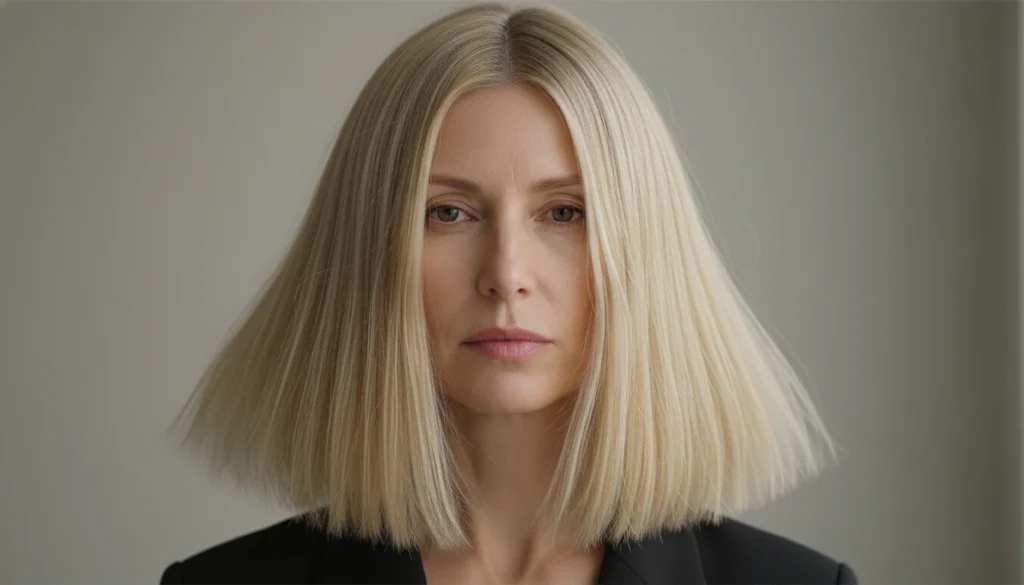
Hair that ends in one blunt line exactly at the shoulders creates a shelf of weight that fine strands cannot support. The ends flip outward uncontrollably, the dreaded triangle shape appears, wider and heavier at the bottom than at the top, and the whole style drags the face visually downward. It is one of the most common fine-hair mistakes, and fortunately one of the most fixable.
Break up that bottom-heavy line with deliberate shape. An angled lob that runs shorter in the back and longer toward the front, or soft underlayers that gently taper the ends, eliminates the shelf effect while keeping the versatile length you love. A slight inward bevel at the ends, achieved in minutes with a round brush, finishes the style with bounce and polish.
Overly Chopped Shags
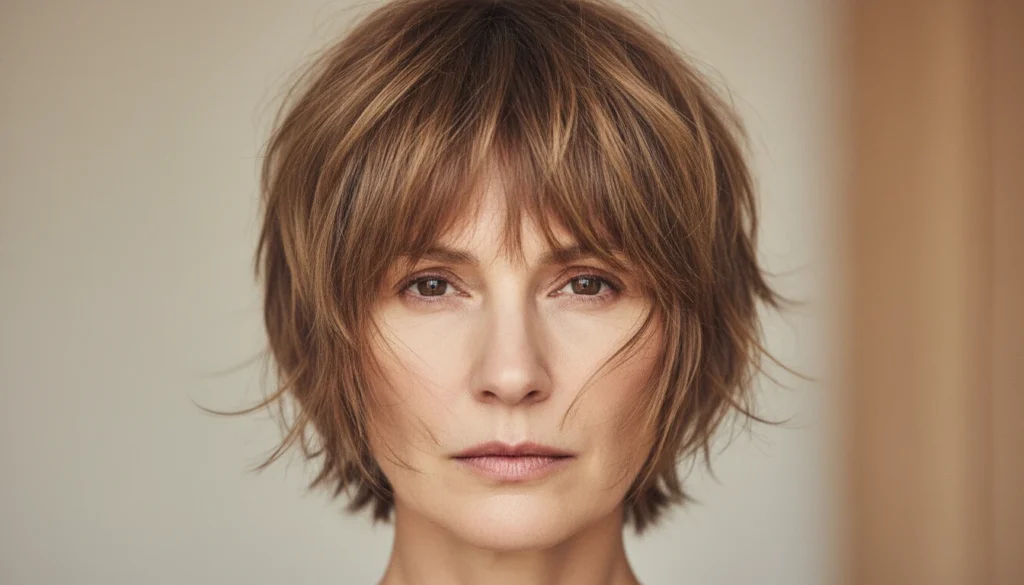
The shag is a genuinely wonderful haircut, but the aggressively chopped version with short, disconnected, razor-shredded pieces can be disastrous on fine hair. Without enough density to support all that texture, the style falls apart into sparse fragments that look piecey around the cheeks, sharpening the features instead of softening them and calling attention to thinness.
Ask for a soft, modern shag instead: longer layers that blend seamlessly, gentle texture concentrated through the ends rather than the crown, and enough weight left through the perimeter to keep the shape cohesive and full. The ideal shag on fine hair should look touchable and effortless, never chewed or ragged. With fine texture, restraint with the razor is everything.
Long Center-Parted Looks
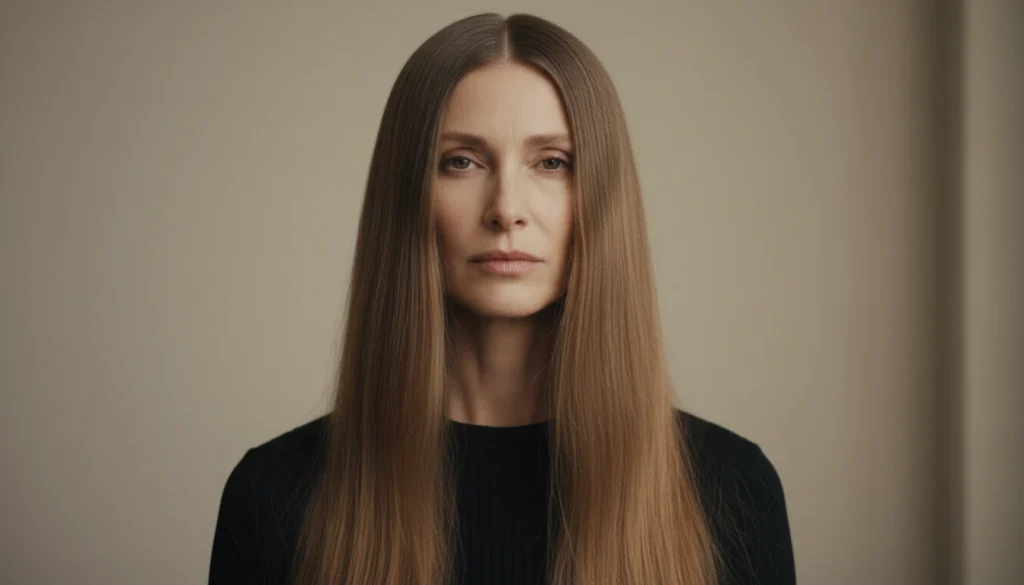
A severe, dead-center part on long fine hair creates perfect symmetry, and symmetry is the enemy of volume. Both sides lie flat and obedient against the head, the crown goes completely limp, and the face appears longer and narrower, emphasizing any sagging or hollowness in the cheeks. It is a style that demands real thickness to succeed.
Shift the part just an inch or two off-center, add deliberate root lift at the crown, and the entire look transforms immediately. An off-center part creates instant asymmetry, natural volume, and flattering diagonal lines, while soft face-framing layers balance the length. It is a tiny change with a dramatic payoff, and it costs nothing.
Medium-Length Blunt Cuts
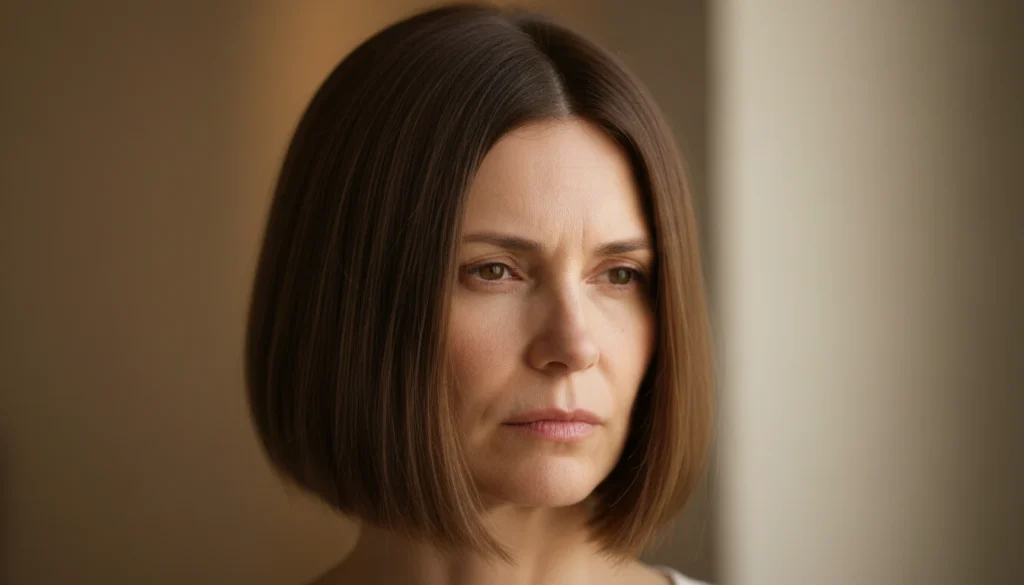
A blunt cut that ends at mid-neck with zero softening or texture creates a rigid, unforgiving frame around the jaw and neck. On fine hair, that severity stiffens the entire neckline and draws a hard horizontal line exactly where you least want one, making the face look boxed in, the jaw heavier, and the overall appearance older.
Soften the perimeter with point-cutting that breaks up the solid edge, or add subtle interior layering that lets the ends swing and move naturally. Even the slightest texture at the bottom edge dissolves the harsh line and restores bounce and life. The cut keeps its chic, graphic structure, but your face gets light, air, and movement instead of walls.
Small Changes, Big Difference
Notice the pattern across all nine of these cuts: the problems always come down to weight in the wrong places, severity without softness, and flatness where there should be lift. Fine hair does not need to be hidden or fought; it needs to be understood. The right adjustments, softened edges, lifted roots, strategic layers, work with the hair’s nature instead of against it.
Start with the change that bothers you most in the mirror. Often a single appointment, focused on texture and lift rather than length, is enough to transform how your hair behaves every day. Fine hair, cut with intelligence, can look every bit as full and gorgeous as thicker textures.
Talk to Your Stylist
None of these nine cuts is forbidden forever; almost all of them simply need thoughtful adjustment for fine hair. Bring inspiration photos of what you love, be honest about your hair’s texture and how much styling you truly do each morning, and ask specifically about weight distribution, movement, and root lift. A skilled stylist will happily adapt any photo to your hair’s reality.
Fine hair rewards lightness in every sense of the word: lighter layering, lifted roots, airy texture, and a cut that moves when you move. Get the shape right and your hair will look thicker, your face will look lifted, and you will look like the freshest, most vibrant version of yourself. That is the quiet power of the right haircut.