 Sarah Grey
Something light is in the air in fashion right now, literally. Feathers, once reserved for showgirls, couture finales, and costume parties, have floated into the mainstream. They are trimming the cuffs of everyday cardigans, exploding across red-carpet gowns, and sprouting from handbags and heels. After years of heavy minimalism and stiff, structured dressing, the softness and movement of plumes feels like a collective exhale. This is the story of how feathers took over, why the timing is right, and how to wear them without looking like you are headed to a costume party.
What makes feathers so compelling is that they do something almost no other embellishment can: they move. Sequins glitter, embroidery impresses, but feathers respond to air itself. Every step, every turn, every breeze becomes part of the outfit. In a fashion moment hungry for joy, texture, and unapologetic glamour, feathers deliver all three at once.
A return to classic Hollywood glamour
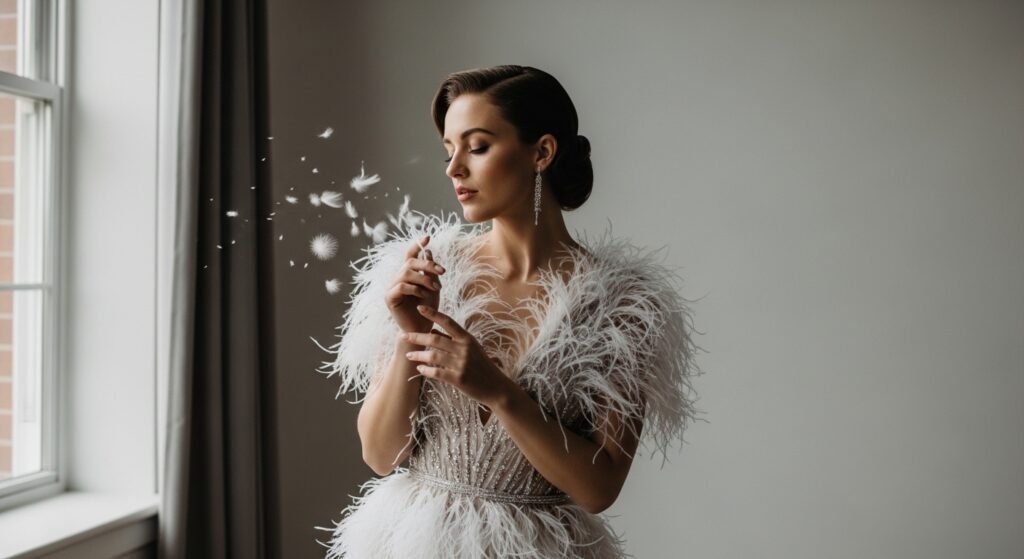
Part of feathers’ power is pure nostalgia. They summon the golden age of Hollywood, when stars like Marlene Dietrich and Mae West wrapped themselves in marabou and ostrich plumes, and a feathered boa was shorthand for stardom. Light plays through feathers in a way it plays through nothing else, creating a halo effect around the wearer. When someone enters a room in feathers, the entrance itself becomes a performance, which is exactly why the red carpet has embraced them so completely.
This glamour is also a reaction. After seasons dominated by quiet luxury, stealth wealth, and head-to-toe beige, fashion’s pendulum was due to swing toward exuberance. Feathers are the opposite of quiet: they announce, they flutter, they refuse to be ignored. For wearers tired of blending in, that is precisely the appeal.
A century of feathers: from flappers to now
Feathers have decorated fashionable dress for centuries, but their modern story starts in the 1920s, when flappers trimmed dresses, capes, and headbands with marabou and ostrich plumes. The look was rebellion made material: light, daring, and defiantly decorative. Hollywood’s golden age cemented the association with glamour, and couturiers have returned to feathers in every subsequent decade, from Yves Saint Laurent’s extravagant evening wear to the supermodel-era showstoppers of the 1980s and 90s.
The history has a serious chapter too. In the late 19th and early 20th centuries, demand for egret and other wild bird plumes for hats devastated bird populations, a crisis that helped spark the conservation movement and led to protective laws like the Migratory Bird Treaty Act of 1918 in the United States. That legacy is why today’s conversation about feathers always includes ethics, and why the modern industry relies on farmed feathers, byproducts, and increasingly convincing faux alternatives rather than wild sources.
The rise of faux and ethical options
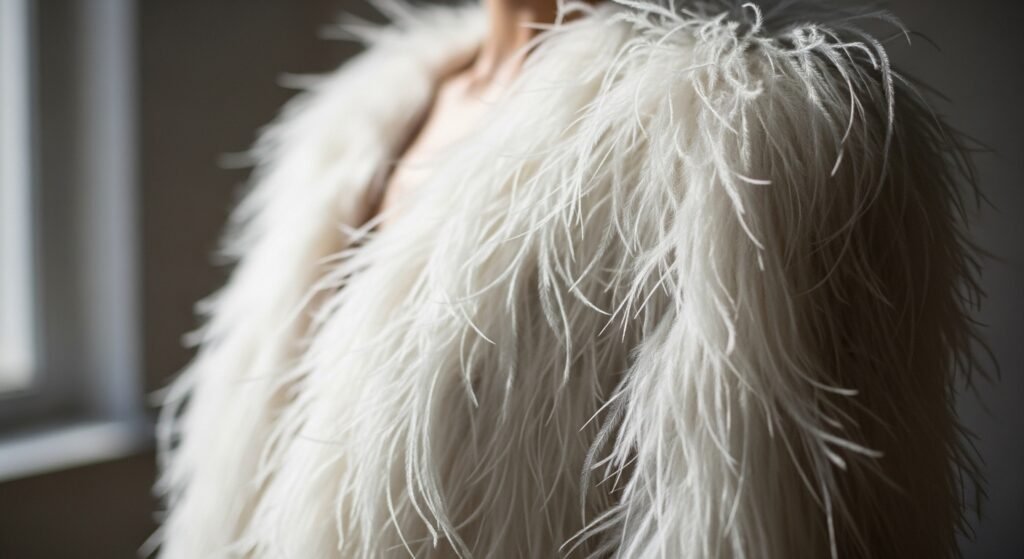
One reason feathers feel newly wearable is the quality of faux options. Advances in textile manufacturing have produced artificial plumes so soft and realistic that even discerning eyes struggle to tell them from the real thing. These alternatives sidestep the ethical questions entirely and often cost far less, which has helped the trend jump from couture to the high street.
For those who prefer natural materials, the industry’s standard sources are ostrich feathers, a byproduct of farmed birds, and marabou, traditionally from turkeys. Responsible brands are increasingly transparent about sourcing, and many designers now offer both real and faux versions of feathered pieces. The choice, for the first time in fashion history, is genuinely the wearer’s to make.
Adding movement to every step
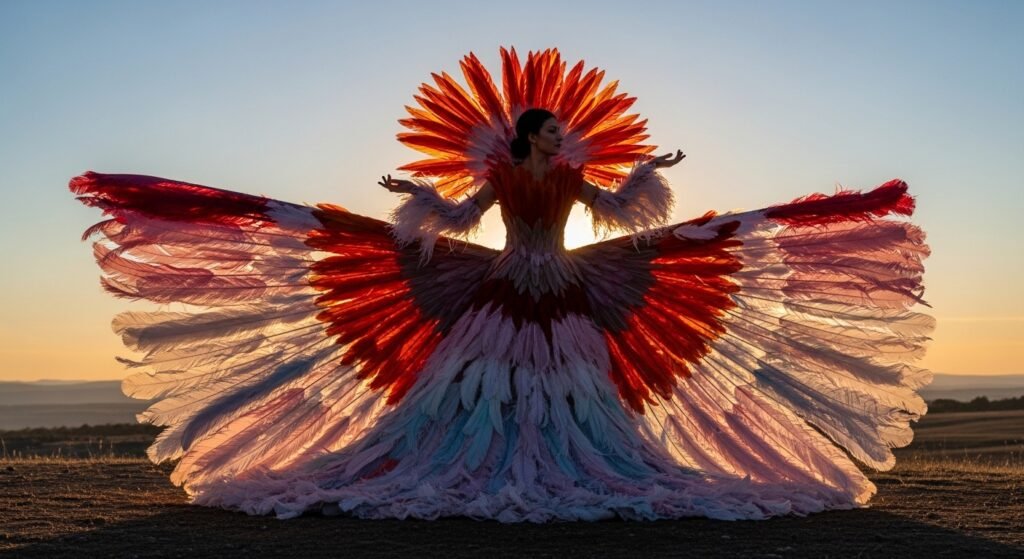
The most seductive thing about feathers is kinetic. Unlike stiff fabrics that hold a shape, feathers respond to the body and the air, turning walking into something choreographed. A feathered hem sways, a trimmed cuff flutters when you gesture, a full plume skirt seems to float a half-second behind you. Designers speak of this as giving garments a fourth dimension, and photographers love feathers because they guarantee a dynamic image even in stillness.
This movement is also why feathers photograph and film so well, which matters enormously in a social-media-driven trend cycle. A feathered look does not just sit in a photo; it suggests motion, air, and life. In video, the effect is multiplied. The trend was practically engineered for the era of the twirl video.
Redefining formal wear for the season
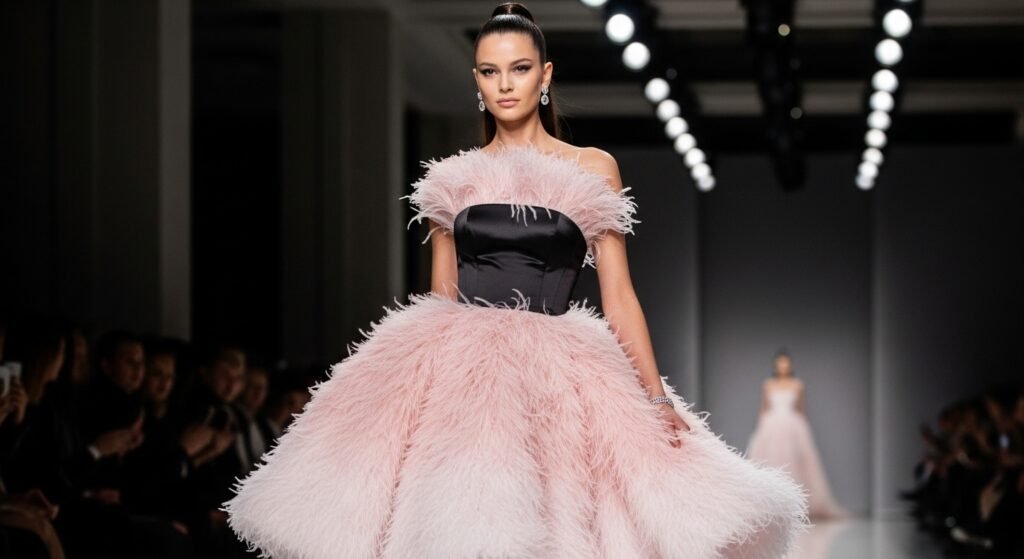
Evening wear is where feathers make their boldest statement. Where galas once meant sequins, beading, or lace, designers are now sending out voluminous feathered skirts, plume-covered bodices, and full feather gowns that read as both contemporary and romantic. The texture is softer than sequins, more surprising than lace, and it photographs like a dream under event lighting.
For wedding guests and formal events, feathers offer a way to stand out without upstaging. A feather-trimmed cocktail dress or a plume-detailed evening top delivers drama in a package that still reads as elegant. The key is letting the feathers be the single star: keep jewelry minimal and the silhouette clean.
Bright colors meeting soft textures
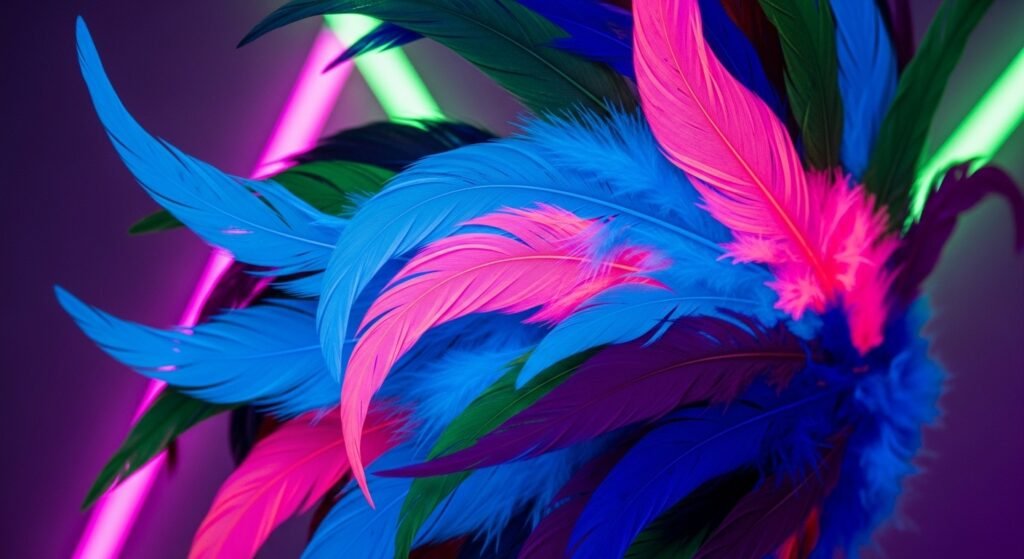
While neutral plumes in black, white, and blush remain timeless, the current moment belongs to color. Feathers take dye beautifully, and designers are using them in electric blue, hot pink, emerald, and deep jewel tones. The contrast between the softness of the texture and the boldness of the color is electric: it keeps vivid hues from feeling harsh and keeps soft textures from feeling timid.
Colored feathers are also the easiest way to personalize the trend. A black dress with a hot-pink feather trim is a different statement from the same dress with ivory plumes. Think of feather color the way you would think of lipstick color: it sets the entire mood.
The art of texture mixing
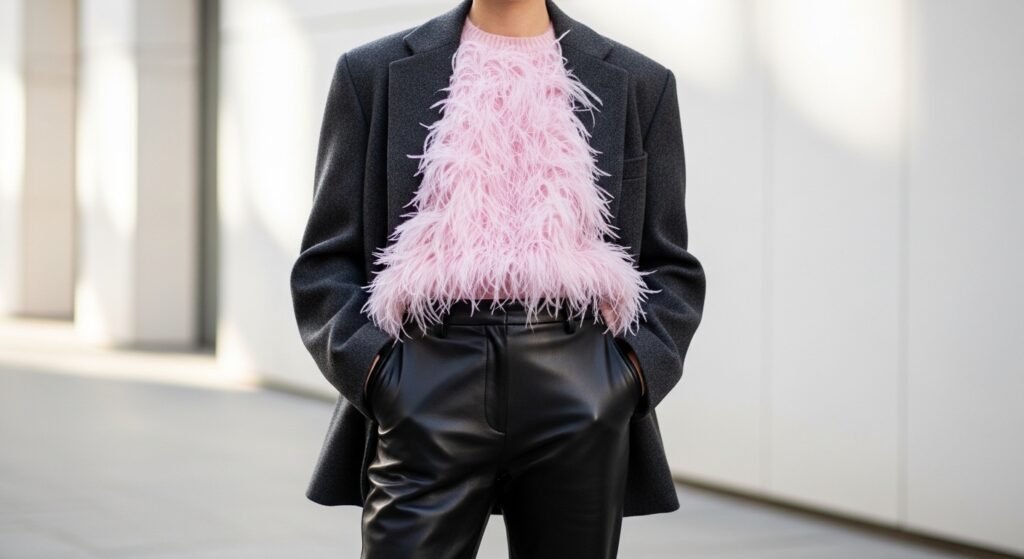
Stylists’ favorite trick with feathers is contrast. Pairing soft plumes with hard materials, leather jackets, structured wool, denim, tailored suiting, creates a tension that makes both textures more interesting. The feathers soften the leather; the leather grounds the feathers. Without contrast, feathers can drift into costume territory; with it, they look deliberate and modern.
Try a feather-trimmed camisole under a sharp blazer, a plume-detailed skirt with a chunky knit, or feathered heels with wide-leg jeans. The formula is simple: one soft thing, one strong thing, and the outfit balances itself.
Subtle accents for everyday wear
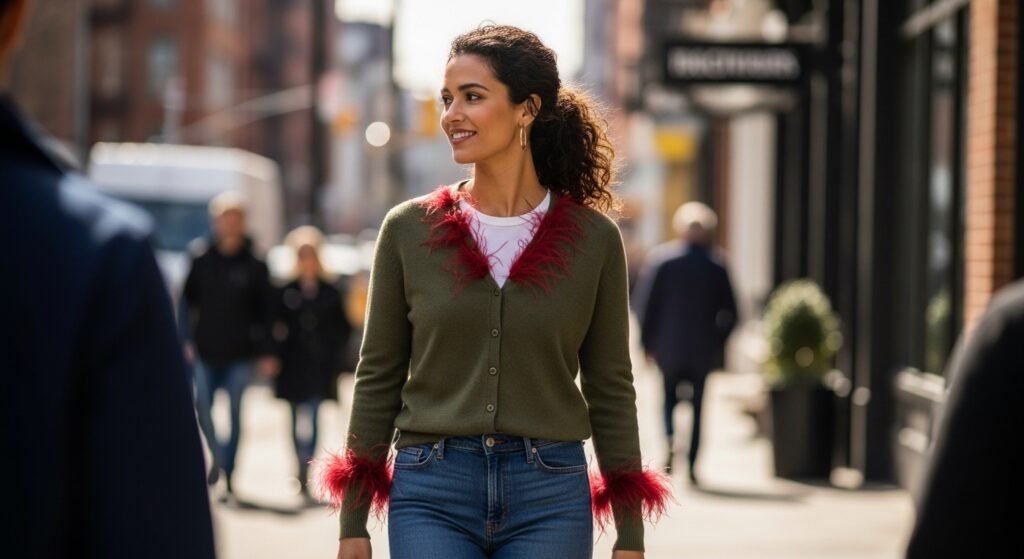
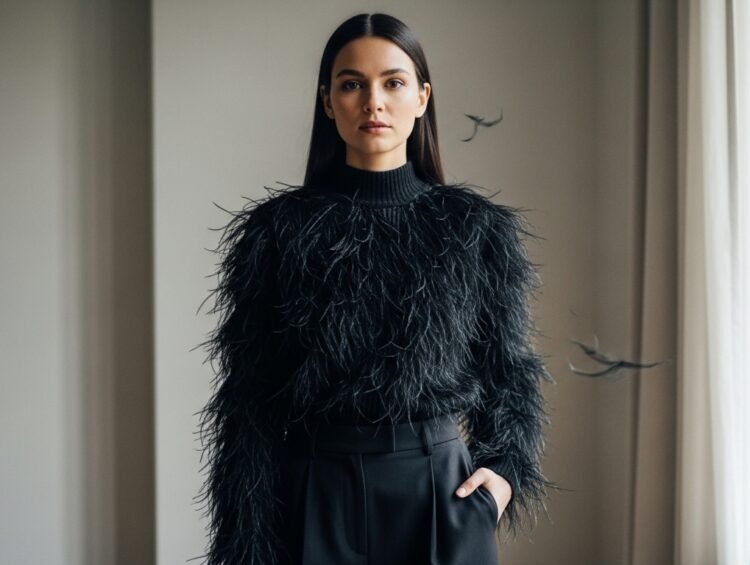
You do not need a gala invitation to wear feathers. The high street has embraced feather trims on cardigans, pajama-style shirts, denim jackets, and knit tops, usually as a detachable or modest cuff, collar, or hem detail. A whisper of marabou at the wrist turns an ordinary Tuesday sweater into something with personality, and because the dose is small, it works for offices, dinners, and weekends alike.
Detachable trims are the smartest buy in the category. A feather cuff or collar that buttons on and off gives you the trend on demand and comes off for washing, which solves the biggest practical problem of feathered clothing in one stroke.
Accessories are getting much fluffier
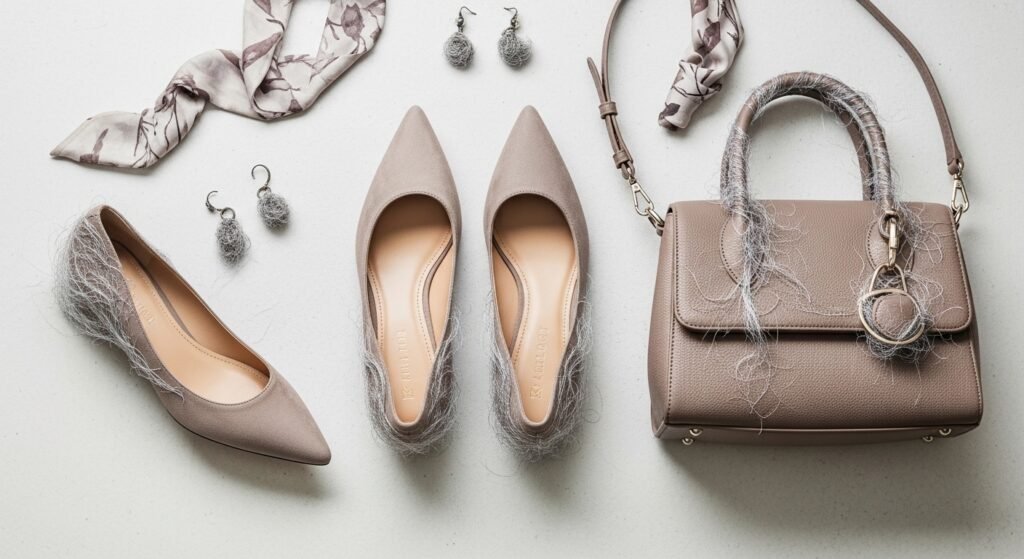
For the feather-curious, accessories are the perfect entry point. Feathered mules and sandals, plume-trimmed handbags, feather earrings, and even feather-detailed phone cases let you participate without committing to a full look. Shoes are a particular sweet spot: a feather accent at the heel or toe is visible with every step and pairs with everything from jeans to evening dresses.
Bags with feather charms or trims deserve a special mention, since they move through your day the way you do, catching air and attention. One fluffy accessory against an otherwise simple outfit delivers the entire trend in miniature.
The designers making feathers modern
A generation of designers has made feathers a signature rather than a novelty. London’s 16Arlington built its reputation on feathered party dresses; Taller Marmo’s plume-trimmed kaftans and sets became a red-carpet and vacation staple; Cult Gaia’s feathered pieces turned the embellishment into resort wear. At the luxury level, houses like Valentino, Saint Laurent, and Gucci have all worked feathers into major collections, while Dries Van Noten and Erdem have used them with a more artistic, textured hand.
What unites these designers is treating feathers as a material rather than a gimmick: dyed, layered, and combined with modern silhouettes instead of retro cliches. That approach is what makes the current wave feel fresh rather than like a costume revival.
The influence of social media creators
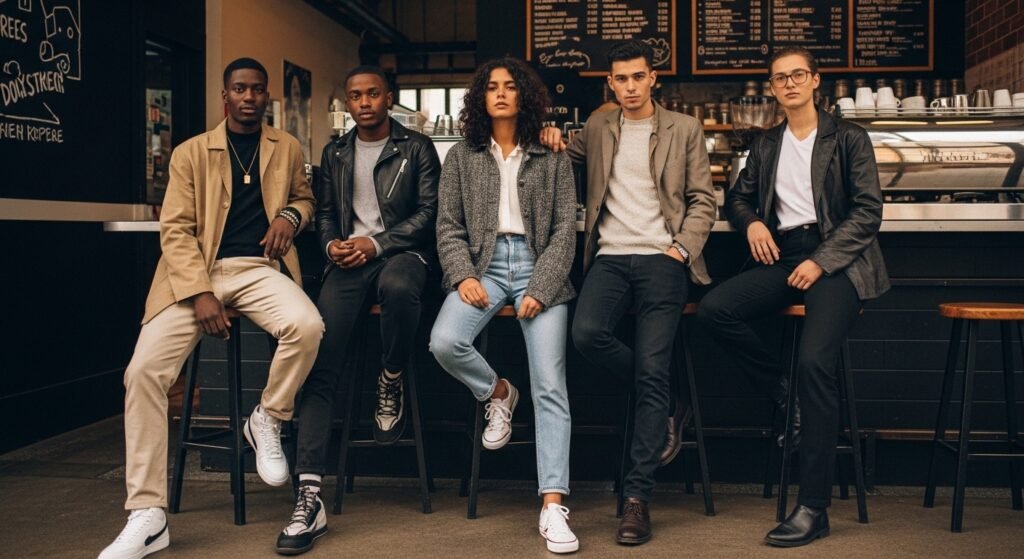
No modern trend travels without its creators, and feathers are a creator’s dream: visual, dynamic, and instantly recognizable in a crowded feed. Stylists and influencers have done the crucial work of translating runway fantasy into real life, showing feathered pieces with jeans, sneakers, and everyday settings. Their try-ons, thrift flips, and DIY trim tutorials have made the trend feel accessible rather than intimidating.
This democratization matters. When viewers see someone with their own body type and budget wearing feathers to brunch, the trend stops being a red-carpet curiosity and becomes an option. Creators have effectively done the cultural translation that turns a fashion moment into a movement.
Vintage inspiration from the twenties
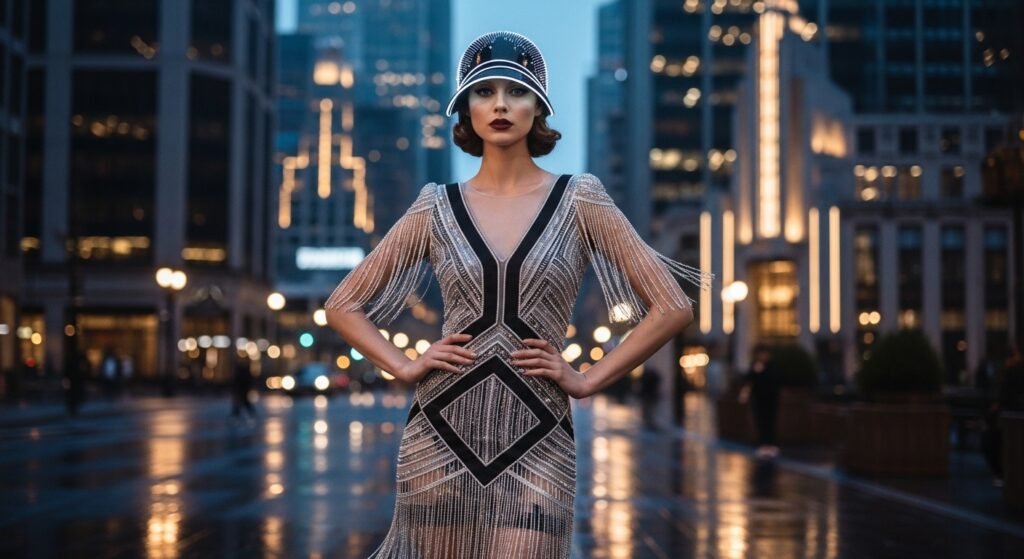
A century after the flappers, the 1920s are echoing again. But the 2026 interpretation is sleeker: where the original flapper look piled on fringe, beads, and feathers in joyful excess, today’s version isolates the feather as a precise accent against clean, modern lines. Think a single plume-trimmed sleeve on a minimalist dress, or marabou cuffs on an otherwise severe coat.
Vintage itself is part of the story. Original 1920s-to-1960s feathered pieces circulate in vintage shops, and their craftsmanship often surpasses modern equivalents. For collectors, the trend is a perfect excuse to hunt down the real thing.
How to wear feathers without looking like a costume
The fear with feathers is looking like you are in costume, and the fix is restraint plus contrast. Choose one feathered element per outfit, keep the rest of the look modern and simple, and avoid stacking feathers with other vintage signifiers like sequins, fringe, and red lips all at once. Fit matters too: feathers add visual volume, so balanced proportions, a feathered top with slim bottoms or vice versa, keep the silhouette intentional.
Occasion matters as well. Full feather drama belongs at parties, events, and evenings; for daytime, keep it to trims and accessories. And consider your environment: feathers and crowded coat checks, rain, or strong wind are not friends. A little planning keeps the look fabulous instead of frazzled.
Caring for feathered pieces
Feathers demand gentler care than ordinary embellishments. Keep them dry, as water can mat and deform plumes; if they get damp, let them air-dry naturally and fluff gently once dry. Store feathered garments hanging with space around them, never compressed, and use breathable garment bags rather than plastic. A cool hairdryer on the lowest setting can revive flattened feathers, and professional cleaners experienced with couture are worth seeking out for valuable pieces. With proper care, quality featherwork lasts for years.
Celebrity endorsements on the big stage
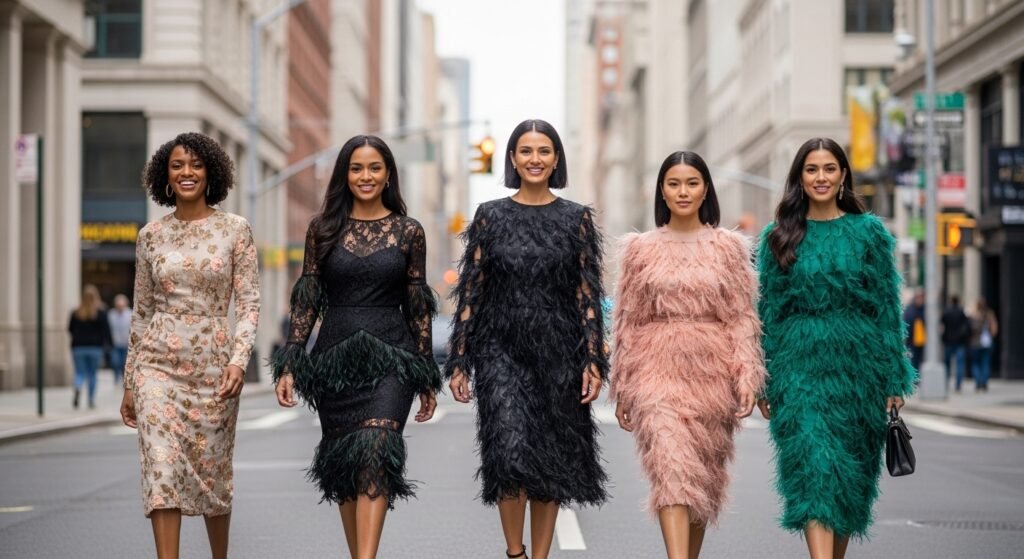
When stars step onto major red carpets in feathered gowns, the effect is immediate: search interest spikes, high-street copies appear within weeks, and the trend cements itself in the public imagination. Award shows, film premieres, and fashion galas have all featured memorable feather moments in recent seasons, each one teaching viewers a new way to wear the look with confidence. Celebrity stylists favor feathers because they guarantee photographs with movement and drama, exactly what a red carpet demands.
For the rest of us, these moments function as a styling library. Note how the best-dressed keep everything else quiet: sleek hair, minimal jewelry, simple shoes. The feathers do the talking, and that is precisely the lesson. Whether you go full plume or just a whisper of marabou at the cuff, feathers are fashion’s reminder that getting dressed can still be joyful, theatrical, and fun.