
 Sarah Grey
There is a moment in every grooming journey when you realize the internet has given you too much advice, not too little. Ten-step routines, miracle ingredients, conflicting expert opinions — it is enough to make anyone want to give up and use bar soap for everything. But underneath the noise, dermatologists and stylists keep repeating the same surprisingly simple truths.
The real transformation does not come from a single miracle product. It comes from a handful of small, consistent habits that work with your biology instead of against it. These are the tips experts actually follow themselves — the unglamorous fundamentals that deliver glowing skin and healthy hair without the overwhelm.
The Shift Toward Skin Minimalism

Dermatologists have been quietly rebelling against the twelve-step routine for years. Every product you layer is another chance for irritation, another ingredient interacting with the rest, another reason your skin barrier — the delicate shield that keeps moisture in and irritants out — gets overwhelmed. Fewer, better-chosen products almost always outperform a crowded shelf.
Start with the non-negotiables: a gentle cleanser, a moisturizer suited to your skin type, and sunscreen. That is the entire foundation. Add targeted treatments one at a time, giving each a few weeks to prove itself. If your skin is calm, clear, and comfortable, your routine is working — no matter how short it is.
Prioritizing The Scalp For Better Hair

Here is something most people miss: your hair is dead tissue, but your scalp is living skin. And just like the skin on your face, it needs cleansing, exfoliation, and care. Product buildup, excess oil, and dead skin can clog follicles and leave hair looking limp, no matter how expensive your shampoo is.
Once a week, give your scalp some attention — a gentle scrub or a clarifying wash, massaged in with your fingertips for a full minute. That massage boosts circulation too. Healthy hair genuinely starts at the root, and a cared-for scalp grows stronger, shinier hair over time.
The Importance Of Daily Sun Protection

If experts could only give one piece of advice, this would be it. UV damage is responsible for the vast majority of visible skin aging — wrinkles, dark spots, loss of firmness — and it happens on cloudy days, through office windows, and during quick errands. Sunscreen is not a beach product; it is a daily one.
Use a broad-spectrum SPF 30 or higher every morning as the last step of your skincare routine. Modern formulas are nothing like the greasy sunscreens of the past — many double as lightweight moisturizers or primers. Reapply if you are outdoors for hours. Future you will be grateful.
Understanding Your Personal Skin Type

Oily, dry, combination, sensitive — knowing your type changes everything about product selection. The richest cream in the world will not help oily skin, and a lightweight gel will not satisfy dry skin. Yet most people choose products based on trends rather than what their skin actually needs.
Here is a simple test: wash your face, wait an hour without applying anything, and observe. Tight and flaky means dry; shiny all over means oily; shiny only in the T-zone means combination; red or reactive means sensitive. Shop for your result, not someone else’s routine.
The Role Of Hydration From Within

No serum can fully compensate for a dehydrated body. Water keeps skin plump, supports circulation, and helps flush the waste products that dull your complexion. You do not need gallons — just consistent intake throughout the day instead of an evening flood.
Pair internal hydration with topical moisture-sealing. Drink water, then lock it in with moisturizer on slightly damp skin. Foods with high water content — cucumber, watermelon, oranges — help too. Hydrated skin looks brighter, feels softer, and bounces back faster.
Choosing Fragrance-Free Options

Fragrance is one of the most common irritants hiding in skincare and hair products. That lovely scent often comes from dozens of undisclosed chemicals, and it is a frequent culprit behind redness, itching, and mysterious breakouts — especially for sensitive skin.
Look for fragrance-free on the label, which is stricter than unscented — unscented products can still contain masking fragrance. Your routine might smell like nothing, but your skin will be calmer for it. Save the beautiful scents for actual perfume, applied away from your face.
The Rise Of Plant-Based Ingredients

Aloe, green tea, chamomile, oat — botanical ingredients have earned their place through genuine results, not just marketing. Green tea is packed with antioxidants, aloe calms irritation, and colloidal oatmeal has been soothing sensitive skin for decades. Nature’s pharmacy is well-stocked.
That said, natural does not automatically mean gentle — essential oils and some plant extracts can irritate. The sweet spot is well-formulated products that combine proven botanicals with modern skincare science. Look for the ingredient on the label, not just the leaf on the packaging.
Exfoliation Balance Is Key

Exfoliation is transformative — it sweeps away the dead cells that make skin look dull and helps every other product absorb better. But it is also the easiest step to overdo. Scrub too often or too harshly and you will strip your barrier, leaving skin red, tight, and reactive.
For most people, one to two times a week with a gentle chemical exfoliant like lactic acid is the sweet spot. Skip the harsh physical scrubs. And always follow exfoliation with moisturizer and sunscreen — freshly exfoliated skin is more sun-sensitive. Balance, not aggression.
Vitamin C For A Bright Look

Vitamin C is one of the most researched brightening ingredients in skincare, and for good reason. It is a potent antioxidant that helps fade dark spots, evens out tone, and boosts the effectiveness of your sunscreen when layered underneath it. Morning application is ideal.
Start with a lower concentration if your skin is sensitive, and store the serum away from light and heat — vitamin C degrades when oxidized, and if it turns dark orange, it is time to replace it. Used consistently, it gives skin that lit-from-within clarity people always ask about.
Managing Stress For Physical Health

Your skin keeps score of your stress. Cortisol spikes trigger oil production and inflammation, which is why breakouts love exam weeks and deadline season. Poor sleep shows up as dullness, dark circles, and slower healing. No cream fully offsets chronic stress.
The fix does not have to be elaborate — a ten-minute walk, consistent bedtimes, or simply stepping away from screens before sleep. Think of stress management as skincare from the inside out. Calm mind, calm skin: the connection is real and well-documented.
Consistency Over Intense Treatments
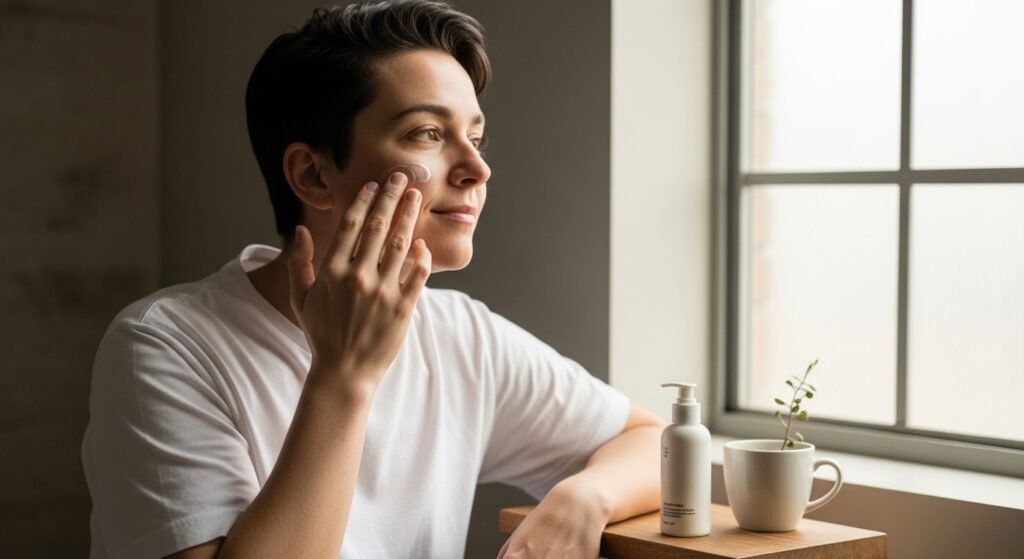
The biggest mistake in grooming is not choosing the wrong product — it is inconsistency. A simple routine followed daily will always beat an elaborate one abandoned after a week. Skin and hair respond to steady, repeated care, not occasional heroic efforts.
Make your routine easy enough to do on your worst day. Keep it short, keep products visible on the counter, and tie steps to existing habits like brushing your teeth. Small daily actions compound into the kind of transformation no single treatment can deliver.
The Overnight Habits That Change Everything
Night is when your skin does its heaviest repair work, which makes your evening routine disproportionately powerful. Never sleep in makeup or sunscreen — cleansing before bed lets your skin breathe and regenerate instead of marinating in the day’s buildup.
Silk or satin pillowcases reduce the friction that causes hair breakage and sleep creases. A humidifier in dry climates keeps skin from losing moisture overnight. These are not products; they are environment tweaks — and they work while you sleep, which is the easiest effort of all.
When To See A Professional
Some concerns are beyond the reach of drugstore products, and that is okay. Persistent acne, sudden hair shedding, rashes that will not quit, or moles that change deserve a dermatologist’s eyes. Experts exist for exactly these moments — using one is not giving up, it is getting answers.
A single professional consultation can save you years of guessing and hundreds spent on wrong products. Bring your current routine and be honest about what you have tried. The best grooming tip of all might be knowing when to ask for help.
Building Your Routine Step By Step
Putting this all together can feel like a lot, so build your routine in layers rather than all at once. Start with the absolute basics — a gentle cleanser, a moisturizer, and sunscreen — and live with just those for two full weeks. This establishes your baseline and shows you exactly what your skin does when it is not being bombarded by a dozen competing products.
Next, add one targeted product at a time, waiting at least two weeks between additions. This is how you learn what actually works: if something causes irritation or a breakout, you will know exactly which product did it. Patience here saves you from the all-too-common cycle of buying, reacting, throwing away, and starting over again.
Finally, write your routine down — morning steps in order, evening steps in order — and keep the list where you get ready. A visible checklist turns good intentions into automatic habits, and it stops you from skipping steps on tired evenings. Within a month, the whole routine takes five minutes and feels as natural as brushing your teeth.
Start Simple, Stay Consistent
None of these tips require a bigger budget — just a smarter approach. Simplify, protect, hydrate, and stay consistent. The experts are not hiding secret products; they are practicing fundamentals with discipline.
Pick two or three of these tips and commit for a month. Take a photo on day one. The transformation will not be overnight, but it will be real — and this time, it will last.