 Sarah Grey
Paris, Rome, and Barcelona will always have their crowds, and they deserve them. But some of Europe’s most rewarding travel happens in the places the tour buses skip: towns where restaurant tables are filled with locals, where a cathedral does not require a timed ticket, and where the pace of the day is set by church bells rather than queues. These lesser-known destinations offer history, culture, and beauty in more generous measure, simply because fewer people are competing for them.
Traveling beyond the obvious has practical rewards too. Accommodation costs less, reservations are easier, and encounters with residents feel genuine rather than transactional. The eleven destinations below span the continent from Norway’s fjords to Malta’s harbors, each with a distinct character and a legitimate claim to your next itinerary. None of them is a secret anymore, but all of them still feel like discoveries.
Kotor, Montenegro
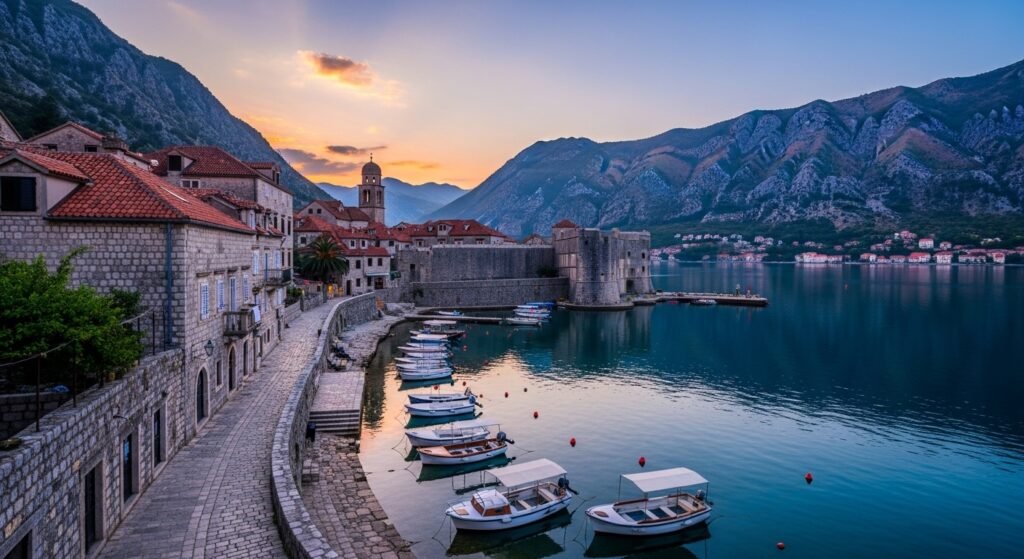
Tucked at the end of a fjord-like bay and ringed by limestone mountains, Kotor is one of the Adriatic’s great fortified towns. Its medieval old town, a UNESCO World Heritage site since 1979, is a maze of narrow lanes, Romanesque churches, and Venetian-era palaces. Above it all, the walls of St. John’s Fortress climb the mountainside; the roughly 1,350 steps to the top reward climbers with one of Europe’s most spectacular panoramas.
What keeps Kotor special is scale. Cruise ships visit, but the town empties by evening, leaving the waterfront promenade and candlelit konobas to overnight guests. Come in shoulder season, hike the fortress at sunrise before the heat, and take a boat to the tiny island church of Our Lady of the Rocks. It delivers the drama of Dubrovnik at a fraction of the crowds and cost.
Ghent, Belgium
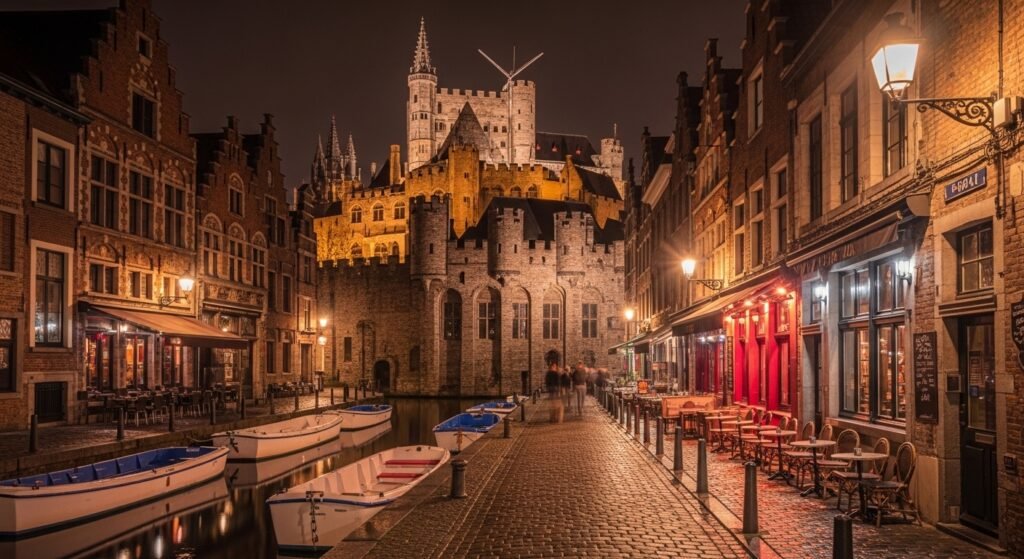
Ghent lives in the shadow of Bruges and Brussels, which is precisely its charm. This university city pairs serious Gothic architecture, the 12th-century Gravensteen castle, the towers of St. Bavo’s Cathedral, with a youthful, lived-in energy. Inside St. Bavo’s hangs the Ghent Altarpiece, the van Eyck brothers’ Adoration of the Mystic Lamb (1432), one of the most important paintings of the Northern Renaissance.
By night, Ghent might be Belgium’s prettiest city: a pioneering lighting plan bathes the Graslei waterfront’s medieval guild houses in a warm glow. The canal-side cafes fill with students and locals rather than tour groups, the street art scene is genuinely good, and the food culture punches above its weight. It is Bruges’ beauty with Brussels’ soul, and half the visitors.
Ljubljana, Slovenia
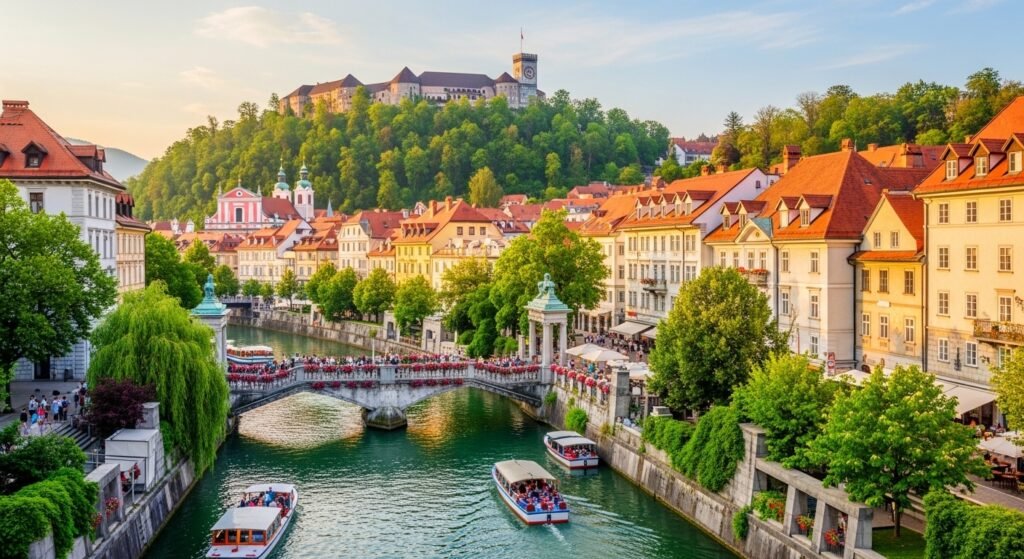
Slovenia’s capital is small enough to cross on foot and green enough to have been named European Green Capital in 2016. The car-free center follows the looping Ljubljanica River, crossed by the famous Triple Bridge designed by architect Joze Plecnik, whose vision shaped much of the city’s elegant look. Above it all sits the castle, reachable by funicular or a pleasant walk, with views across the rooftops to the Alps.
Ljubljana’s symbol is the dragon, and the city wears its mythology lightly, with dragon statues on the bridge and playful souvenirs in the shops. The riverside cafes are the social heart of the city, especially on warm evenings, and the central market designed by Plecnik is a lovely place to breakfast. It is an ideal first stop in Slovenia before heading to Lake Bled or the caves of Postojna.
Colmar, France
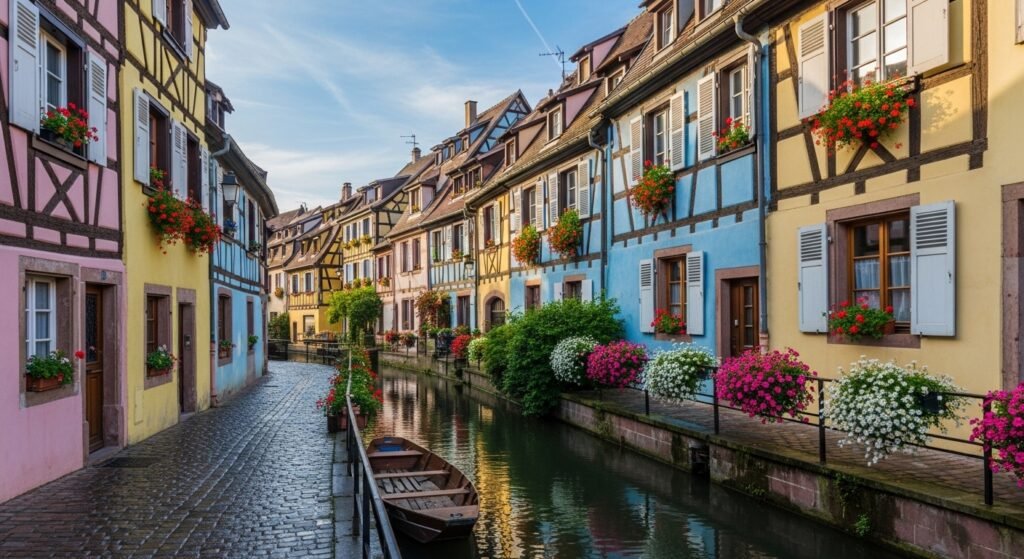
In the heart of Alsace wine country, Colmar looks like a storybook brought to life. Its old town is a gallery of half-timbered houses in pastel pinks, yellows, and blues, many dating to the 14th century, clustered around the canal quarter known as Little Venice. Flower boxes spill from every window in summer, and the whole town seems composed for photographs.
Beyond the looks, Colmar has substance. The Unterlinden Museum houses the Isenheim Altarpiece, a masterpiece of German Renaissance art, and the town was the birthplace of Frederic Auguste Bartholdi, sculptor of the Statue of Liberty. The Alsatian food culture blends French and German influences, think tarte flambee and local Riesling. Visit on a weekday morning to have the lanes nearly to yourself.
Bologna, Italy
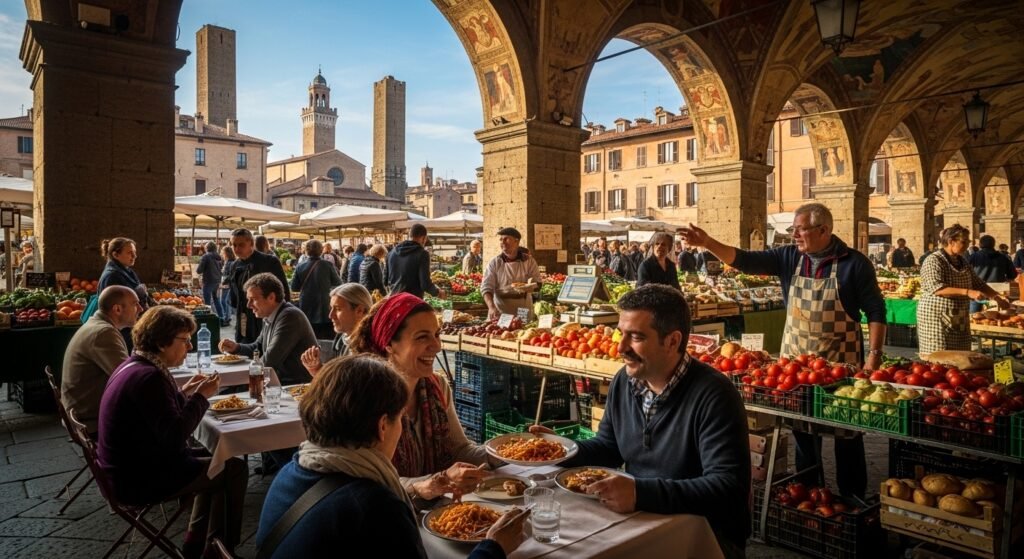
Italians call Bologna la dotta, la grassa, la rossa: the learned, the fat, the red. The learned for its university, founded in 1088 and the oldest in the Western world; the fat for a culinary tradition that gave the world tagliatelle al ragu, tortellini, and mortadella; the red for its terracotta rooftops. Nearly 40 kilometers of porticoes, arcaded walkways listed by UNESCO in 2021, shelter pedestrians from sun and rain.
Bologna feels like a real city rather than a museum, animated by students and locals. Climb the 498 steps of the Asinelli Tower, one of the famous Two Towers, for views over the red rooftops, then eat where the Bolognesi eat: skip any menu offering spaghetti bolognese, a dish unknown in Bologna, and order tagliatelle al ragu instead. The morning food markets around the Quadrilatero are a delicious education.
Gdansk, Poland
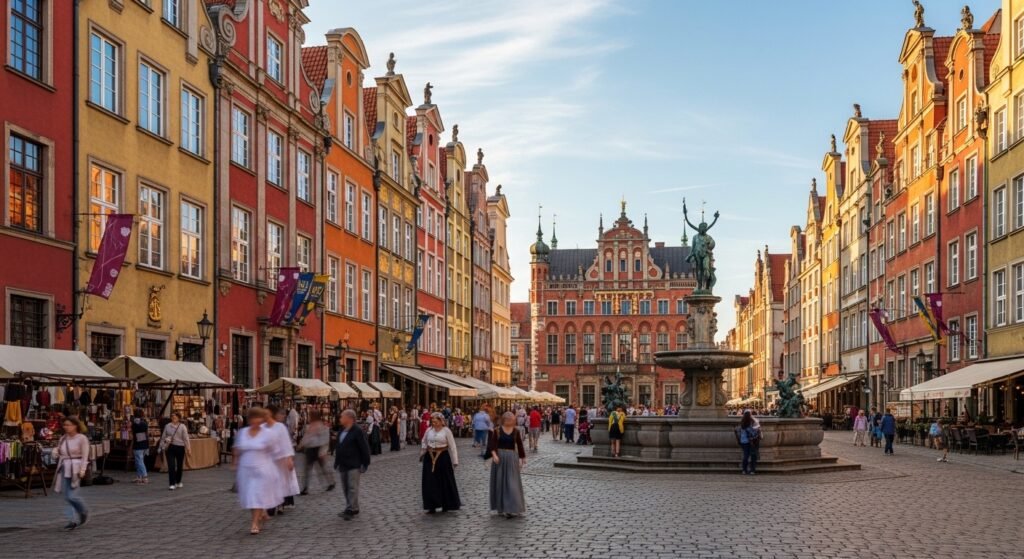
On the Baltic coast, Gdansk is a Hanseatic jewel rebuilt with extraordinary care after near-total wartime destruction. The Long Market’s narrow, gabled merchant houses, painted in rich colors and crowned with ornate facades, look authentically old because restorers followed historical records meticulously. Neptune’s Fountain has watched over it all since the 17th century.
Gdansk’s history runs deep and dramatic: the first shots of World War II were fired at Westerplatte here in September 1939, and the Solidarity movement that helped end Communist rule was born in the city’s shipyards in 1980. The European Solidarity Centre tells that story brilliantly. Between the history, the sea air, and amber shops on every corner, Gdansk rewards at least two full days.
Valletta, Malta
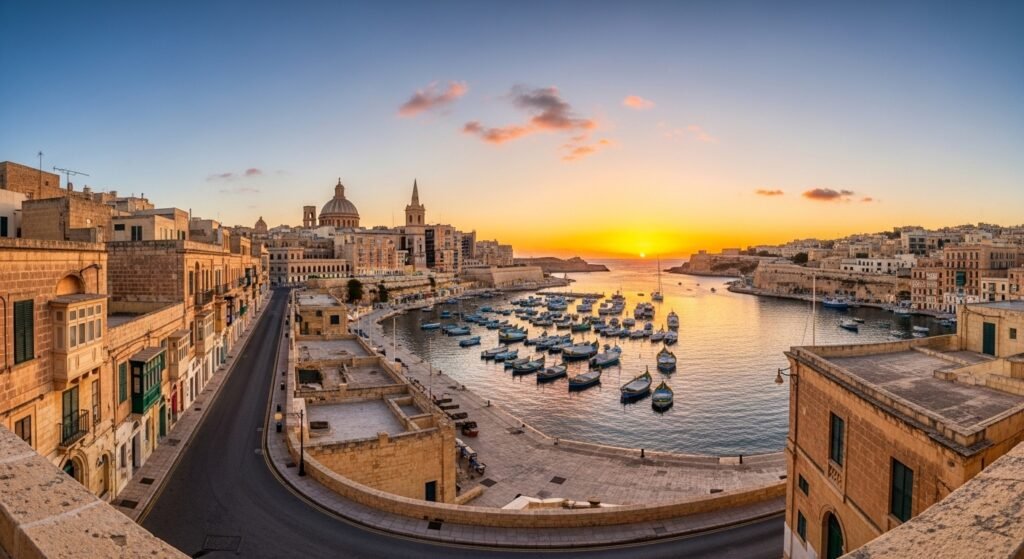
One of Europe’s smallest capitals, Valletta packs extraordinary heritage into a grid of steep streets above the Grand Harbour. Built by the Knights of St. John in the 16th century and listed by UNESCO in 1980, the city is a baroque ensemble in honey-colored limestone that glows gold at sunset. St. John’s Co-Cathedral hides an astonishingly ornate interior, including two Caravaggio masterpieces.
Named European Capital of Culture in 2018, Valletta has added contemporary galleries, wine bars, and design hotels to its historic bones without losing its character. The Upper Barrakka Gardens offer the classic harbor panorama, ideally at noon for the traditional gun salute. Combine it with the ancient temples of Hagar Qim and a boat trip to the Blue Lagoon for a complete Maltese itinerary.
Timisoara, Romania
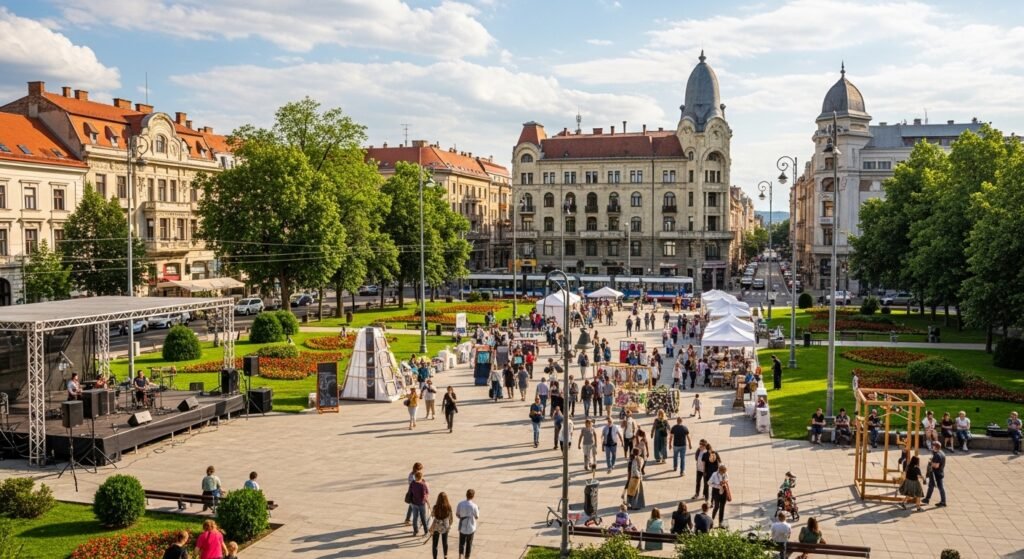
Timisoara’s claim to fame is luminous: in 1884 it became the first city in Europe with electric street lighting. Its elegant center is a showcase of Secessionist and Art Nouveau architecture around wide, cafe-filled squares like Piata Victoriei and Piata Unirii, with parks softening the urban landscape. The Romanian Revolution of 1989 began here, and the city wears that history with quiet pride.
As a European Capital of Culture in 2023, Timisoara invested heavily in its cultural scene, and the calendar of festivals, concerts, and open-air events remains lively. The atmosphere is creative and relaxed, prices are gentle, and the Banat region’s multicultural heritage, Romanian, Hungarian, German, and Serbian influences, shows in the food and architecture. It is Romania’s most underrated city break.
Bergen, Norway
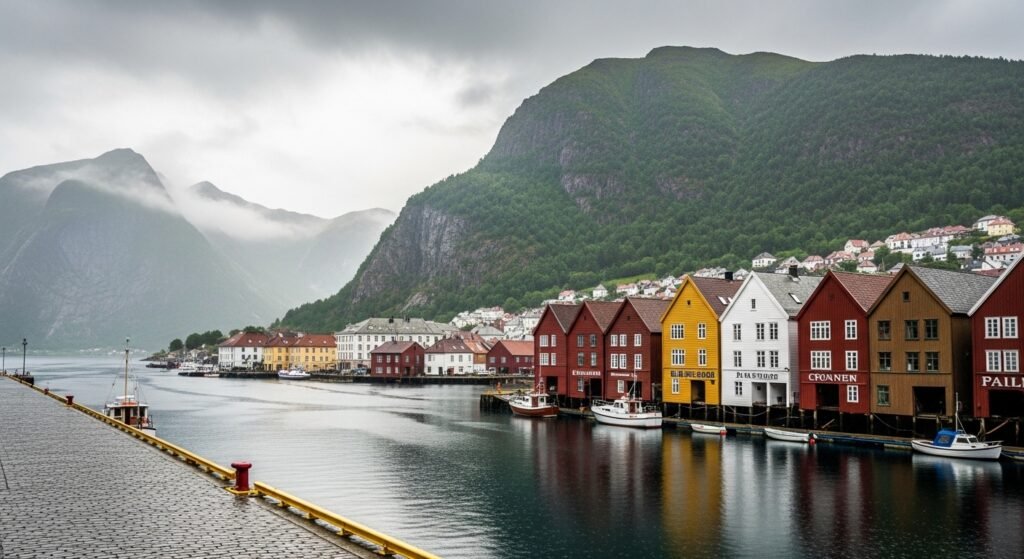
Surrounded by seven mountains and the sea, Bergen is Norway’s historic gateway to the fjords. Its icon is Bryggen, the colorful row of wooden Hanseatic merchant houses on the harbor, a UNESCO site since 1979. Behind the facades, a warren of wooden alleys, workshops, and museums preserves the atmosphere of the medieval trading port.
Yes, it rains, Bergen is famously one of Europe’s wettest cities, but the mist only adds drama to the harbor, and locals simply dress for it. Ride the Floibanen funicular up Mount Floyen for panoramic views and forest trails, browse the fish market, and use the city as a base for fjord excursions to Narooyfjord or Hardangerfjord. In summer, the long northern evenings are magical.
Matera, Italy
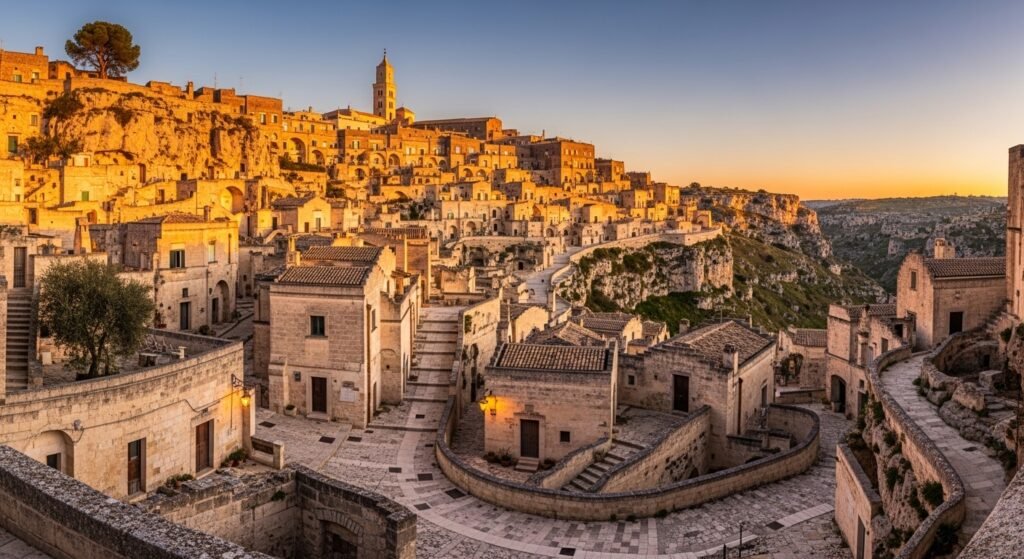
Matera is unlike anywhere else in Europe. Its Sassi, ancient districts of cave dwellings carved into limestone ravines, have been inhabited since the Paleolithic era, making it one of the world’s oldest continuously lived-in settlements. Listed by UNESCO in 1993 and a European Capital of Culture in 2019, the golden stone labyrinth glows at dusk like a film set, which is fitting, since it has played ancient Jerusalem in The Passion of the Christ and featured in the James Bond film No Time to Die.
Many caves are now boutique hotels, restaurants, and museums, so you can literally sleep in history. Wander the Sasso Barisano and Sasso Caveoso districts, visit a furnished cave house museum to understand traditional life, and find a viewpoint at sunset when the whole ravine turns amber. Matera pairs beautifully with Puglia’s Alberobello and Lecce for a southern Italy itinerary.
Zaragoza, Spain
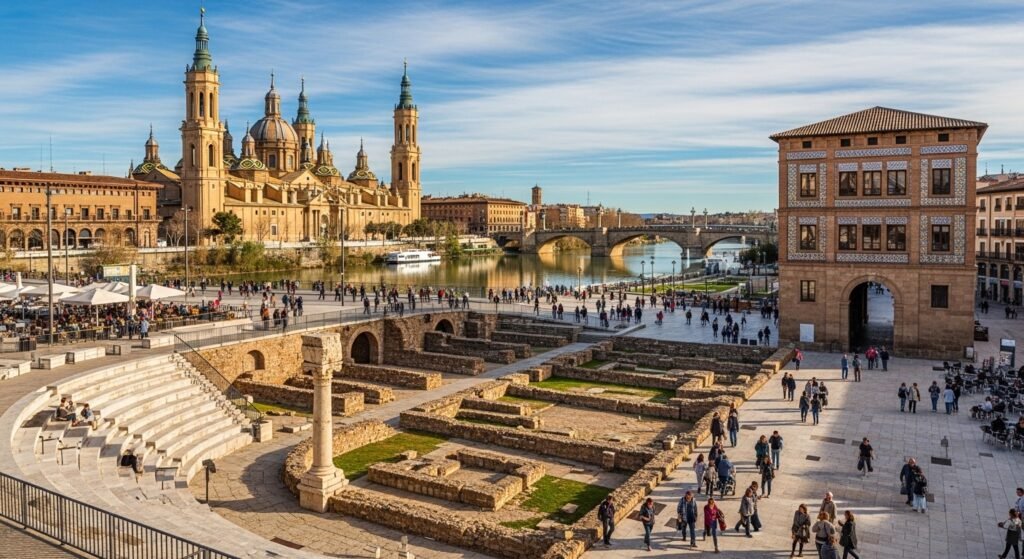
Spain’s fifth-largest city is skipped by most visitors racing between Madrid and Barcelona, which is their loss. Zaragoza layers two millennia of history along the Ebro River: Roman ruins including a theater, the exquisite Islamic Aljaferia Palace with its intricate arches, and the baroque Basilica of Our Lady of the Pillar, one of Spain’s most important pilgrimage churches, dominating the riverside Plaza del Pilar.
The city’s tapas culture is a highlight: the streets around Calle Mayor and the old town fill in the evening with locals moving between bars. Zaragoza is also the birthplace of Francisco Goya, and the local museums hold fine collections of his work. With high-speed trains connecting it to both Madrid and Barcelona in under two hours, it makes an easy and rewarding detour.
Traveling Beyond the Obvious
The common thread among these eleven destinations is not obscurity but proportion: each offers world-class sights without world-class crowds. You will wait less, pay less, and remember more, because the experiences feel personal rather than performed. Shoulder seasons, spring and autumn, are the sweet spot for most of them, with mild weather and thinner crowds.
A practical tip: several of these cities pair naturally. Combine Kotor with Dubrovnik or the Montenegrin coast, Ghent with Bruges and Brussels, Ljubljana with Lake Bled, Colmar with Strasbourg, Bologna with Florence or Ravenna, Gdansk with Warsaw or Krakow, Matera with Puglia, and Zaragoza with Madrid or Barcelona. The hidden gems do not replace the famous cities; they complete them.