 Sarah Grey
By fifty, most women have a finely tuned sense of what works: the brands that fit, the colors that flatter, the silhouettes that feel like themselves. That confidence is hard-won and worth celebrating. But it has a shadow side. Shopping habits formed in the thirties and forties can quietly keep running on autopilot, filling closets with duplicates of things that no longer serve the life being lived now.
This is not about rules or age-appropriate dressing, a concept that deserves its retirement. It is about intention. The pieces below are the ones stylists see women rebuying out of pure habit: comfortable, familiar, and often past their prime. Each has earned its place in fashion history, and each has a worthy successor that delivers the same comfort with more polish. Consider this a friendly closet audit, not a criticism.
Black Leggings Multiples
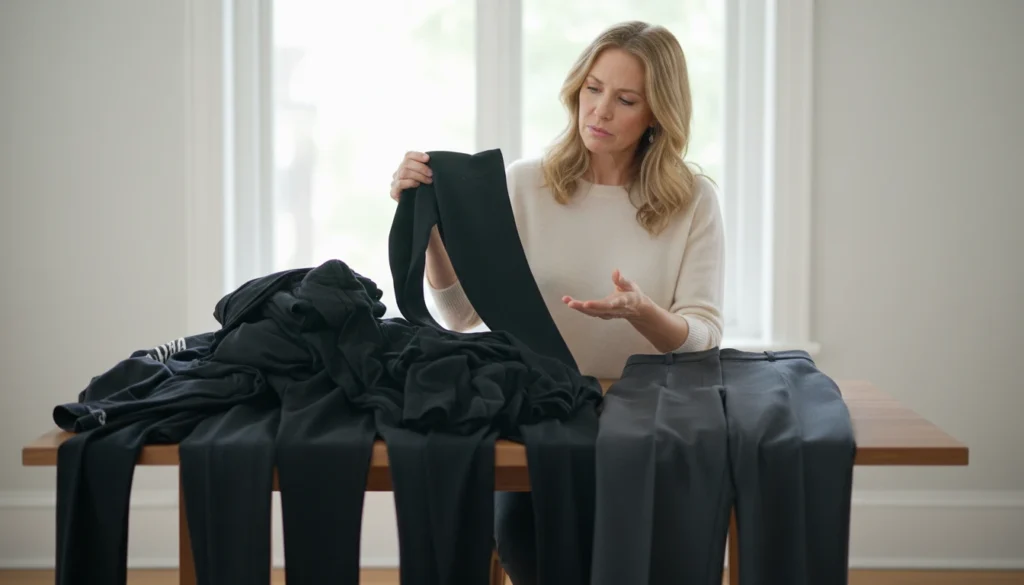
Nearly every wardrobe holds a small colony of black leggings, bought because they go with everything and ask nothing of the wearer. The problem is attrition: inexpensive leggings stretch out, pill, and turn sheer within months, yet they keep getting rebought in the same thin fabric instead of being upgraded. What started as a practical staple becomes a cycle of disposable replacements.
The habit to break is not leggings themselves but the reflex to buy the cheapest pair. One or two pairs of high-quality leggings in a dense, opaque ponte knit, with a wide waistband and reinforced seams, will outlast five flimsy ones and look sharper doing it. For outfits where leggings feel too casual, the same money buys dark straight-leg jeans or tailored pull-on trousers that polish the whole look instantly.
Cardigan Sweaters by the Dozen
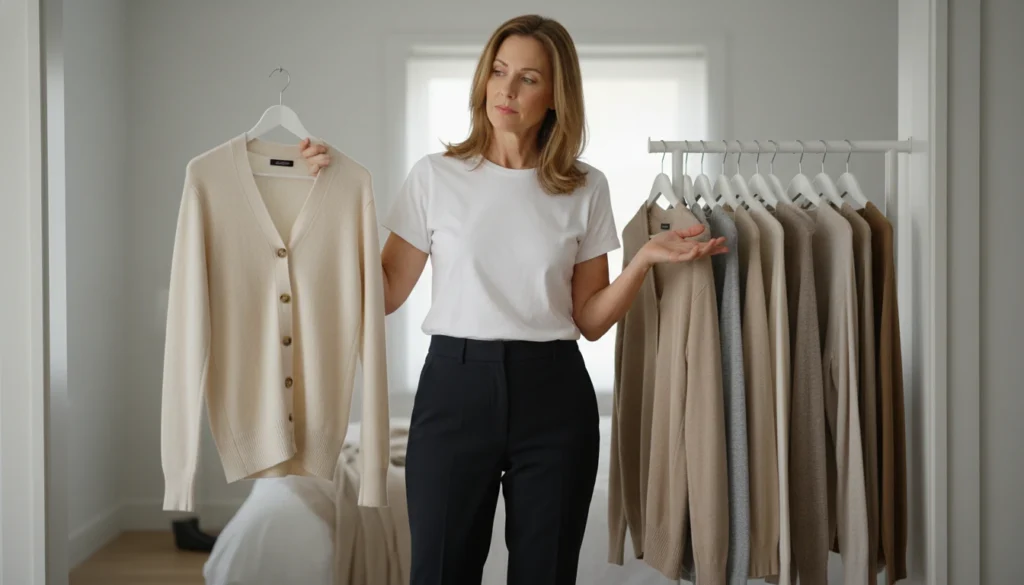
Shawl collars, button-fronts, funnel necks: the neutrals accumulate, one per season, until a whole closet section is devoted to near-identical acrylic cardigans. They were bought for practicality, an extra layer for cold offices and drafty restaurants, and there is nothing wrong with the impulse. But ten mediocre cardigans that pill and sag cannot do the job of one excellent one.
A single cashmere or merino cardigan in a rich neutral, navy, charcoal, or camel, provides more warmth, better drape, and years more wear than a stack of acrylic versions. Quality knitwear resists pilling, holds its shape, and elevates everything it layers over. Keep the habit of reaching for a cardigan; just retire the habit of buying a new cheap one every fall.
Tunic Tops in Every Color
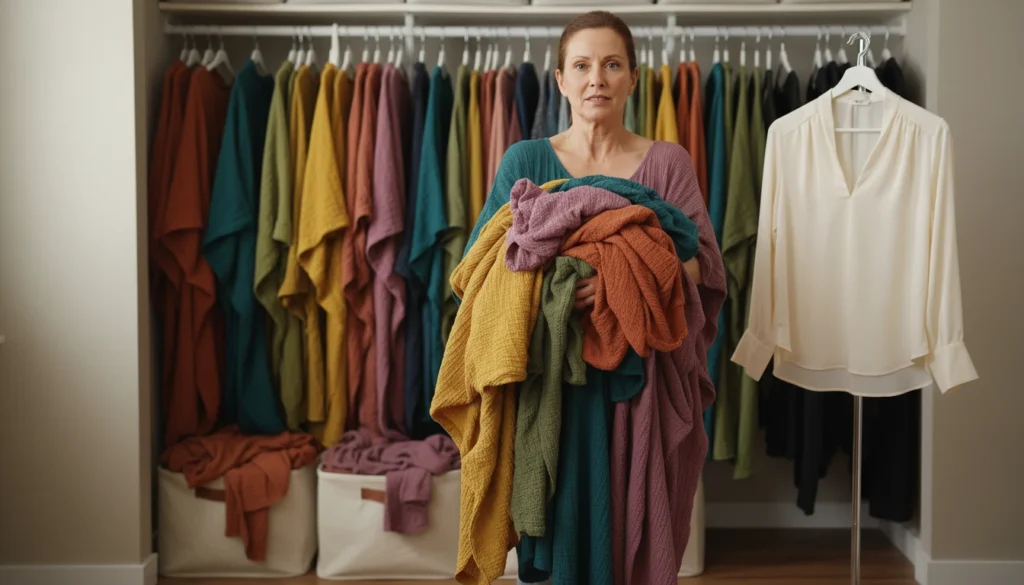
Flowy boho tunics were adopted, often in the forties, as camouflage: long enough to skim the midsection, easy to throw on, available in every print imaginable. A decade later the collection has grown but the effect has dulled. Unstructured volume in quantity tends to overwhelm the frame rather than flatter it, and the busy prints date quickly.
The underlying desire, comfort with coverage, is completely valid. The upgrade is structure: a well-cut blouse or shirt with clean lines, perhaps with a curved hem that offers the same coverage, in a fabric with some substance. Tailored does not mean tight; it means the garment has a shape of its own instead of borrowing none. Two excellent blouses will outperform six shapeless tunics.
Comfort Wedge Sandals
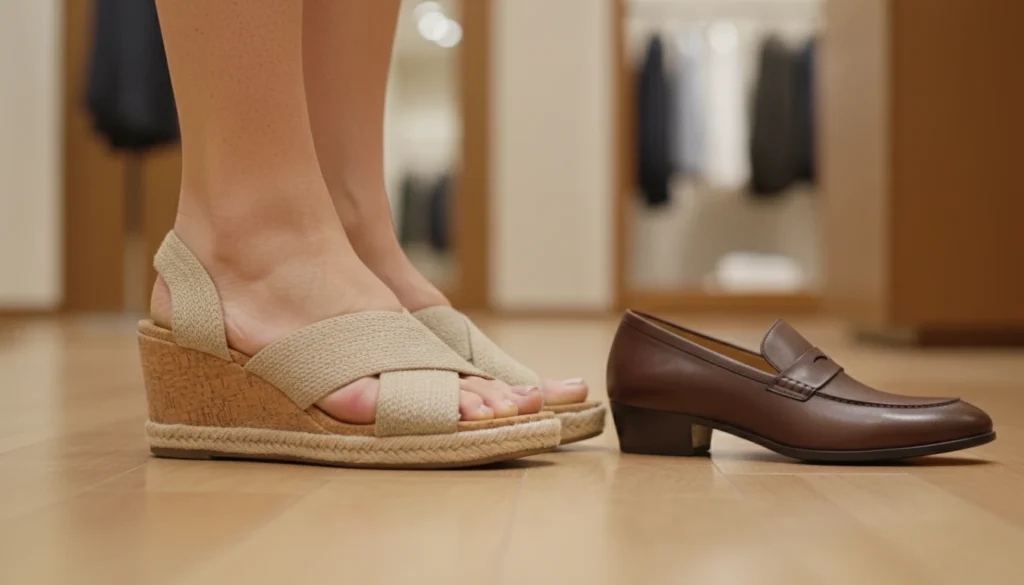
Cork and espadrille wedges promised the holy grail: height without pain. And for a while they delivered. But wedges bought five years ago have compressed footbeds and tired straps, and the style itself has cycled out of fashion’s favor. Feet still hurt by evening, because a worn-out comfort shoe is no longer a comfort shoe.
Modern comfort footwear has moved on beautifully. Sleek leather loafers with cushioned insoles, refined low block-heel sandals, and elegant minimalist sneakers all provide the lift and support the wedge once offered, in silhouettes that look current. Replace the wedges with one pair of genuinely supportive, well-made shoes and notice how much longer the day feels.
Festive Holiday Sweaters
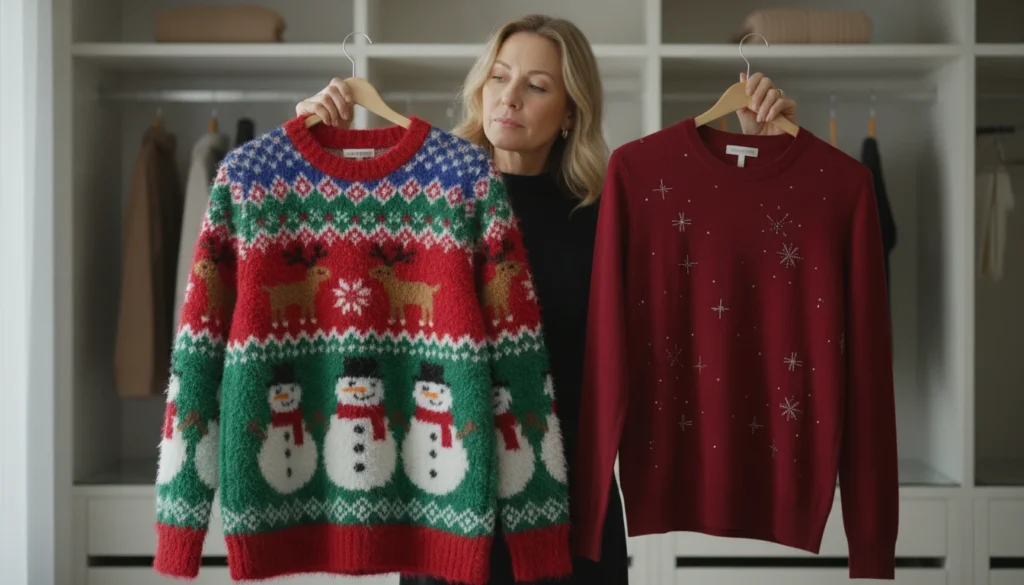
The novelty Christmas sweater is bought as a joke and kept out of tradition, then joined the next year by another, until December dressing becomes a costume parade. They are worn once, photographed, and stored, the worst possible cost per wear. Halloween and Valentine’s variants follow the same pattern.
Festive spirit does not require cartoon reindeer. A sumptuous cashmere crewneck in deep red, forest green, or midnight navy reads as celebratory all season and works for every December occasion, from office parties to family dinners. Add festivity with jewelry, a silk scarf, or a bold lip instead of a punchline knit. You will look like the holiday, not like its greeting card.
Stretched-Out Nursing Tanks
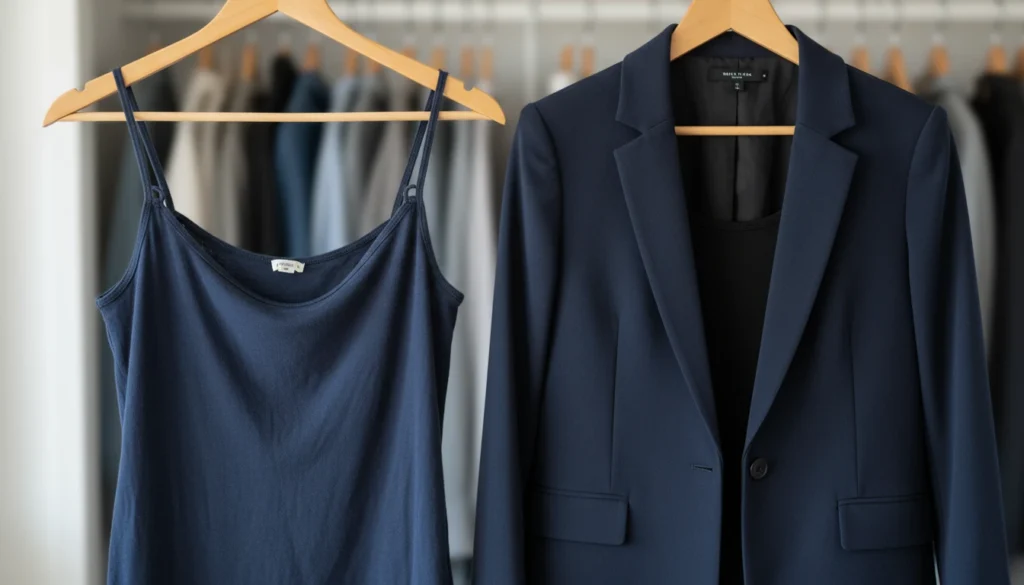
The stretchy tanks of early motherhood were workhorses, and they earned their retirement years ago. Yet they linger in drawers with gaping necklines and tired elastic, pulled on for layering out of pure inertia. Underpinnings this worn undermine everything layered over them.
Today’s layering pieces are a different species: smooth camisoles with built-in support, seamless tanks that disappear under knits, and beautiful silk shells that stand alone. They cost more per piece but you need fewer, and they make blazers and cardigans sit properly instead of dragging. Retire the veterans with gratitude and invest in a foundation that matches the woman you are now.
Velour Track Suits
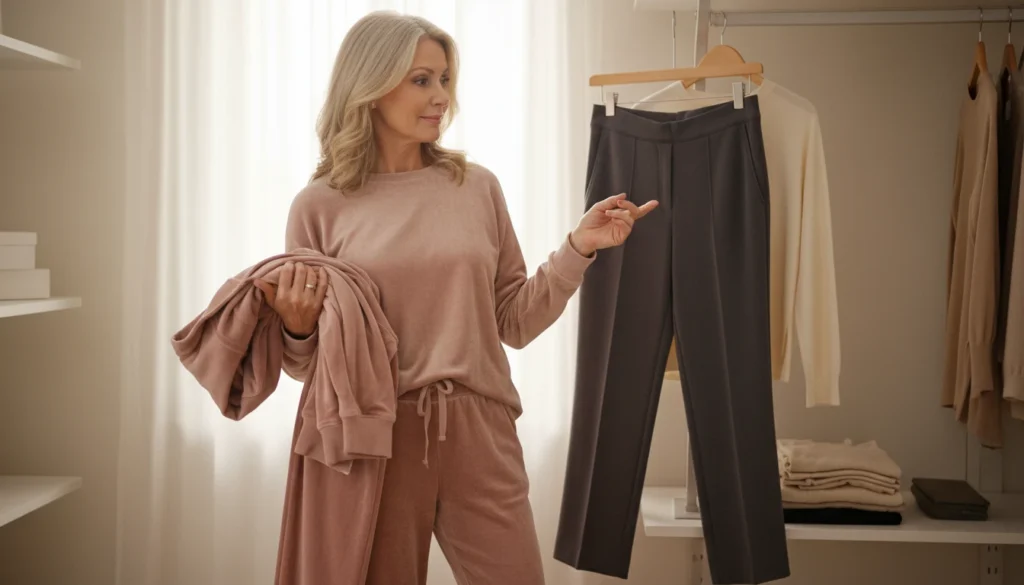
The Juicy Couture era left velour tracksuits in closets across the country, where they survive as loungewear long after their fashion moment passed. They are undeniably soft, which is why they persist. But velour shows wear quickly, the pile crushes, the waistbands relax, and outside the house they broadcast a very specific year.
The comfort instinct is right; the fabric is the issue. Modern ponte-knit sets, refined joggers in technical fabrics, and cashmere-blend loungewear deliver the same ease with a contemporary look that works beyond the front door. Athleisure grew up: let the tracksuit retire to memory and upgrade to lounge pieces you would happily answer the door in.
Tiered Maxi Skirts
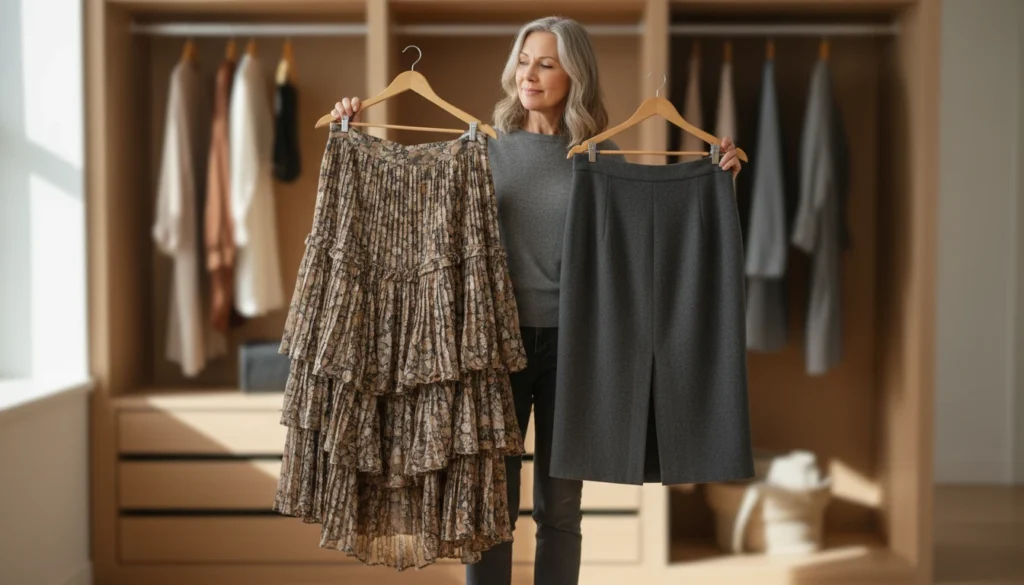
Boho tiered maxis bought for festivals and beach vacations have a way of migrating into everyday rotation, where their volume and length start working against the wearer. Yards of tiered fabric can overwhelm, catch on everything, and read as costume outside a holiday context. The 2010s festival look has fully cycled out.
Skirts deserve better than retirement, though. A straight or gently flared midi in wool, denim, or a fluid crepe offers the same swish and femininity in a silhouette that suits real life: office-appropriate, travel-friendly, and endlessly pairable with knits and boots. Keep the love of skirts; lose the excess yardage.
Cheap Printed Wrap Dresses
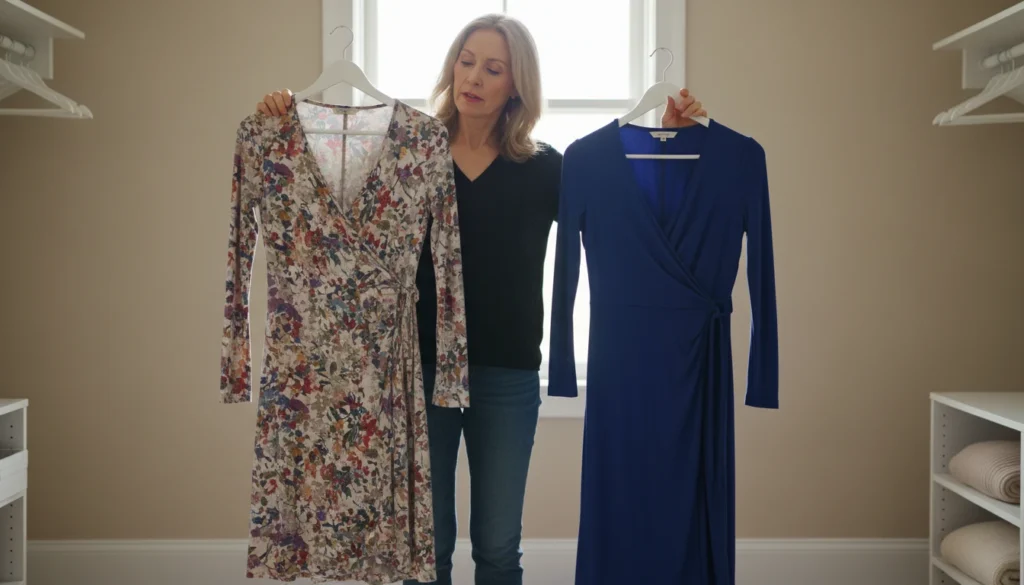
The wrap dress is a genuinely great design, Diane von Furstenberg’s 1974 original flatters nearly every figure. The habit version is the thin-jersey knockoff in a loud print, bought because the silhouette worked once. These lose their elasticity after a few washes, gap at the neckline, and the busy prints stamp them with an expiration date.
Honor the silhouette by buying it properly just once: a solid-color wrap dress in a substantial jersey or silk knit, with secure closures and a knee-length hem. In navy, black, or deep green it becomes the hardest-working dress you own, appropriate for weddings, dinners, and offices alike. The difference between a knockoff and the real thing is not the design but the fabric, and fabric is everything.
The Intentional Shopping Checklist
Breaking autopilot gets easier with a simple pre-purchase ritual. Before buying any habitual item, pause and ask four questions. First: do I already own something that does this job? Most habit buys are duplicates, and the honest answer is often yes. Second: what is the cost per wear? Divide the price by a realistic number of wears. A 120-dollar cashmere sweater worn 60 times costs 2 dollars per wear, while a 30-dollar acrylic cardigan worn 6 times costs 5 dollars per wear and looks worse doing it.
Third: does it work with at least three things I already own? Versatility is the hallmark of a worthwhile purchase. If it only matches one outfit, it is a costume, not a wardrobe piece. Fourth: will I still want it in three years? Trends expire, but navy cashmere, dark denim, and a well-cut blazer do not. If a prospective purchase fails any of these tests, walk away. The money saved funds the upgrades that actually change how you look and feel.
Apply the same scrutiny to what you already own. Once a year, try everything on and sort honestly: keep the pieces that fit well and earn their keep, tailor the almost-right ones, and release the stretched, pilled, and dated. A smaller wardrobe of better things is easier to dress from every morning and kinder to both your confidence and the planet. Intention, applied consistently, is the whole secret.
Shopping With Intention
The thread connecting all nine habits is autopilot: buying what you have always bought because it is familiar, easy, and cheap enough not to think about. The fifties are the ideal decade to switch to manual. You know your body, your life, and your taste better than ever; let your purchases reflect that knowledge.
Try the replacement rule: for every habitual rebuy, ask what the upgraded version looks like, then buy one of those instead of three of these. Fewer, better pieces. Fabrics with substance. Silhouettes with intention. The goal is not a different woman but the same woman, dressed with the discernment she has earned.