 Sarah Grey
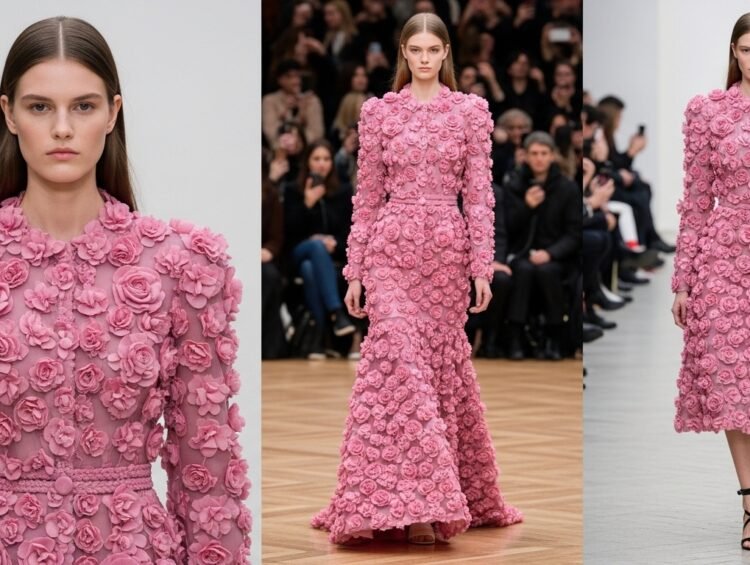
Fashion moves in cycles, but every so often a trend arrives that feels less like a cycle and more like a blooming. This season, designers in New York, Paris, and Milan have pushed past flat floral prints into something fully immersive: flowers that lift off the fabric, petals with real shadow and depth, garments that behave like sculpture. After years of crisp digital prints and minimalist palettes, the return of texture you can almost feel through the screen has struck a nerve. Big rosettes, hand-sewn petals, and three-dimensional blooms are everywhere, and they have quickly become one of the most talked-about style stories of the year.
What makes this moment different from every previous floral revival is the dimensionality. A printed rose is decoration; a constructed rose is architecture. Designers are rolling, folding, layering, and even 3D-printing petals, turning dresses, jackets, shoes, and handbags into small gardens. This guide explores where the trend came from, the fashion houses driving it, the techniques behind the petals, and how to wear the look in real life without feeling like a wedding cake.
The evolution of the classic print
Flowers have decorated clothing for centuries, from the painted chintzes traded across continents in the 1700s to the romantic Victorian bouquets, the psychedelic flower power of the 1960s, and the photo-real garden prints of the 2000s. Each generation reinvents the motif to suit its mood. The current reinvention is a reaction against flatness itself. After a decade dominated by screen-ready graphics, seamless digital prints, and athleisure minimalism, designers and wearers alike are craving craft you can see from across the room. Dimensional florals answer that craving: they catch light, cast shadows, and move with the body in ways no print ever could.
The shift also mirrors a broader return to couture-level handwork in ready-to-wear. As shoppers grow more interested in how clothes are made, visible craftsmanship becomes a selling point rather than a hidden cost. A dress scattered with hundreds of hand-rolled organza petals tells a story of human hours, and in an era of fast fashion fatigue, that story matters.
From flat print to sculpture: how the dimension is built
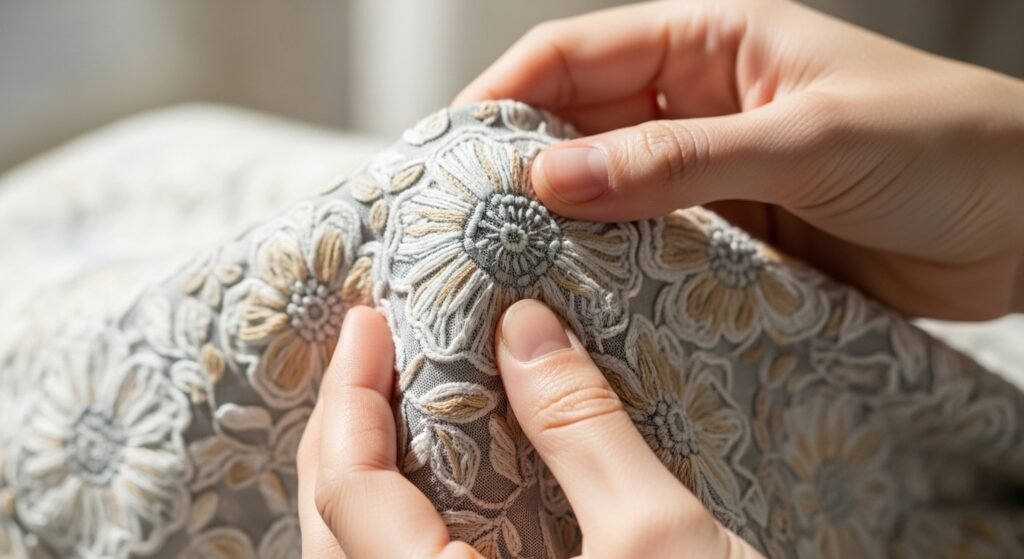
Creating three-dimensional florals is a technical discipline with its own vocabulary. The most traditional method is applique, in which petal shapes cut from silk, organza, tulle, or velvet are sewn, glued, or embroidered onto a base fabric in overlapping layers. Each petal may be heat-shaped, wired, or starched so it holds a curl. Hand embroidery adds beaded centers, French knots, and thread-painted shading. More experimental studios use laser cutting for precision petals, thermoplastic shaping for architectural forms, and 3D printing for blooms that would be impossible to sew.
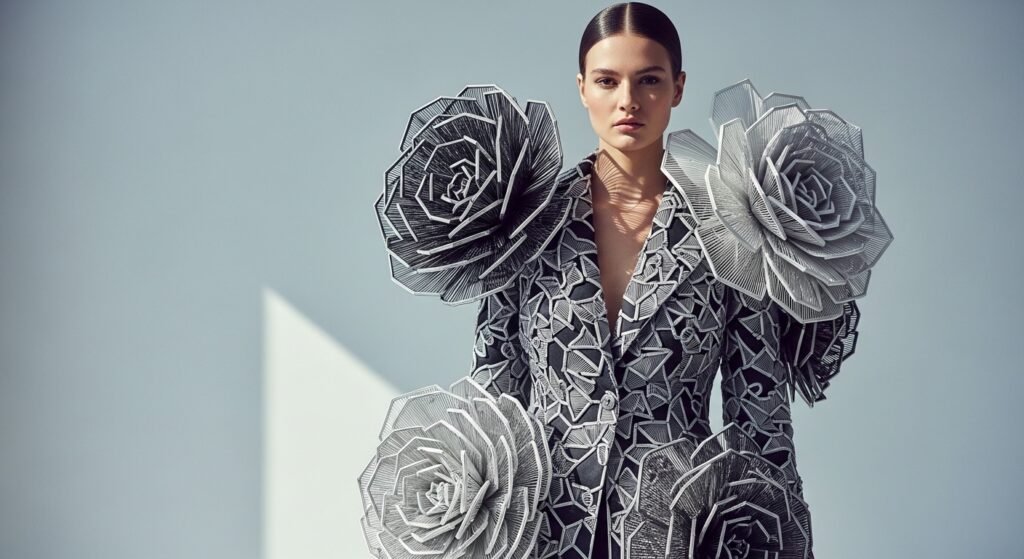
The Dutch couturier Iris van Herpen pioneered 3D-printed fashion more than a decade ago, and her biomorphic, skeleton-and-petal-like structures showed the industry that technology could produce organic beauty. Today that spirit lives on in printed floral bodices and accessories that hold their shape permanently. The result is a spectrum: at one end, soft fabric flowers that flutter; at the other, rigid sculptural blooms that read as wearable art.
Delicate petals in every stitch
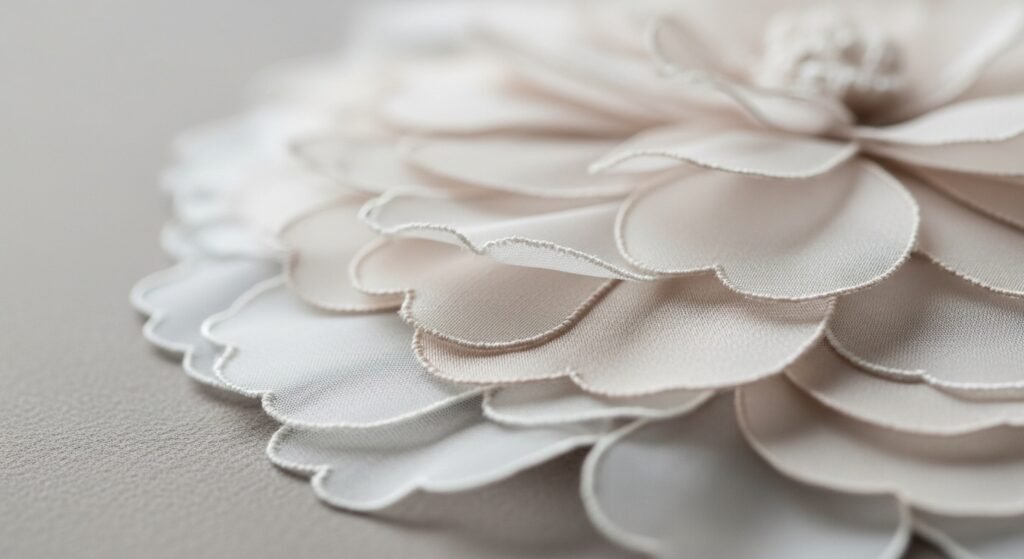
One of the most captivating aspects of this trend is the artistry behind it. The finest examples use layers of silk or organza, with each petal individually shaped and stitched, creating the impression of a real garden frozen in time. Look closely at a well-made piece and you will see gradations of color, wired edges that catch the light, and centers built from beads or knotted thread. This is slow fashion in its purest form: a single bodice can represent dozens of hours of handwork by specialized artisans, many of them trained in heritage embroidery ateliers.
That human touch is exactly why the trend resonates now. In a feed full of AI-generated imagery and mass-produced sameness, the slight irregularity of a hand-rolled petal reads as authenticity. Shoppers are increasingly willing to pay for evidence that a person, not just a machine, made their clothes.
The fashion houses leading the bloom
Several designers have become synonymous with dimensional florals. Simone Rocha has built her romantic universe on floral applique, pearl-studded petals, and tulle confections that feel both girlish and subversive. Erdem Moralioglu, trained in part by his love of botanical references, regularly covers gowns in embroidered and appliqued blooms. At Schiaparelli, Daniel Roseberry has sent gilded, surrealist flowers down the runway, continuing Elsa Schiaparelli’s legacy of turning nature into jewelry-like ornament.
Jonathan Anderson’s Loewe produced one of the most memorable floral moments in recent memory when anthurium flowers appeared as sculpted tops and sprouted from the heels of shoes, images that circulated worldwide and cemented the flower as fashion object. Valentino, Balmain, and Alexander McQueen have all worked sculptural roses and botanical embroidery into major collections. When this many influential houses bloom at once, the trend filters down to the high street within a season.
The rise of the statement rosette
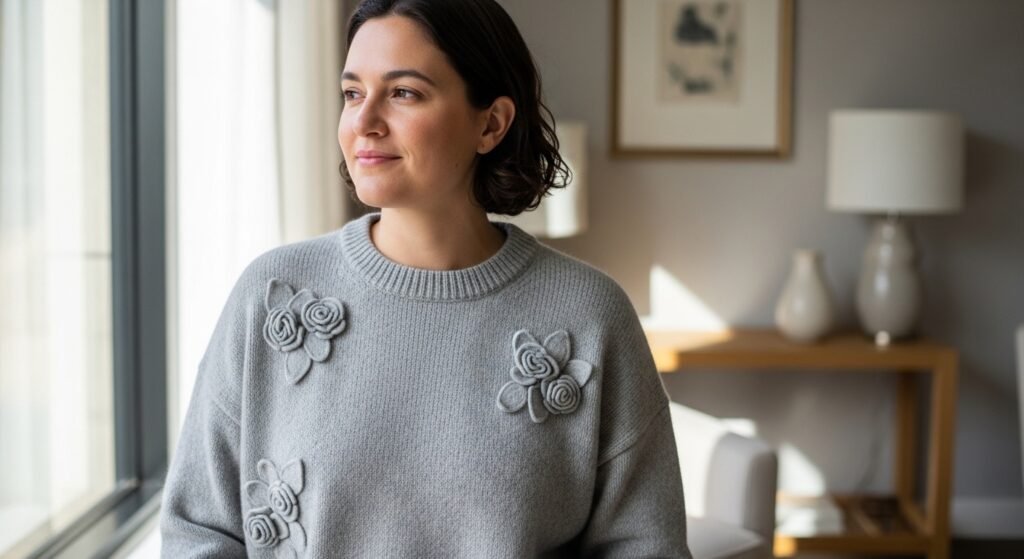
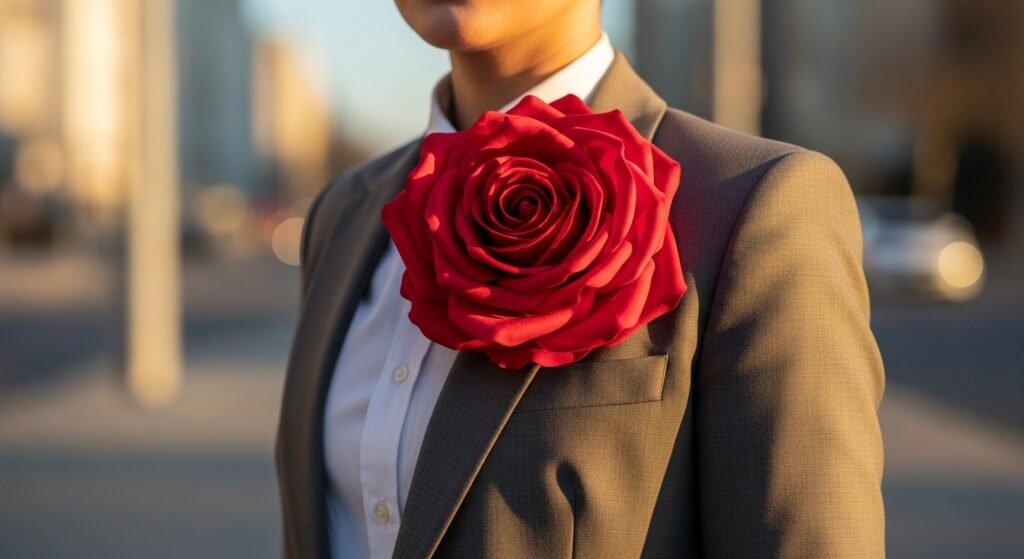
If there is one entry point into the trend, it is the oversized rosette: a single dramatic fabric rose pinned to a lapel, shoulder, waist, or neckline. It has become the styling trick of the moment because it transforms the simplest outfit. A plain black blazer, a white shirt, or a slip dress gains instant intention with one well-placed bloom. Celebrities and street-style stars have embraced the rosette on red carpets, where a single sculptural flower photographs beautifully and reads as confident rather than fussy.
The beauty of the rosette is its democracy. You do not need a couture budget: fabric flower pins and brooches are widely available, easy to attach, and removable, which means one accessory refreshes your entire wardrobe. Choose a bloom in a color that echoes something you already own, and it will look deliberate rather than decorative.
Nature meets modern technology
Some of the most striking dimensional florals are not sewn at all. Designers are using 3D printing to create blooms with engineered structure, petals that hold impossible curves and maintain their form indefinitely. Merging botanical beauty with industrial technology is a very modern paradox, and it keeps fashion feeling inventive. Printed flowers will not wilt, fray, or lose their shape in the rain, which solves the practical problems of fabric blooms while opening new aesthetic territory.
Laser cutting plays a similar role at the accessible end of the market, allowing precise, intricate petal shapes to be produced at scale from felt, faux leather, and bonded fabrics. Technology is not replacing the hand here; it is expanding what the hand can imagine.
A nod to vintage romance
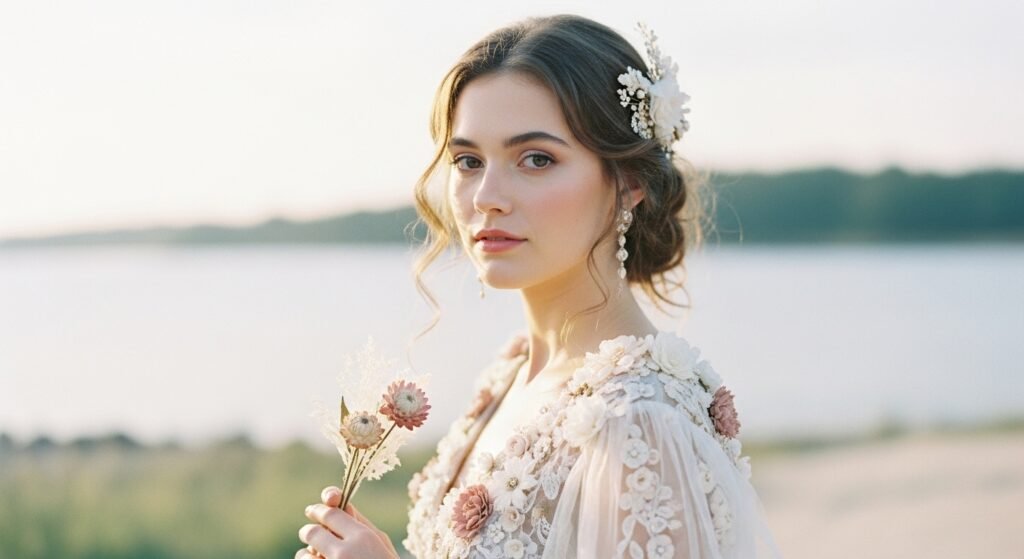
There is a thread of nostalgia running through the trend. Dimensional flowers recall old Hollywood glamour, when starlets wore corsages and fabric blooms as evening jewelry, and they echo the elaborate millinery and couture of earlier eras. In uncertain times, fashion often reaches backward for comfort, and these romantic details offer a gentle escapism. Designers are responding to a collective craving for softness, ceremony, and beauty as a deliberate choice rather than an accident.
This vintage undercurrent also explains the trend’s appeal beyond the runway. A floral brooch inherited from a grandmother suddenly looks current; deadstock 1980s dresses with appliqued bodices are being pulled from closets and worn with pride. The trend rewards the archive, the attic, and the thrift store.
Why texture matters right now
Our visual culture is saturated with flat, filtered, endlessly edited images. Against that backdrop, something genuinely tactile stands out. Texture adds a sensory dimension that photography can barely capture and screens cannot deliver at all, which paradoxically makes it more powerful in person. A dimensional floral does not just decorate an outfit; it gives it presence, shadow, and movement.
There is also a psychological layer. Touch is our most reassuring sense, and after years of digital-first living, many people are drawn to clothes that invite contact. The trend is part of a wider appetite for craft, weight, and materiality, from chunky knits to hand-thrown ceramics. We want to feel things again, starting with what we wear.
Accessories are joining the bloom
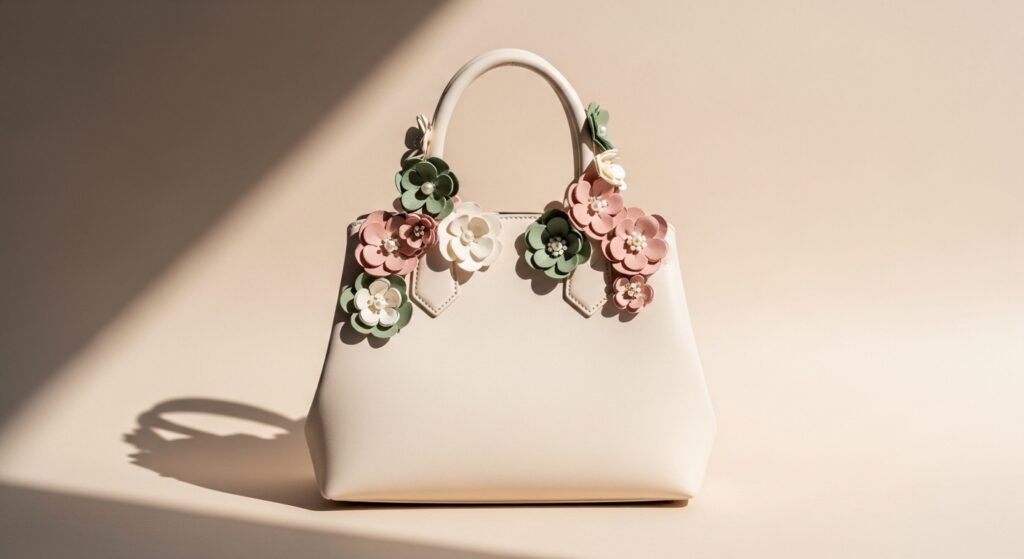
The trend has long since escaped clothing. Handbags sprout floral clasps and appliqued panels, shoes carry blooms on toes and heels, and jewelry designers are casting petals in metal and resin. A pair of heels with a single sculpted flower at the toe can be the easiest possible entry point: all of the romance, none of the commitment. Even eyewear, hair accessories, and phone cases are getting the botanical treatment.
Accessories are also the smartest way to test the trend. They cost less than garments, require no fitting, and let you control the dose precisely. One floral bag against an otherwise simple outfit delivers the full effect.
Bringing texture to everyday style
Runway drama is one thing, but the trend’s real victory is its translation to daily life. High-street brands are adding floral applique to sweaters, denim jackets, T-shirts, and sneakers, often as small embroidered or patched blooms that read as charming rather than costume. A cardigan with a scattering of tiny 3D flowers works for the office; floral-patched jeans work for the weekend.
The key to everyday wear is scale and placement. Smaller blooms scattered asymmetrically look modern; one large bloom looks intentional; blooms covering every inch look like a garden exploded. Start small, see how it feels, and scale up as your confidence grows.
Subtle touches for the minimalist
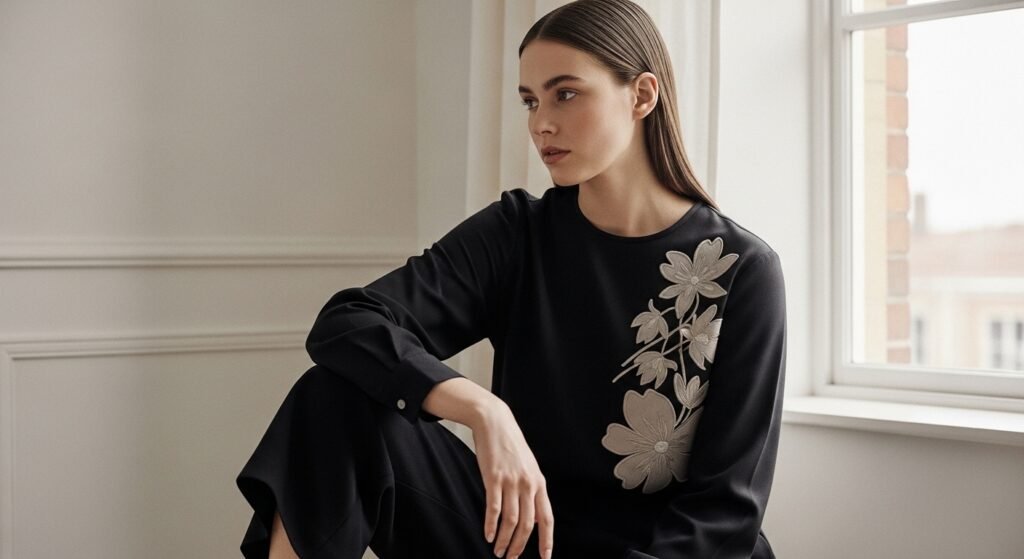
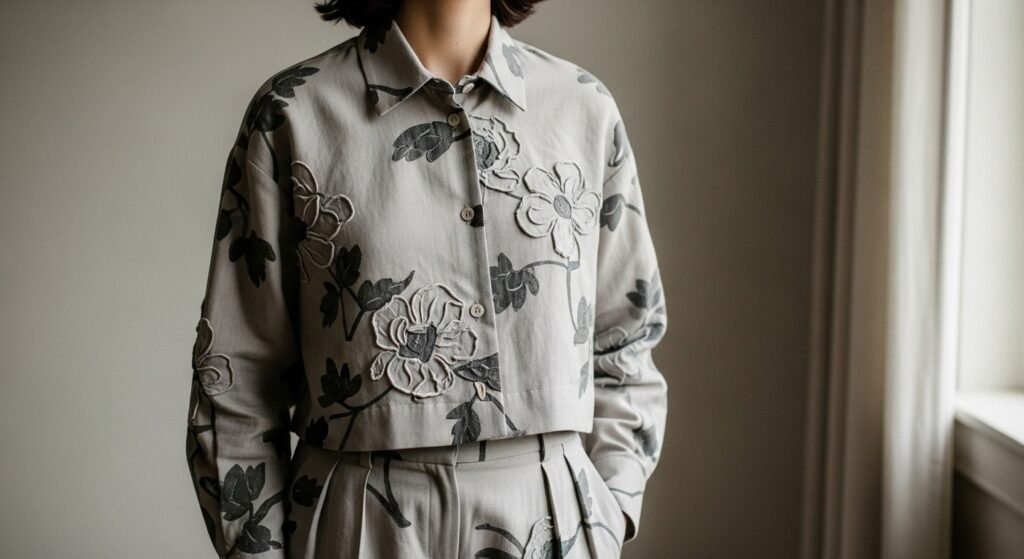
Minimalists need not sit this one out. Tonal applique, where the flowers match the base fabric exactly, adds dimension without adding color or noise. A black-on-black petal texture, a white-on-white embroidered bloom, or a nude floral applique delivers all the craft with none of the sweetness. Monochrome is the minimalist’s friend here: it keeps the silhouette clean while rewarding a closer look.
Placement matters too. A single small bloom at a cuff, collar, or waistband reads as a detail rather than a theme. Think of it as the floral equivalent of a signet ring: small, personal, and quietly confident.
Sustainable petals and recycled fabrics
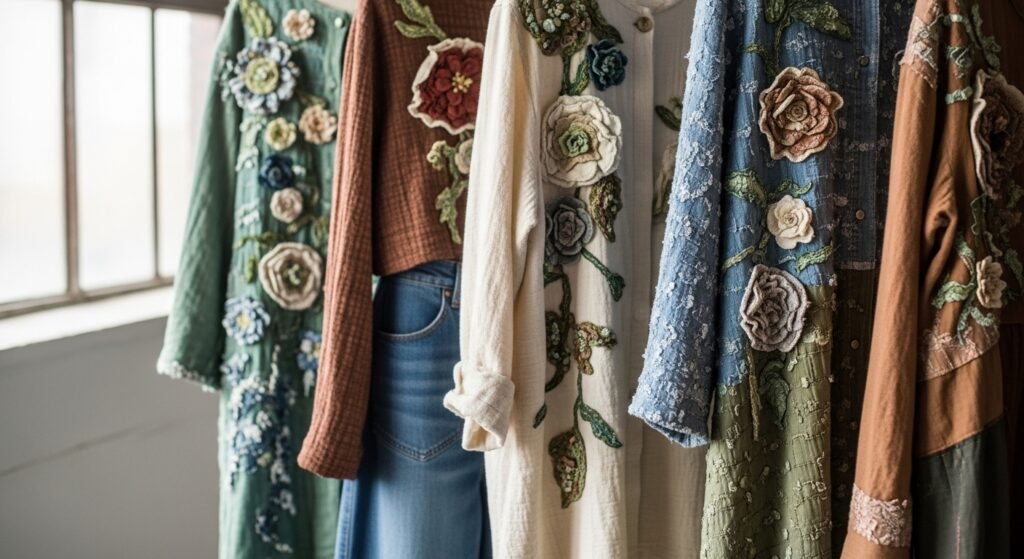
One of the trend’s happiest side effects is how naturally it suits sustainable making. Fabric flowers are traditionally cut from scraps and offcuts, which makes them an ideal use for deadstock and leftover materials. Independent designers are building entire collections from rescued textiles, turning what would be waste into the most eye-catching part of the garment. Vintage and secondhand pieces with existing floral applique are also being revived rather than discarded.
For the DIY-inclined, dimensional florals are among the most approachable embellishments to make at home. Fabric flower tutorials using circles of chiffon, simple running stitches, and a button center can refresh an old jacket or bag in an afternoon, no sewing machine required. The trend’s craft roots make it inherently participatory.
How to wear 3D florals without looking costumey
The line between romantic and costumey comes down to balance. Let the flowers be the statement and keep everything else quiet: pair a floral-appliqued top with simple trousers, or a bloom-covered skirt with a plain knit. Avoid competing romance overload by skipping ruffles, lace, and bows in the same outfit unless you are deliberately going full romantic. Tailored pieces, denim, and leather are excellent foils because their structure contrasts beautifully with soft petals.
Consider proportion and occasion. A fully blooming gown belongs at an event; a single rosette belongs anywhere. And mind the practicalities: dimensional pieces can snag, so they pair best with smooth fabrics and deserve a little extra care in storage. When in doubt, remember the trend’s own logic: one perfect flower beats a dozen wilted ones.
Caring for dimensional pieces
Appliqued and sculptural garments need gentler handling than ordinary clothes. Check labels first, and when in doubt choose hand washing or professional cleaning over the machine. Store dimensional pieces flat or hanging with space around them rather than compressed in a drawer, and use garment bags to prevent snagging. Stuff the cups of structured floral bodices with tissue to hold their shape, and keep 3D-printed elements away from high heat, which can warp them. A little care preserves the craftsmanship that makes these pieces special.
A focus on individual expression
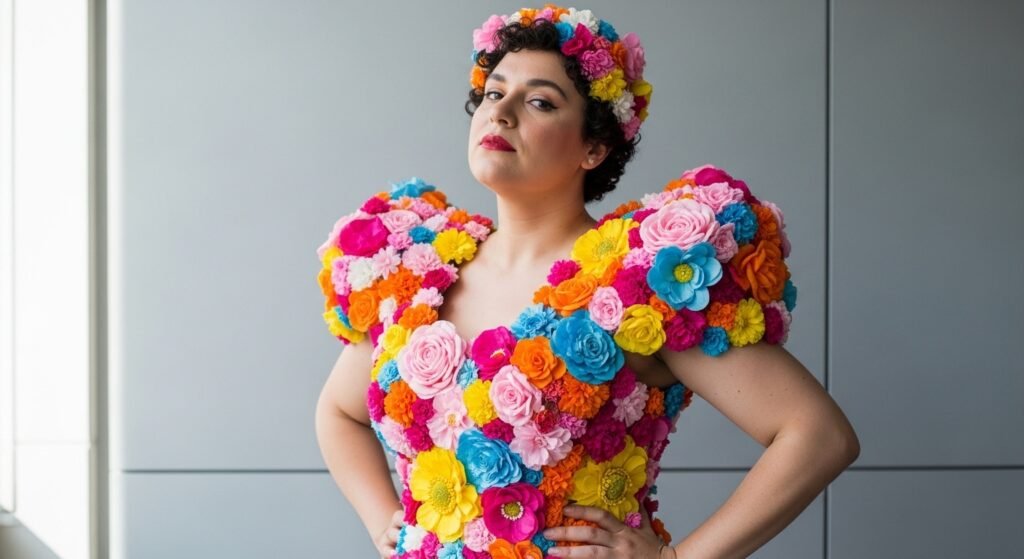
Perhaps the best thing about the 3D floral moment is its range. It can be bold and avant-garde or soft and romantic, maximalist or whisper-quiet, couture or thrifted. There is genuinely something for every taste and budget, from a designer showpiece to a handmade brooch. In a fashion landscape that often demands allegiance to a single aesthetic, dimensional florals invite personal interpretation.
Trends come and go, but the impulse behind this one, the desire for beauty you can touch, craft you can see, and romance you can wear, is timeless. Whether you go all in with a sculptural gown or simply pin a single rose to your lapel, you are participating in fashion’s oldest and most joyful tradition: dressing like the world is in bloom.