
 Sarah Grey
I have tried the 4 a.m. wake-ups. I have downloaded the complicated productivity apps, color-coded the calendars, and bought the planners I abandoned by February. None of it stuck — because none of it was realistic. What finally worked was not a system for superhumans. It was a gentle, repeatable daily routine built for a real person with real energy limits.
This is the routine that actually keeps me consistently productive — not perfectly, not every day, but reliably. No heroics, no burnout, just a rhythm that respects both my ambition and my humanity. Here is exactly what it looks like, from morning to night.
Starting The Day Without The Digital Noise

The hardest habit I ever built was also the simplest: not touching my phone for the first thirty minutes after waking. Those first moments set the tone for everything. If I start with emails and headlines, I spend the day reacting. If I start with quiet, I spend the day choosing.
I keep my phone charging in another room overnight — an alarm clock handles wake-ups. Those thirty phone-free minutes are for stretching, water, daylight, and thinking. It feels strange for about three days. Then it feels like the most natural thing in the world, and going back becomes unthinkable.
Finding Movement That Feels Right

Forget punishing 6 a.m. workouts if that is not you. My movement is a twenty-minute walk or some living-room stretching — enough to get blood flowing and signal to my body that the day has started. The best exercise is the one you will actually do, repeatedly, without dread.
Morning movement pays compound interest: better focus by 9 a.m., better mood by noon, better sleep by night. I stopped treating it as optional self-improvement and started treating it as the on-switch for my brain. Everything productive that follows gets easier because of those twenty minutes.
The Power Of A Consistent Breakfast

I eat basically the same breakfast every day — oatmeal with fruit, or eggs on toast — and it is deliberate. Decision fatigue is real, and spending mental energy choosing breakfast is a waste of a finite resource. A consistent, protein-rich breakfast keeps my energy steady until lunch with no mid-morning crash.
Find your version: something satisfying, quick to prepare, and repeatable without boredom setting in. Rotate two or three options if one feels monotonous. The goal is fuel, not culinary adventure — save the creativity for the work that matters.
Creating A Dedicated Workspace At Home
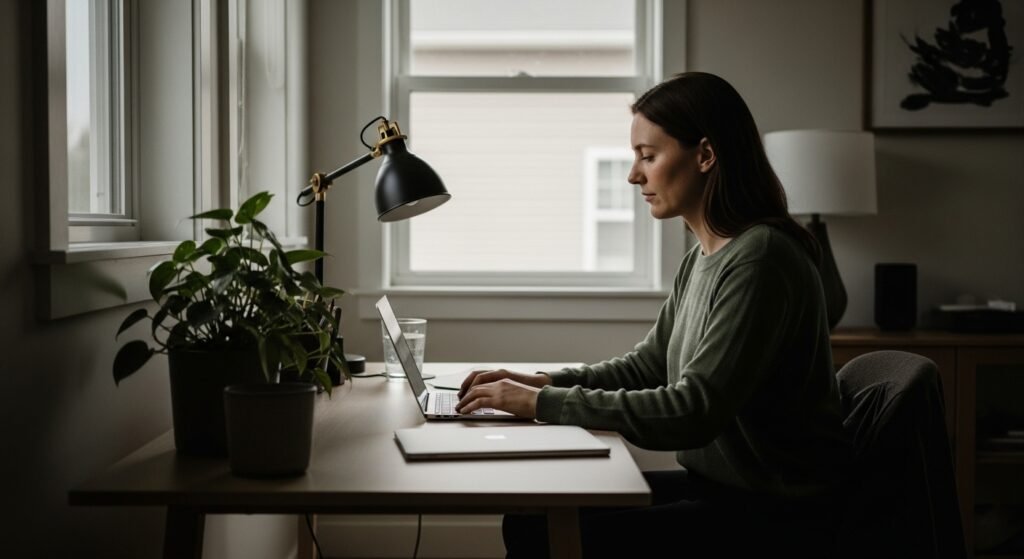
Working from the couch destroyed my focus and my back. Now I have one dedicated spot — a real desk, a decent chair, good light — and my brain has learned that sitting there means work mode. The physical boundary creates a mental one, which matters enormously when home and office are the same place.
Just as important: I leave that spot when work ends. The desk becomes a place I arrive at and depart from, which gives the day structure. Even in a small apartment, a consistent corner beats roaming with a laptop. Your brain thrives on the ritual.
Taking Real Breaks Away From Screens

Scrolling news on your “break” is not a break — it is just a different screen demanding the same attention. A real break means stepping away: water, a window, a walk around the block, staring at actual clouds. Ten minutes of genuine disconnection restores more focus than thirty minutes of feed-scrolling.
I take a proper break every ninety minutes or so, matching my brain’s natural focus cycles. The work I do after a real break is noticeably sharper. Rest is not the enemy of productivity — it is the fuel for it. The most productive people I know are also the best resters.
Hydration As A Subtle Productivity Tool
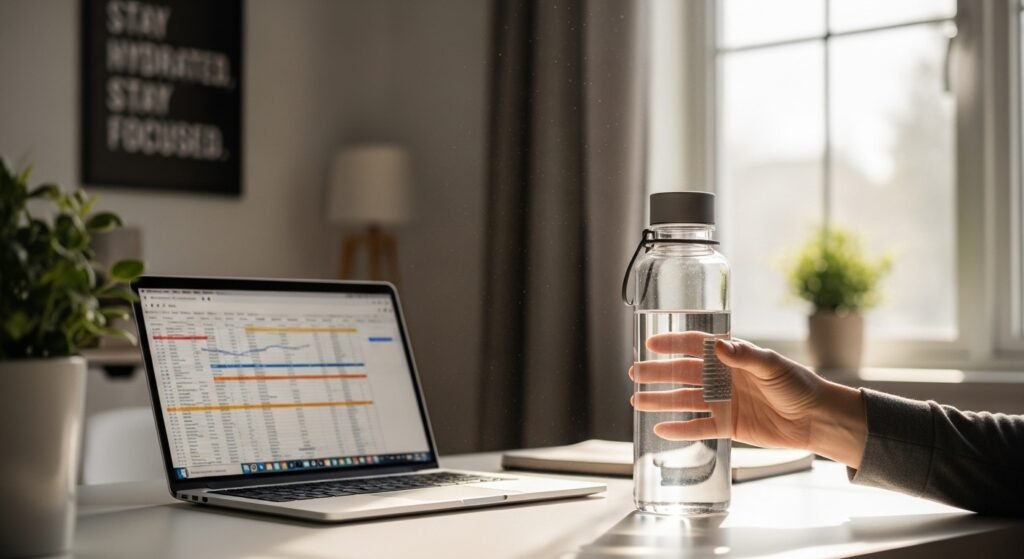
This sounds almost too simple, but dehydration is a silent productivity killer — afternoon headaches, foggy thinking, that 3 p.m. slump. I keep a large water bottle on my desk and refill it twice. It is the easiest performance upgrade there is, and most people are running on empty.
Pair hydration with sensible caffeine: one coffee in the morning, maybe one after lunch, nothing after 2 p.m. if you value your sleep. Energy management beats time management — and it starts with the unglamorous basics of water and reasonable stimulants.
Managing The Infinite Influx Of Notifications
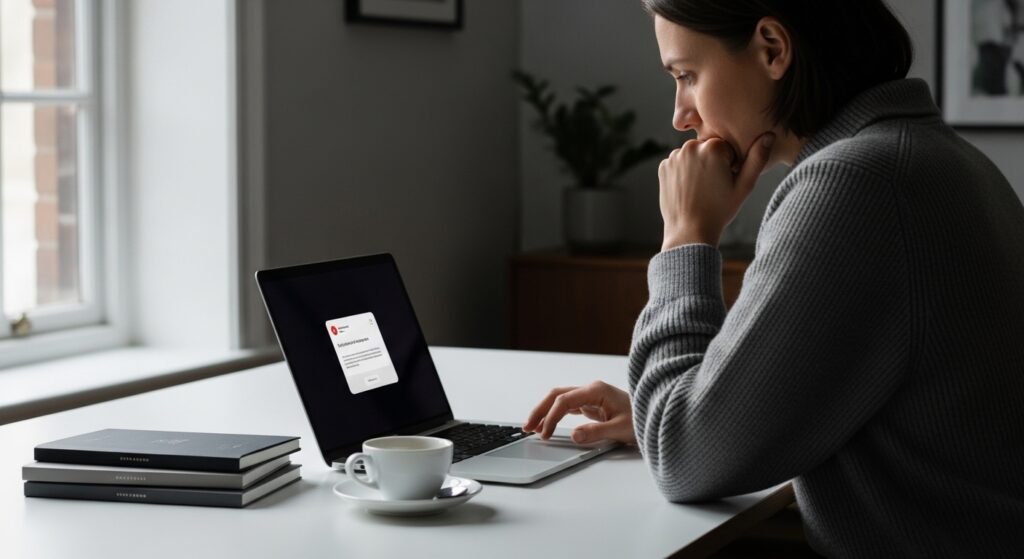
Every ping fractures your focus, and it takes far longer to reassemble than you think. I keep my phone on Do Not Disturb during deep work blocks and check messages at set times — mid-morning, after lunch, late afternoon. The world does not end. Nothing is ever as urgent as the notification makes it feel.
I also ruthlessly disabled non-essential notifications: social media, news, shopping apps — all silent. What remains is messages from actual humans and calendar alerts. My attention is my most valuable asset, and I stopped giving it away to every app that asked.
Using A Simple Physical Planner

Digital tools are great, but there is something powerful about writing the day’s three most important tasks on paper. It forces prioritization — you cannot write twenty things — and crossing them off by hand delivers a satisfaction no checkbox animation can match.
My rule: three priorities, written each morning, visible all day. Everything else is bonus. On days I do this, I finish feeling accomplished. On days I skip it, I finish feeling busy but oddly empty. The planner is small; the difference is enormous.
The Art Of The Midday Reset

Lunch is not just fuel — it is a reset button. I eat away from my desk, without multitasking, for at least twenty minutes. That genuine pause divides the day into two fresh halves instead of one long blur, and my afternoons are dramatically more effective because of it.
If possible, get outside during lunch, even briefly. Daylight and movement recalibrate your energy for the afternoon stretch. The desk will still be there. You will return to it as a sharper version of yourself — which is the whole point.
Batching Similar Tasks Together

Switching between different kinds of work carries a hidden tax — every switch costs focus. So I batch: emails together, calls together, creative work in one protected block, admin in another. Staying in one mode is faster and far less draining than bouncing between five.
My creative mornings are sacred — no meetings, no email, just deep work on the hardest thing first. Admin and communication get the lower-energy afternoon slots. Match the task to your energy, batch the similar ones, and the same hours produce noticeably more.
Closing Out The Professional Day

I end every workday with a shutdown ritual: review what got done, write tomorrow’s three priorities, tidy the desk, and close the laptop — literally and mentally. This ten-minute habit stops work from bleeding into the evening and lets me actually enjoy my off hours.
Without a clear ending, work expands to fill the night with low-grade anxiety about what you forgot. The ritual draws a line. Tomorrow’s list is written, so tonight’s mind can rest. Ending well is as important as starting well.
Protecting Your Energy, Not Just Your Time
Here is the mindset shift that changed everything: manage energy, not just hours. A well-rested, focused hour outperforms three distracted, depleted ones. That means guarding sleep fiercely — consistent bedtimes beat heroic mornings — and treating recovery as part of the routine, not a reward for finishing.
Learn your own rhythms. If you are sharpest before noon, protect those hours for hard work and push meetings to the afternoon. If you fade at 3 p.m., plan lighter tasks there instead of fighting biology. Working with your energy instead of against it is the ultimate productivity hack, and it is free.
The Weekly Review That Keeps It All Working
Once a week — Sunday evening for me — I spend twenty minutes reviewing: what worked, what did not, what needs adjusting. Routines decay without maintenance; the review is the maintenance. Small tweaks weekly prevent the slow drift that kills good habits by month three.
Be kind in the review. The goal is not perfection but sustainable rhythm. Some weeks the routine holds beautifully; some weeks life intervenes. Both are fine. Adjust, recommit, and start Monday fresh. Consistency over months beats intensity over days — every time.
The Evening Wind-Down
How you end the day determines how the next one begins. I stop screens an hour before bed, dim the lights, and do something analog — reading, stretching, tidying. This wind-down signals to my brain that the day is closing, which makes falling asleep faster and waking up clearer.
Protect your sleep like the productivity tool it is, because that is exactly what it is. Consistent bedtimes, a cool dark room, and a real wind-down routine will do more for your focus than any app or hack. Tomorrow’s productivity is built tonight.
Realistic Beats Heroic
This routine will not make you a productivity machine, and that is the point. It will make you steadily, sustainably effective — the kind of person who gets important things done without burning out. Realistic beats heroic because realistic is repeatable.
Start with one piece, not all of it. The phone-free morning, or the shutdown ritual, or the three priorities. Add the next piece when the first feels automatic. In three months, you will have a routine that runs itself — and a life with room to breathe inside it.