 Sarah Grey
There is a particular kind of cold that only a hot dinner can fix. Not the polite chill of an autumn evening, but the deep, gray February cold that settles into your bones and makes the walk from the car to the front door feel like an expedition. On nights like that, dinner is not just dinner. It is a small rescue mission, and the best tool for the job is a meal that tastes like someone loves you.
Comfort food works because it is familiar. Researchers who study food and mood have long noted that nostalgic foods can lift spirits and ease loneliness, largely because we associate them with the people and places where we first ate them. A bowl of beef stew is never just beef stew. It is a warm kitchen on a Sunday, the windows fogged while it snowed outside. That emotional layer is exactly why the recipes below endure: they are simple, generous, and built for cold nights at home.
Why Winter Calls for Comfort Food
Winter changes what our bodies want. When temperatures drop, we burn more energy just staying warm, and most of us instinctively reach for heartier meals. Hot food warms us from the inside, and dishes built on protein and complex carbohydrates keep us full for hours. There is a practical side too: winter produce like potatoes, carrots, onions, squash, and cabbage is inexpensive, stores well, and was made for the long, slow cooking methods that fill the whole house with good smells.
The dinners below are the ones I return to every winter. Each one uses pantry-friendly ingredients, feeds a family or makes excellent leftovers, and delivers that specific feeling of being taken care of. Pick one for tonight, and keep the rest for the weeks when the forecast gives you an excuse.
1. Classic Chicken Pot Pie
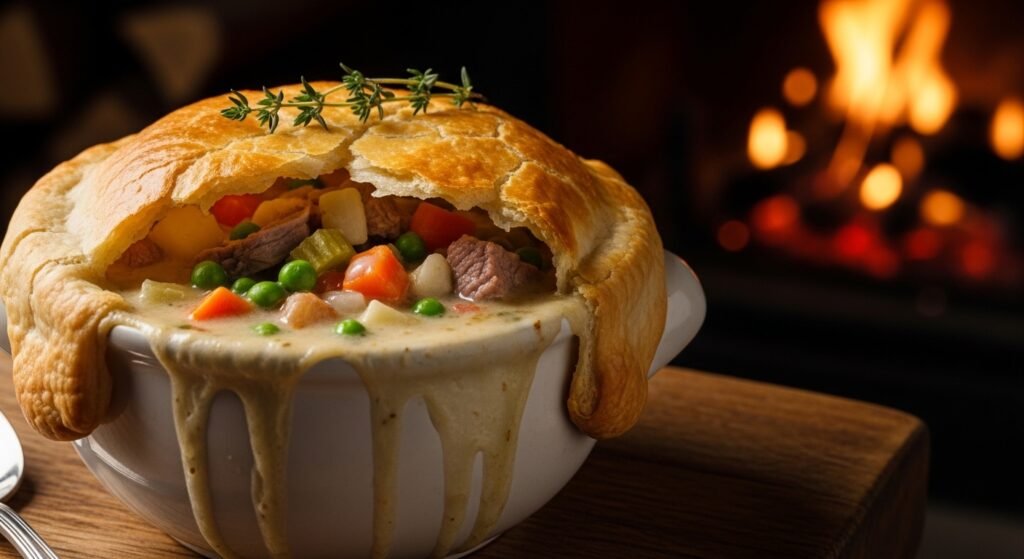
Chicken pot pie is the undisputed champion of winter comfort dinners: tender chunks of chicken, carrots, peas, and celery folded into a creamy sauce under a golden, flaky crust. Meat pies date back to ancient Rome, and the creamy American-style pot pie became a household staple in the 19th and 20th centuries, when home cooks needed filling, affordable ways to stretch one chicken across a whole family.
The secret is the sauce. It should be thick enough to hold its shape when sliced but still luxuriously creamy. Cook the flour and butter together for two full minutes before adding broth so the filling never tastes pasty, and use a mix of chicken broth and a splash of cream. A good store-bought pie crust is completely respectable on a busy night. Brush the top with beaten egg for a deep golden finish and cut a few steam vents so the crust stays crisp.
2. Slow-Cooked Beef Stew
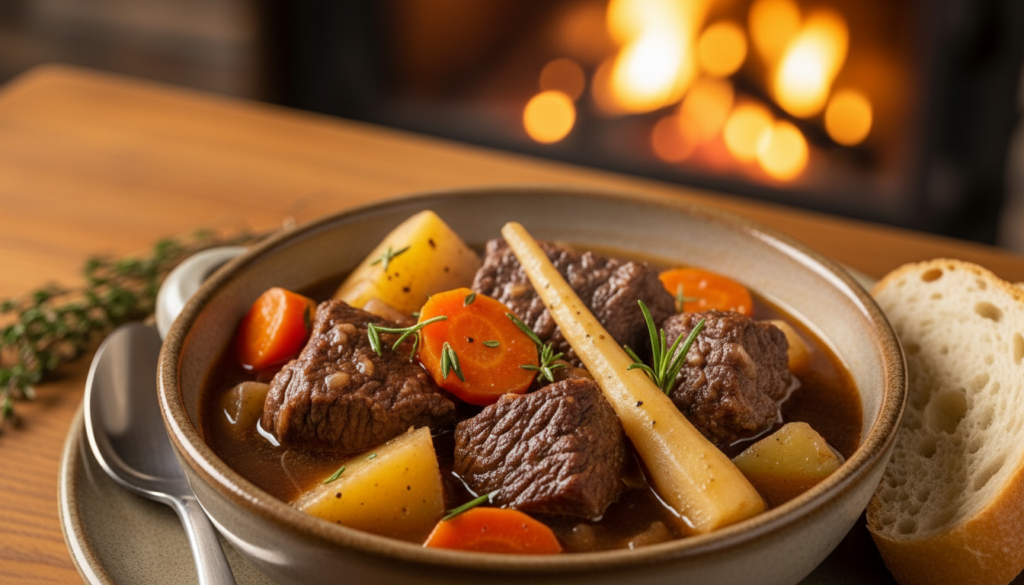
Beef stew is proof that patience is an ingredient. Chunks of chuck roast, potatoes, carrots, and onions simmer for hours until the meat turns spoon-tender and the broth turns rich and silky. Slow cooking works because tough cuts are full of collagen, which breaks down into gelatin over long, gentle heat. That is what gives a proper stew its body and the richness no quick recipe can fake.
Brown the beef well before it goes into the pot. That dark crust is the Maillard reaction at work, and it creates most of the deep, savory flavor in the finished stew. Stir in a tablespoon of tomato paste and let it caramelize, deglaze with beef broth or red wine, and add a bay leaf and fresh thyme. Cook six to eight hours on low in a slow cooker, or about two and a half hours in a Dutch oven at 325F. Serve over buttered egg noodles or with crusty bread for the broth.
3. Creamy Baked Macaroni and Cheese
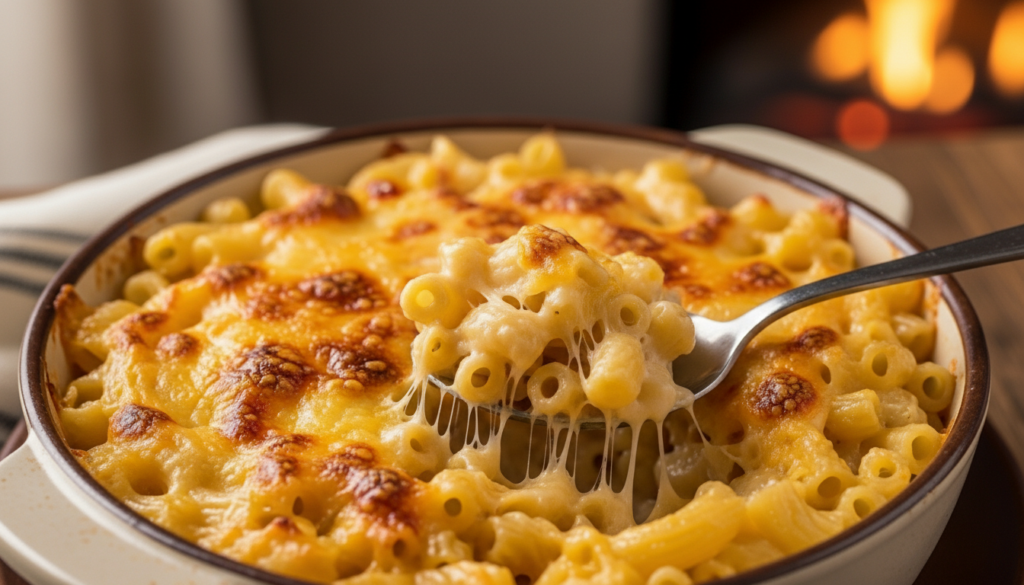
Mac and cheese might be the most universally loved comfort food in America, and its history is longer than most people realize. Baked pasta with cheese appears in European cookbooks centuries old, and the dish famously showed up at an 1802 White House dinner hosted by Thomas Jefferson. It has been a fixture on American tables ever since.
For the creamiest baked version, make a proper bechamel: melt butter, whisk in flour, then add warm milk slowly until smooth before melting in the cheese off the heat. Sharp cheddar is the classic choice, but a handful of Gruyere or fontina adds a nutty depth. Toss cooked elbow macaroni in the sauce, top with buttered breadcrumbs, and bake at 375F until bubbling and golden at the edges, about 25 minutes. Rest ten minutes before serving so the sauce sets.
4. Hearty Vegetable Soup
Not every winter dinner needs to be heavy. A hearty vegetable soup delivers the same warmth with a lighter touch, and it is one of the best ways to use up whatever the crisper drawer throws at you. Carrots, celery, onion, potatoes, green beans, corn, and cabbage all hold up in a simmered broth, and a can of white beans or lentils stirred in at the end adds protein that makes it a genuine meal.
Build flavor in layers: soften onion, carrot, and celery in olive oil with a good pinch of salt, add garlic for the last minute, then pour in broth. A parmesan rind tossed into the pot while it simmers adds wonderful savory depth. Finish with a squeeze of lemon juice or a splash of vinegar. Acid is the trick most home cooks miss: it wakes up all the flavors. Serve with grilled cheese soldiers for dipping.
5. Traditional Shepherd’s Pie
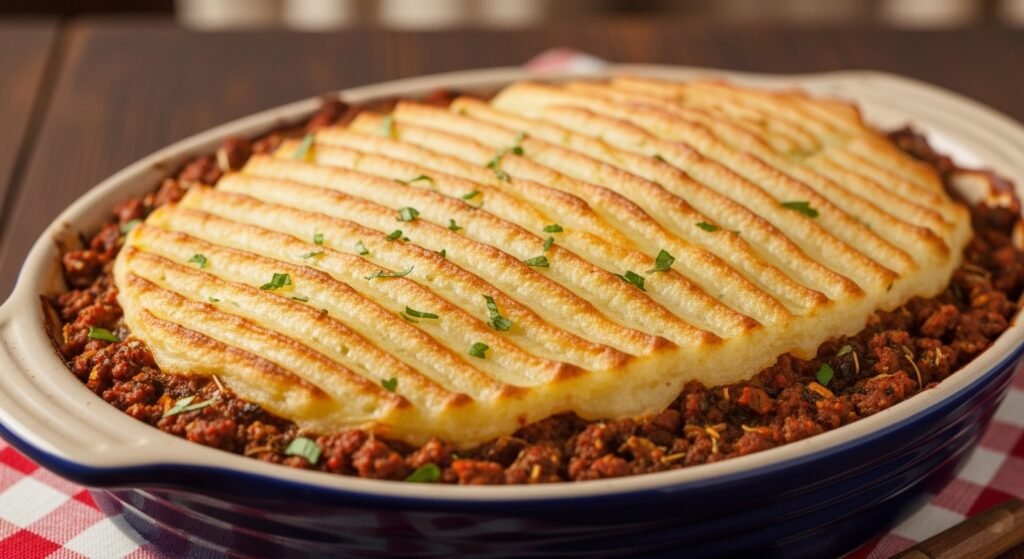
Shepherd’s pie is the ultimate one-dish winter dinner: a savory layer of seasoned meat and vegetables under a thick blanket of mashed potatoes, baked until the peaks turn golden. Traditionally it is made with lamb, while the beef version is called cottage pie, a distinction dating back to 18th-century England and Ireland. Ground beef or turkey works just as well for a weeknight version.
The filling should be moist but not soupy. Brown the meat with diced onion and carrot, stir in tomato paste and a splash of Worcestershire sauce, add broth, and simmer until thick enough to mound on a spoon. For the topping, mash starchy potatoes like russets with warm milk and plenty of butter, and season boldly. Spread over the filling, rough up the surface with a fork so the ridges crisp, and bake at 400F for about 20 minutes until browned and bubbling.
6. Roast Chicken with Winter Vegetables
There is a reason a roast chicken dinner feels like a hug. One bird, one pan of vegetables, one hot oven, and the house smells incredible for hours. Roasting is also one of the most forgiving cooking methods: a whole chicken is hard to ruin as long as you respect two rules. First, pat the bird completely dry so the skin crisps. Second, cook to temperature, not to time. The USDA recommends poultry reach 165F at the thickest part of the thigh, and a simple instant-read thermometer takes all the guesswork out.
Toss chunked potatoes, carrots, parsnips, and red onion with olive oil, salt, and rosemary right in the roasting pan so they cook in the chicken’s drippings. Rub the bird with softened butter mixed with garlic and thyme, season generously, and roast at 425F for about 20 minutes per pound. Rest the chicken for at least 15 minutes before carving so the juices redistribute. And do not throw away the carcass: simmer it with water, onion, and celery the next day and you have homemade stock for a future soup.
7. Homemade Meatloaf with Mashed Potatoes
Meatloaf has an unfair reputation as boring cafeteria food, but a homemade version is pure comfort. The difference comes down to moisture and seasoning. A mix of ground beef and pork gives better flavor and texture than beef alone, and the classic panade of bread soaked in milk keeps the loaf tender without making it dense. Finely diced onion, garlic, salt, pepper, and a dash of Worcestershire round it out.
Shape the loaf free-form on a sheet pan rather than packing it into a loaf pan. More surface area means more delicious caramelized crust. The traditional ketchup or barbecue glaze brushed on during the last 15 minutes is non-negotiable in my house. Bake at 350F until the center hits 160F, about an hour for a two-pound loaf, then rest before slicing. Serve with creamy mashed potatoes and something green. Cold meatloaf sandwiches the next day are arguably even better.
8. Creamy Mushroom Risotto
Risotto sounds fancy, but at its core it is rice, broth, and patience, which makes it a perfect slow winter evening project. The creaminess of a proper risotto does not come from cream at all. It comes from the starch released by Arborio or Carnaroli rice as you stir, which emulsifies with broth and parmesan into a sauce coating every grain. That is also why you cannot rush it or walk away from the stove.
Brown sliced mushrooms, a mix of cremini and shiitake is ideal, in butter until deeply golden and set them aside. Soften shallot in the same pan, add the rice and toast two minutes until the edges turn translucent, then deglaze with a splash of dry white wine. Add warm broth one ladle at a time, stirring often and letting each addition absorb before adding the next. After 18 to 20 minutes the rice should be al dente. Stir the mushrooms back in with a knob of butter and a shower of parmesan, cover two minutes, and serve immediately. Risotto waits for no one.
9. Stuffed Bell Peppers
Stuffed peppers are the weeknight hero of winter comfort food: colorful, filling, endlessly adaptable, and they basically cook themselves once assembled. The classic filling is seasoned ground meat mixed with cooked rice, diced onion, garlic, and tomato sauce, packed into halved bell peppers and baked until tender with browned, bubbly tops.
Two tips make all the difference. First, par-bake the empty pepper halves for 10 minutes before filling so they finish tender instead of crunchy. Second, do not overcook the rice in the filling; it absorbs more moisture in the oven, so slightly underdone is perfect. Try variations: Italian sausage with orzo and mozzarella, black beans and corn with rice for a meatless version, or ground turkey with quinoa. Top with cheese in the last 10 minutes of baking at 375F and finish with fresh herbs.
10. Baked Lasagna with Rich Tomato Sauce
Lasagna is a project, and that is exactly the point on a cold weekend afternoon. Layer by layer it builds into something greater than the sum of its parts: pasta sheets, slow-simmered tomato sauce with beef or sausage, creamy ricotta, and a golden cap of mozzarella. The dish originated in the Emilia-Romagna region of Italy, where the traditional version layers flat pasta with ragu and bechamel rather than ricotta, but the American-style bake has become a beloved classic in its own right.
The make-or-break details: salt the ricotta mixture well and add an egg so it sets instead of weeping; spread sauce on the bottom of the dish first so noodles never stick; and, hardest of all, let the lasagna rest 15 to 20 minutes after baking. Cutting too soon turns neat layers into a delicious landslide. Assemble it a day ahead if you like; it bakes up beautifully and the flavors meld even more. One 9×13 pan feeds a crowd or gives you leftovers all week.
11. Warm Lentil and Rice Casserole
This humble casserole proves comfort food needs neither meat nor dairy to satisfy. Brown lentils and rice bake with onions, garlic, carrots, and warming spices like cumin and smoked paprika into a hearty, spoonable dish as nutritious as it is cozy. Lentils are among the oldest cultivated foods on earth, grown in the Middle East for thousands of years, and remain one of the cheapest, most reliable sources of plant protein and fiber you can buy.
Saute the aromatics, stir in lentils, rice, and spices, add vegetable broth, cover tightly, and bake at 375F for about 45 minutes until tender and the liquid is absorbed. A dollop of yogurt or a squeeze of lemon on top brightens the whole dish. It reheats beautifully, which makes it ideal for meal prep: portion it into containers on Sunday and warming lunches are ready for the coldest days of the week.
Pantry Staples for Cozy Winter Cooking
Every dinner on this list gets easier if your pantry is ready for winter. Keep these basics on hand and a comfort-food dinner is never more than an hour away:
- Broths and stock: chicken, beef, and vegetable broth are the backbone of soups, stews, and risottos.
- Canned tomatoes: crushed, diced, and paste. The foundation of sauces, soups, and braises.
- Dried lentils, beans, and rice: cheap, filling, and endlessly versatile.
- Root vegetables and onions: potatoes, carrots, parsnips, and onions store for weeks in a cool spot.
- Butter, flour, and milk: the trio behind every creamy sauce, crust, and mash on this list.
- Hard cheeses: parmesan, sharp cheddar, and Gruyere keep for weeks and transform simple dishes.
- Dried herbs and spices: bay leaves, thyme, rosemary, cumin, and smoked paprika do the heavy lifting.
Make It a Ritual
The food matters, but so does everything around it. Winter dinners taste better when the table is set instead of eaten over the sink, when phones stay in another room, and when the meal stretches a little longer than strictly necessary. Light a candle. Put on music. Let the stew simmer while you do nothing in particular. These are the evenings you will remember in July: the windows steamed up, a full table, and a plate of something warm that tasted like home.
Start with one recipe this week. By the time spring arrives, you will have a whole rotation of cold-weather favorites, and winter will feel less like something to endure and more like something to savor.