
 Sarah Grey
Your hair talks — you just have to learn its language. That sudden dullness, the tangles that were not there last month, the style that falls flat by noon: these are not random bad hair days. They are signals. Your hair is telling you, quite clearly, that something in your routine is not working and it needs extra help right now.
The good news is that most hair distress is fixable once you decode the signs. Here are the clearest signals your hair sends when it is struggling — what each one means, and exactly what to do about it. Listen early, act quickly, and your hair will thank you.
The Sudden Loss Of Natural Shine
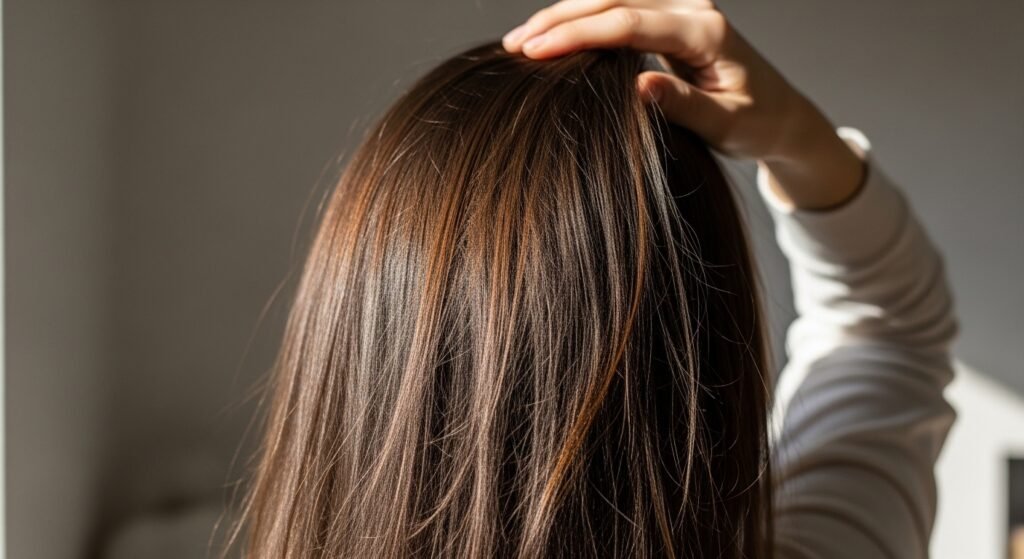
Healthy hair reflects light; damaged hair absorbs it. When your hair suddenly looks matte and dull instead of glossy, it usually means the cuticle — the protective outer layer — is rough and raised instead of smooth and flat. Product buildup, hard water, and over-washing are the usual culprits.
The fix: a clarifying shampoo once every week or two to remove buildup, followed by a proper conditioner. Finish with cool water to help seal the cuticle. If dullness persists, a glossing treatment or shine serum on the mid-lengths and ends restores that light-reflecting smoothness almost instantly.
Tangles That Appear Out Of Nowhere

If you are reaching for detangler more than usual, your hair’s surface has likely become rough. Damaged cuticles catch on each other like Velcro, creating knots that were never a problem before. This is one of the earliest warning signs — and one of the easiest to reverse if you catch it.
Detangle gently, always on conditioned hair, working from ends upward with a wide-tooth comb. Add a weekly deep-conditioning mask to smooth the cuticle. And protect your hair while sleeping — a silk pillowcase or loose braid prevents the overnight friction that turns minor roughness into major tangles.
Split Ends Making An Unwanted Appearance
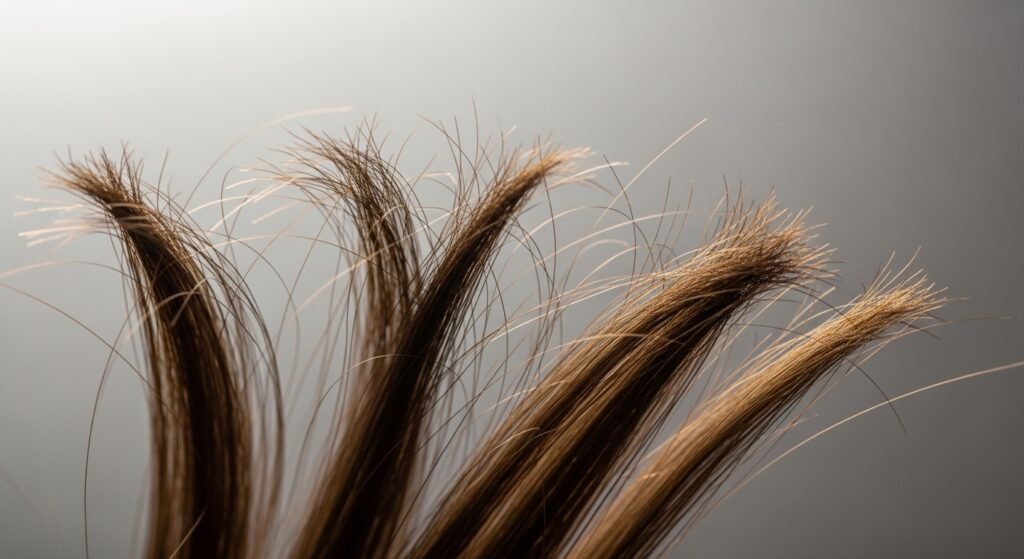
Split ends are the classic cry for help — and the one signal you cannot condition away. Once hair splits, no product can fuse it back together. If you are seeing those tiny frayed tips, especially with longer styles, your hair is overdue for a trim.
Book the trim; even a quarter-inch dusting stops splits from traveling upward and breaking higher. Between cuts, reduce the causes: less heat styling, gentler brushing, and regular trims every eight to twelve weeks. Prevention is the only cure, and it works beautifully.
A Noticeable Change In Texture
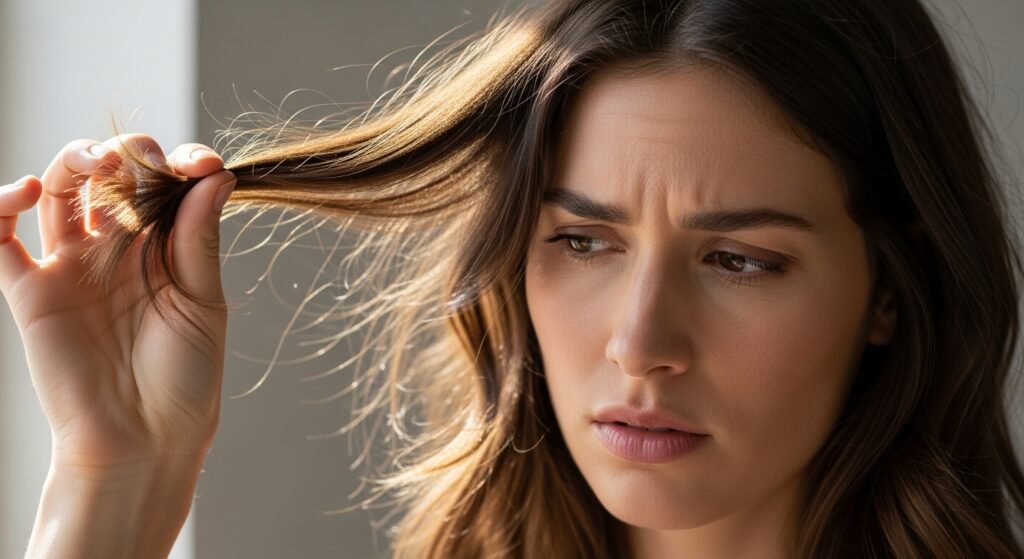
When your hair suddenly feels different — straw-like, oddly sticky, rough where it used to be smooth — pay attention. Texture changes signal that the hair’s moisture-protein balance is off. Straw-like usually means thirsty for moisture; gummy or stretchy means it needs protein.
Do the strand test: wet a single hair and gently stretch it. If it snaps immediately, you need moisture. If it stretches excessively, you need protein. Then treat accordingly — a hydrating mask or a protein treatment. Getting the diagnosis right is everything; the wrong treatment can make things worse.
Styling That Just Will Not Stay

You spend an hour on a perfect blowout, and it collapses before you leave the house. When hair will not hold a style, it is often over-conditioned, weighed down by buildup, or lacking the internal structure that gives style memory. The hair is too soft to stand up for itself — literally.
Clarify to remove the weight, then rebuild structure with a volumizing mousse or root-lifting spray applied to damp hair. Blow-dry with tension for smoothness that lasts. And go easy on heavy oils and butters near the roots — they are style-killers on fine or weighed-down hair.
Excess Frizz In Normal Humidity
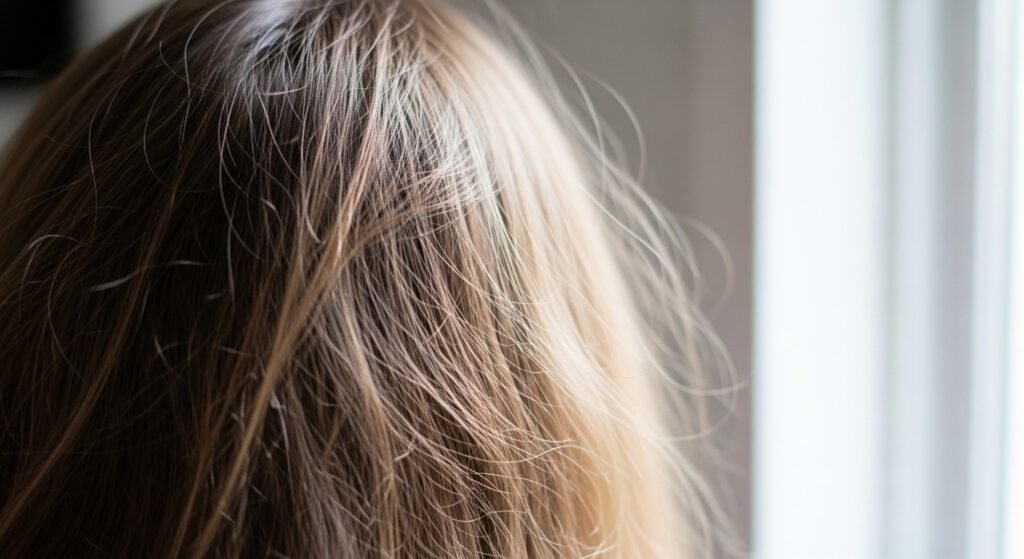
A little frizz in rain is normal. Frizz on a dry, mild day is a distress signal. It means your hair is dehydrated and grabbing moisture from the air, puffing up the cuticle in the process. Chronically frizzy hair is thirsty hair, plain and simple.
Fight frizz with moisture and sealing: a hydrating shampoo and conditioner, a leave-in on damp hair, and a light oil or cream to seal the ends. Sleep on silk, avoid rough towel-drying, and consider a humidifier in dry climates. Consistent moisture is the long-term fix.
More Strands In The Brush

Losing fifty to a hundred hairs a day is normal. Noticing significantly more — clogged drains, a fuller brush, thinner ponytail — deserves attention. Common triggers include stress, seasonal changes, tight hairstyles, harsh brushing, and scalp neglect. Most causes are temporary and fixable.
Be gentle: loose styles, careful detangling, and a scalp massage to boost circulation. Ensure you are eating enough protein and iron. If shedding is sudden, severe, or comes with bald patches, see a dermatologist — some causes need professional diagnosis, and early treatment works best.
Brittle Strands That Snap Easily
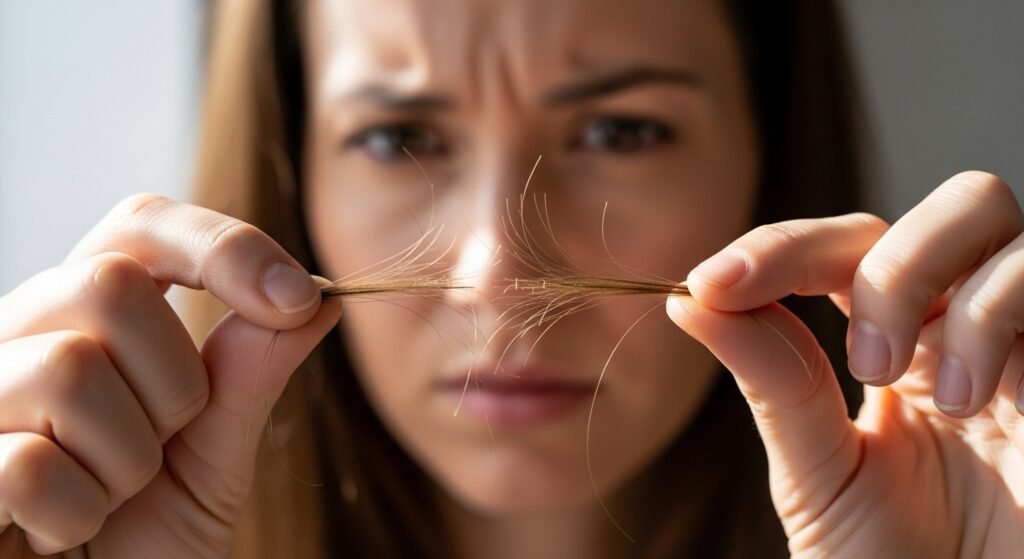
Healthy hair stretches a little before breaking; brittle hair just snaps. If your strands break with minimal tension, the internal protein structure is compromised — usually from chemical processing, excessive heat, or a severe moisture-protein imbalance. Breakage, unlike shedding, means the hair itself is failing.
Pause the damage: reduce heat, space out chemical services, and start a repair routine with protein treatments followed by deep moisture. Trim off the worst breakage — it will not recover. Then rebuild slowly. Patience is the treatment; there are no overnight fixes for brittleness.
Colors That Fade Way Too Fast

When expensive salon color washes down the drain within days, your hair is too porous to hold pigment. Porosity comes from damage — the cuticle is lifted and open, so color molecules slip right out along with moisture. Fast fading is really a damage report.
Protect color with sulfate-free shampoo, cool water washes, and UV protection. Deep-condition regularly to fill in the porous gaps. And tell your colorist about the fading — they can adjust formulas and add bonding treatments that help color actually stay where it belongs.
A Scalp That Feels Tight Or Dry

We obsess over ends and ignore the scalp — but a tight, itchy, flaky scalp is often the first sign the whole system is dehydrated. Harsh shampoos, hot water, infrequent washing, or seasonal dryness can all strip the scalp’s natural balance.
Treat your scalp like facial skin: gentle cleansing, lukewarm water, and occasional exfoliation or a soothing scalp serum. A healthy scalp grows healthy hair — everything starts at the root, and a comfortable scalp is the foundation every other fix builds on.
Lack Of Volume And Bounce

Hair that lies flat and lifeless, refusing to hold any lift at the roots, is usually weighed down — by product buildup, heavy conditioners, or natural oils that have not been properly cleansed. Flatness is rarely a hair problem; it is almost always a buildup problem.
Clarify, then condition only from mid-lengths down. Blow-dry roots upward with a round brush, or flip upside down for instant lift. A volumizing powder or dry shampoo at the roots absorbs oil and creates grip. Bounce is not about having more hair — it is about removing what is holding it down.
The Hair SOS Recovery Plan
Seeing several of these signs at once? Do not panic — do a reset. For two weeks: clarify once, deep-condition weekly, minimize heat, sleep on silk, and trim the worst ends. This simple reset resolves the majority of hair distress, because most of it comes from buildup, dehydration, and mechanical damage — all fixable.
Track what changes. If shine returns and tangles ease, you are on the right path — keep going. Recovery is not instant, but hair responds quickly to consistent care. Two weeks of kindness can undo months of neglect, and the improvement keeps compounding from there.
When To See A Professional Stylist
Some signs warrant expert eyes: severe breakage, sudden heavy shedding, scalp conditions that do not improve, or color that will not hold despite proper care. A good stylist can diagnose what home care cannot — and prescribe the right salon treatments, from bonding therapies to professional scalp care.
Think of it like a checkup, not a failure. Bring your current products and be honest about your routine. Professional guidance at the right moment saves months of guessing — and often saves the hair itself. Knowing when to ask for help is the smartest hair care move there is.
Building A Hair-Healthy Lifestyle
Great hair is not just about products — it is about the whole picture. Eat enough protein and iron, since hair is built from what you eat. Manage stress, which is a notorious trigger for shedding. Get enough sleep, because growth and repair happen overnight. Your hair reflects your overall health more honestly than any mirror.
Protect your hair from the elements too: UV sprays or hats in strong sun, a swim cap or pre-swim rinse before chlorinated pools, and extra moisture in harsh winter air. Think of it as skincare for your strands — daily, gentle, consistent protection beats occasional heroic treatments every time.
Listen To Your Hair
Your hair is always communicating — dullness, tangles, frizz, flatness are all messages, not mysteries. The sooner you learn to read them, the sooner you can respond. Small interventions early prevent big rescues later.
So the next time your hair starts acting differently, do not just fight it — listen to it. Decode the signal, give it what it is asking for, and watch it bounce back. Healthy hair is not luck. It is a conversation.