
 Sarah Grey
It started with a video of a billionaire’s morning routine. 4 a.m. wake-up, ice bath, meditation, journaling, workout, all before most people hit snooze. I watched it at midnight, eating cereal, feeling like a failure. The next morning, I decided to fix my life the way the internet told me to: by scheduling every single waking hour for maximum productivity. What could possibly go wrong?
Everything. Everything could go wrong, and it did, faster than I expected. For one full week, I lived by the hour: color-coded calendar blocks, five productivity apps, timed breaks, optimized everything. By Wednesday, I was more exhausted than I had ever been while doing less meaningful work than usual. This is the honest story of my productivity experiment, what backfired, and what I actually learned about getting things done.
The 4 A.M. Alarm Mistake

Day one began at 4 a.m., because apparently that is when successful people are born. I did not feel successful. I felt like a zombie extra. The problem was not discipline. It was biology. Sleep researchers have long documented that people have different chronotypes, natural patterns that make some of us morning larks and others night owls, driven by individual circadian rhythms. Forcing a night owl into a lark’s schedule does not create discipline. It creates sleep deprivation.
By 2 p.m. on day one, my brain had the processing power of a potato. I got less done in sixteen waking hours than I normally do in eight. The lesson was immediate: the best wake-up time is the one that gives you enough sleep. Most adults need seven to nine hours, and no morning routine can compensate for a sleep deficit. I moved my alarm to a time that allowed eight hours, and my productivity instantly improved more than any app ever managed.
Scheduling Every Single Minute

My calendar looked beautiful. Every hour had a label, a color, and a purpose. Work blocks, meal blocks, exercise blocks, even a block labeled buffer that I had scheduled to feel spontaneous. The rigidity lasted about four hours. Then a meeting ran long, the whole tower collapsed, and I spent more time rescheduling than working.
Here is what I learned: a schedule should be a scaffold, not a cage. Time-blocking works when it is loose, with two or three anchor tasks per day and breathing room between them. When every minute is accounted for, there is no room for reality: the unexpected call, the creative detour, the lunch that runs long because the conversation is good. A good plan survives contact with the day. Mine did not.
The Productivity App Trap
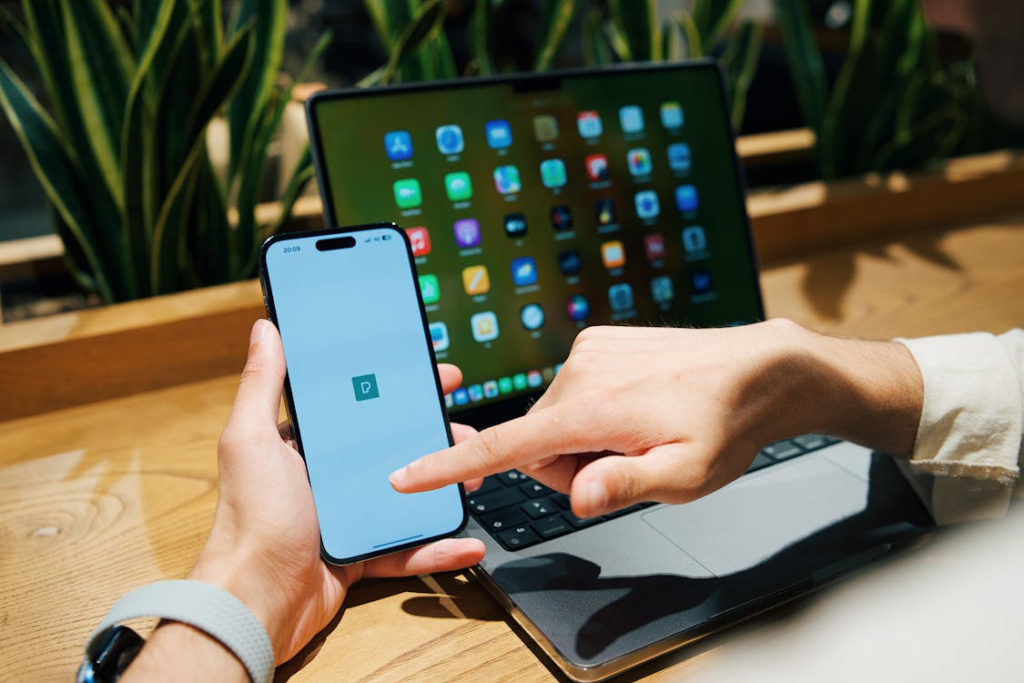
I downloaded five apps: a habit tracker, a time logger, a focus timer, a task manager, and a goal journal. For two days, my main activity was managing my productivity system. Logging the time I spent logging time. Checking off the task of checking tasks. It was productivity theater, and the audience was just me.
The apps were not the problem. The belief was: that a better system would fix what was actually an energy and priorities problem. I deleted four apps and kept one simple to-do list. The rule I use now: the system should take less than five minutes a day to maintain. If organizing your work takes longer than doing it, the system is the procrastination.
Ignoring My Internal Clock
My schedule demanded deep creative work at 8 a.m. and administrative tasks at 3 p.m. My brain had other plans. I am sharpest late morning and hit a wall mid-afternoon, a pattern tied to natural circadian dips in alertness that most people experience in the early afternoon. Fighting that rhythm with willpower was like swimming upstream all day.
The fix was embarrassingly simple: match tasks to energy. Creative, demanding work goes in my peak hours. Email, errands, and routine tasks go in the dip. I get more done in four aligned hours than I did in eight forced ones. Pay attention to when you naturally focus best for a week, then protect those hours like appointments. Your chronotype is not a flaw to fix. It is data to use.
The Multitasking Myth

To save time, I started answering emails during lunch, listening to podcasts while writing, and keeping chat windows open during focused work. I felt incredibly busy. I was also making mistakes, forgetting things, and taking twice as long on simple tasks. The brain does not parallel-process complex tasks. It switches rapidly between them, and every switch has a cost in time and accuracy.
Single-tasking felt uncomfortably slow for two days. Then my output doubled. One task, full attention, done, next. I started using the Pomodoro Technique, working in focused 25-minute intervals with short breaks, a method developed by Francesco Cirillo in the 1980s that remains popular because it works with the brain instead of against it. Doing less at once turned out to be the fastest way to do more.
Social Media Guilt Trips
Nothing destroys motivation like watching someone else’s highlight reel while you are struggling. Every perfectly organized desk, every 5 a.m. routine, every six-figure month made my messy experiment feel like a personal failure. I was comparing my behind-the-scenes to everyone else’s final cut.
I muted every productivity influencer for the rest of the week, and the relief was instant. Comparison is not information. It is noise dressed as inspiration. The only productivity worth measuring is your own: are you moving toward what matters to you? Unfollow anything that makes you feel behind. Your pace is not a problem to solve.
Forgetting to Just Breathe
In my quest to optimize every hour, I eliminated the spaces between things: no staring out the window, no wandering thoughts, no doing nothing. My mind never idled, and my best ideas stopped coming. That is not a coincidence. Research on the brain’s default mode network suggests that mind-wandering and rest are when the brain consolidates learning and makes creative connections.
I reintroduced deliberate nothing time: a walk without a podcast, ten minutes with my eyes closed, a long shower. The ideas came flooding back. Rest is not the absence of productivity. It is part of the process. The most productive people I know protect their downtime as fiercely as their work time, because they understand that output depends on recovery.
Coffee Is Not Food
By day three, I was running on caffeine and ambition, which is to say I was running on fumes. Four coffees before noon, lunch at 3 p.m., dinner whenever. My energy graph looked like a heart attack: spikes, crashes, spikes. Caffeine borrows energy from later; it does not create it.
No productivity system survives bad fuel. I started eating real meals at real times, drinking water before the second coffee, and stopping caffeine after 2 p.m. so it would not wreck my sleep. The change in my afternoon energy was bigger than anything the schedule had achieved. You cannot optimize your way out of biology. Eat, hydrate, sleep. Then optimize.
The Burnout Was Real
Wednesday afternoon, I hit the wall. Not tiredness, something deeper: a flat, gray feeling where even easy tasks felt impossible. I had heard of burnout, but I had always imagined it as something that happened to other people over months. Mine arrived in three days of relentless self-optimization. The World Health Organization recognizes burnout as an occupational phenomenon characterized by exhaustion, mental distance from work, and reduced effectiveness. I had the full set by midweek.
Burnout is not a badge of honor. It is a system failure, and the system was mine. I took Wednesday evening completely off, no optimization, no improvement, just rest, and felt human again by morning. The experience taught me to treat energy as a budget: spend it on what matters, and stop spending before you are overdrawn.
Decision Fatigue Set In
When every hour requires a decision, decision-making itself becomes exhausting. Psychologist Roy Baumeister’s research on decision fatigue suggests that the quality of our choices deteriorates after a long session of decision-making. By evening, I could not decide what to eat, what to watch, or whether to answer a text. I had spent my entire decision budget by 6 p.m.
The antidote is fewer, bigger decisions made in advance. I now plan the next day’s top three priorities the night before, lay out workout clothes, and keep meals simple on weekdays. Automating the small stuff preserves mental energy for the decisions that actually matter. Every routine you build is a decision you no longer have to make.
Missing the Small Moments
The saddest part of my hyper-scheduled week was what I missed while optimizing it. A beautiful sunset I saw only as a glare on my screen. A friend’s funny story I half-heard while checking a task. A perfect spring afternoon I spent indoors rescheduling blocks. I was so busy managing my life that I forgot to live it.
Productivity is supposed to serve life, not replace it. If your system leaves no room for spontaneity, beauty, or other people, it is not working, no matter what the metrics say. I now leave unscheduled space every day on purpose. Some of my best ideas, conversations, and memories live in those gaps.
Perfectionism Ruined My Flow
The final backfire was perfectionism. If I fell ten minutes behind, the whole day felt ruined, so I would abandon the plan entirely and get nothing done. This all-or-nothing thinking turned small deviations into total collapses. A good system bends. Mine shattered.
Now I aim for good enough and directionally correct. A day where I complete two of three priorities is a win. Progress is not linear, and consistency beats intensity every time. The goal was never a perfect schedule. It was a good life, lived at a sustainable pace.
What Actually Works
After the experiment collapsed, I rebuilt my approach from what survived the wreckage. Here is the simple system I actually use now:
- Sleep first. Eight hours, consistent times. Everything else is downstream of this.
- Three priorities a day. Chosen the night before. Everything else is bonus.
- Match tasks to energy. Hard work in peak hours, admin in the dips.
- Single-task. One thing at a time, with breaks. The Pomodoro Technique keeps me honest.
- Protect white space. Unscheduled time every day for rest, ideas, and real life.
- Quit by default. Fewer apps, fewer commitments, fewer decisions. Simplicity scales.
I tried being productive every hour, and it backfired faster than I expected. But it taught me something valuable: productivity is not about squeezing more out of every minute. It is about spending your energy on the right things and having enough left over to enjoy your life. That is a system worth keeping.