
 Sarah Grey
Your twenties are a strange decade. Old enough to make big decisions, young enough to make big mistakes, and busy enough that the lessons only become obvious in hindsight. I spent most of mine learning things the hard way: through overdraft fees, burnt-out friendships, sun damage, and a career path that zigzagged like a confused GPS. Nobody sits you down at twenty-two and explains how compounding works, why boundaries matter, or that the sunscreen you skip today becomes the regret of your thirties. So consider this the conversation I wish someone had with me. These are the things I wish I knew in my twenties that would have changed everything sooner.
Compounding Interest Is Real Magic

This is the lesson with the biggest price tag. If you invest even a modest amount in your early twenties, compound growth does extraordinary things over time. Consider the math: money invested at twenty-two has ten more years to compound than money invested at thirty-two, and those extra years matter enormously because compounding accelerates. Financial planners love the Rule of 72, which says you can estimate how long it takes money to double by dividing seventy-two by your annual return. At a seven percent average return, money doubles roughly every ten years, which means every decade you wait costs you a doubling.
I did not open a retirement account until my late twenties because retirement felt like a rumor. That delay will cost me tens of thousands of dollars in lost growth. If your employer offers a 401(k) match, contribute at least enough to get the full match; it is literally free money. If not, a Roth IRA lets your contributions grow tax-free for decades. You do not need a lot to start. You need to start. Your sixty-five-year-old self is counting on decisions your twenty-two-year-old self makes this week.
Quality Over Quantity In Friendships

In my early twenties, I measured my social life by headcount. Big group chats, packed weekends, hundreds of acquaintances. It felt like success. But the Harvard Study of Adult Development, one of the longest-running studies on human happiness, found that the quality of our relationships is the strongest predictor of a happy, healthy life, far more than wealth or fame. A handful of deep friendships does more for your wellbeing than dozens of shallow ones.
Your twenties are when friendships get tested by distance, careers, and changing lives, and that is normal. The ones worth keeping are the ones where effort flows both ways. I wish I had stopped chasing every invitation and invested more deeply in the few people who genuinely showed up. Call your real friends. Show up for the hard things, not just the fun ones. Ten years from now, you will not remember the crowded parties, but you will remember who answered the phone at midnight.
Sunscreen Is A Long-Term Investment

In my twenties, sunscreen was something I wore at the beach and nowhere else. I had no idea that dermatology research attributes the majority of visible skin aging, roughly eighty percent, to ultraviolet exposure, most of it from ordinary daily life rather than sunbathing. The UV damage you accumulate walking to work, driving, and sitting near windows is cumulative and silent. It shows up a decade later as dark spots, uneven texture, and wrinkles that no cream can fully reverse.
A daily broad-spectrum SPF 30 takes thirty seconds and is the single most effective anti-aging product ever made, outperforming every expensive serum on the market. I wish I had started at twenty-two instead of thirty. If you are in your twenties reading this, start today. Future you will look in the mirror and be grateful. And beyond vanity, sunscreen reduces skin cancer risk, which is a health matter, not a beauty one. The cheapest, easiest longevity habit in skincare is sitting in a bottle waiting for you.
Learning To Cook Basic Meals

I spent an embarrassing amount of money in my twenties on takeout and delivery, telling myself I was too busy to cook. The math is brutal: even a modest fifteen-dollar takeout habit a few times a week adds up to thousands of dollars a year, money that could have been compounding in the investment account I also did not have. Learning just five simple recipes would have saved me a small fortune.
Cooking is also a health investment. Restaurant and delivery food is engineered for taste, which usually means more salt, sugar, and oil than you would ever use at home. You do not need to become a chef. Master a stir-fry, a pasta, a sheet-pan dinner, a soup, and a breakfast you actually like, and you will eat better for a fraction of the cost. Batch cooking on Sundays takes an hour and covers half the week’s dinners. Your twenties are the perfect time to build this skill, because the savings compound just like investments do.
Your Career Is Not A Sprint

I spent my early twenties in a panic that I was behind. Behind whom? Everyone, apparently. Social media made it look like my peers were all getting promoted, funded, and featured while I was still figuring out my job title. Here is what I know now: the average American holds around a dozen jobs over a working lifetime, according to Bureau of Labor Statistics data. Careers are marathons with switchbacks, not ladders you climb once.
The pressure to have it all figured out by twenty-five is a fiction. Your twenties are for exploration, skill-building, and yes, some wrong turns. The people who look impossibly successful at twenty-seven often burn out by thirty-two. Focus on becoming genuinely good at valuable things, build a reputation for reliability, and trust that compound career growth works like compound interest: slow at first, then suddenly powerful. Nobody’s highlight reel is the full story.
The Importance Of Regular Checkups

Skipping the dentist to save money is one of the most expensive decisions you can make. A routine cleaning costs a fraction of a root canal, and preventive care exists precisely because catching things early is cheaper and less painful than fixing them late. The same goes for annual physicals, eye exams, and every screening your doctor recommends. In your twenties, you feel invincible, which is exactly why it is the best time to build the habit.
I avoided the dentist for three years in my twenties and paid for it with interest, literally and figuratively. Beyond the money, there is peace of mind in knowing where you stand health-wise. Many employers offer wellness benefits people never use. If you have insurance, an annual physical is typically covered. Treat preventive care like an investment portfolio for your body: small, regular contributions now prevent catastrophic costs later.
Boundaries Are Not Selfish Acts

I spent my twenties saying yes to everything: extra projects, favors I resented, social plans I dreaded. I thought boundaries were selfish. They are not. They are how you protect your time, energy, and health so you can show up fully for the things that actually matter. The World Health Organization now recognizes burnout as an occupational phenomenon, and chronic overcommitment is its primary fuel.
Learning to say no gracefully is a skill, and like any skill, it improves with practice. Start small: decline one thing this week that you would normally accept out of guilt. Notice that the world does not end. The people who respect you will respect your boundaries; the ones who do not were benefiting from your lack of them. Every yes to something you do not want is a no to something you do, including rest. Guard your time like the finite resource it is, because it is.
Travel While You Have Flexibility

Your twenties are the most flexible decade of your life. Fewer mortgages, fewer dependents, fewer immovable obligations. Travel gets logistically harder with each passing decade, not because it becomes impossible, but because the windows of freedom get narrower. I wish I had taken more advantage of that flexibility instead of telling myself I would travel later.
This does not require luxury. Some of my most formative trips were cheap: road trips with friends, budget flights booked months ahead, hostels in cities I could barely pronounce. Travel in your twenties teaches self-reliance, adaptability, and perspective in ways nothing else does. You learn to navigate, to problem-solve, to be comfortable being uncomfortable. Later is not guaranteed, and later is definitely more expensive. Go now, go cheap, go often.
The Reality Of Credit Scores

Nobody teaches you how credit scores work, and then one day you need one for an apartment, a car, or a mortgage. Here is the crash course I wish I had gotten: FICO scores range from 300 to 850, and the two biggest factors are payment history, about thirty-five percent, and credit utilization, about thirty percent. Translation: pay every bill on time, and keep your credit card balances well below thirty percent of your limits.
A strong credit score saves you staggering amounts of money through lower interest rates. The difference between a good and mediocre score on a mortgage can cost tens of thousands over the life of the loan. Build credit early with a single card you pay off in full every month. Never miss a payment; a single late payment can haunt your score for years. Check your score regularly through free services. Credit is a tool, and like any tool, it rewards those who learn to use it properly.
Mental Health Is Physical Health

I treated my mental health as optional for most of my twenties, something to address if everything else was handled. That is backwards. Your mind runs everything: your work, your relationships, your physical health. The research is unambiguous that mental and physical health are deeply intertwined. Chronic stress and untreated anxiety manifest in the body as sleep problems, digestive issues, weakened immunity, and pain.
Therapy is not just for crises; it is maintenance, like going to the gym for your mind. Many employers offer employee assistance programs with free sessions people never use. Journaling, regular sleep, movement, and honest conversations with trusted people are all legitimate mental health tools. I wish I had started therapy years before I did, not because anything was dramatically wrong, but because having a professional help you understand your own patterns is one of the highest-leverage investments you can make in yourself.
Skill Building Outside Of Work

Your job teaches you job skills. Everything else you have to teach yourself. In my twenties, I assumed my career development would happen at work. It does not, or at least not enough. The most valuable skills I have now, writing, basic design, financial literacy, public speaking, were all built outside office hours, one evening or weekend at a time.
Skills compound like money. An hour a week spent learning something valuable becomes fifty hours a year, and fifty hours a year over a decade makes you genuinely expert at something. Pick skills that are transferable across industries: communication, data literacy, a second language, coding basics. The job market rewards people who can do rare and valuable things, and the only reliable way to become one of those people is deliberate practice outside the job description.
Comparison Is A Joy Thief

Social media turned my twenties into a comparison marathon I could never win. Everyone’s life looked better: better apartments, better vacations, better relationships, better hair. What I know now is that I was comparing my behind-the-scenes to everyone else’s highlight reel. People post their wins, not their credit card statements. The curated feed is not a documentary.
Research consistently links heavy social comparison to lower self-esteem and life satisfaction. The fix is not necessarily deleting everything, though breaks help enormously. It is changing the relationship: curate your feed toward inspiration rather than envy, limit the doomscrolling, and measure your life against your own past, not someone else’s present. The only fair comparison is you last year versus you today. Everything else is fiction with good lighting.
The Value Of A Side Hustle
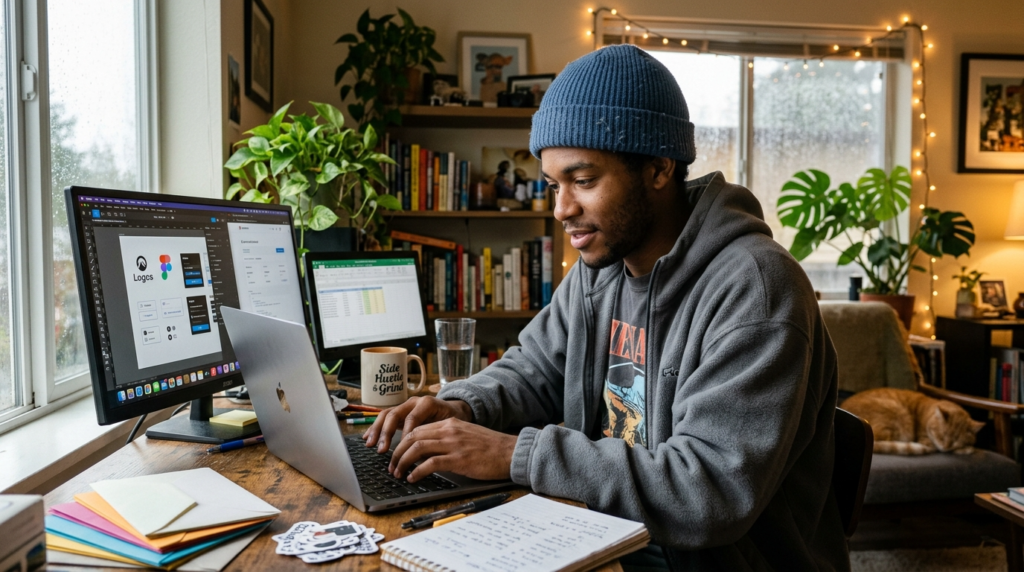
A side hustle is not just extra income. It is optionality. Financial planners recommend keeping three to six months of expenses in an emergency fund, and a side income stream is the fastest way to build one. But beyond the money, a side project teaches you entrepreneurship, diversifies your skills, and gives you leverage. It is much easier to negotiate at work or walk away from a bad job when you are not one hundred percent dependent on a single paycheck.
Start small and start honest. Freelance a skill you already have, sell something you make, consult in your area of expertise. The goal in your twenties is not to build an empire; it is to prove to yourself that you can generate income independently. That confidence changes how you move through your career. Even a few hundred extra dollars a month, consistently saved or invested, becomes meaningful over time. And if the side hustle grows into something bigger, you will be glad you started early.
Living Within Your Actual Means

Lifestyle inflation is the silent killer of twenties finances. You get a raise, and suddenly your apartment, car, and habits all get more expensive, leaving you exactly as broke as before but with nicer things. I did this for years. The popular 50/30/20 budgeting framework offers a saner path: roughly fifty percent of income for needs, thirty percent for wants, and twenty percent for savings and debt payoff. The magic is in keeping the percentages stable as income grows.
Living below your means is not about deprivation. It is about buying freedom: the freedom to change careers, to handle emergencies, to say no, to retire someday. Every dollar you do not spend on impressing people is a dollar working for your future. Your twenties set your financial trajectory more than any other decade, because habits formed now compound for forty years. Spend intentionally, save automatically, and let your lifestyle grow slower than your income. Your future self will thank you for every boring, disciplined decision.