
 Sarah Grey
Modern life runs at a relentless pace. Between work demands, glowing screens, and an endless feed of things we are supposed to care about, most of us are running on fumes by midweek. We tend to wait for some dramatic breakthrough — a new job, a big move, a perfect Monday — to finally transform our lives. But the biggest changes I have ever made came from the smallest habits, repeated quietly day after day.
Over the past few years I have tested dozens of small routines, keeping the ones that genuinely moved the needle and dropping the rest without guilt. The eleven habits below are the keepers. None of them takes more than a few minutes, none requires special equipment, and each one compounds over time. Here is what actually worked — and how you can start today.
Starting The Day Without A Screen

The first thing most of us do in the morning is reach for the phone, flooding the brain with notifications, headlines, and other people’s priorities before we have even sat up. That jolt of information spikes stress hormones and puts you in reactive mode for the rest of the day. Giving yourself even thirty screen-free minutes lets your brain wake up on its own terms.
The trick is making it easy: charge your phone outside the bedroom and use a simple alarm clock instead. Keep a book or journal on the nightstand so your hands have somewhere to go. The first mornings feel strange, almost itchy — and then, within a week, the quiet becomes the best part of the day.
Drinking Water Before The Coffee

After seven or eight hours of sleep, your body is mildly dehydrated — and coffee, for all its virtues, is not the fastest fix. A tall glass of water first thing replenishes what the night took, wakes up your digestion, and often clears that groggy feeling faster than caffeine alone. Coffee tastes better after water, too.
Habit-stack it: put a filled glass or bottle on the bathroom counter each night, and drink it while the coffee brews. No willpower required, no extra time needed. It is the smallest possible upgrade to a morning, and it is the one I would keep if I had to give up all the rest.
Practicing The Two Minute Rule

Borrowed from productivity expert David Allen, the two-minute rule is beautifully simple: if a task takes less than two minutes, do it now instead of writing it down. Reply to the text, hang up the coat, rinse the mug, file the receipt. Each tiny completion stops a small task from joining the mental pile.
The magic is in what it prevents. Undone micro-tasks do not just clutter your home — they clutter your mind, each one quietly demanding attention in the background. Clearing them in real time keeps your space calmer and your head clearer, all without scheduling a single organizing session.
Prioritizing Real Paper Books

Reading on a screen is convenient, but it comes with built-in distractions — every chapter competes with notifications one swipe away. A paper book is a single-tasking device: no pings, no tabs, no temptation. Flipping real pages also seems to help the brain settle, which is why so many readers find print easier on the eyes and the mind before bed.
You do not need to read for an hour. Ten pages with your evening tea, or a chapter before sleep, adds up to dozens of books a year. Keep a book where you would otherwise scroll — the couch arm, the nightstand, your bag. Boredom is where reading lives now; protect a little of it.
Writing Down Three Daily Wins

Our brains are wired with a negativity bias: we remember the one rude email and forget the ten good things. Writing down three small wins each night — a finished task, a kind word, a green light when you were late — retrains your attention toward what went right. It sounds almost too simple, which is exactly why most people dismiss it before trying.
Keep a dedicated notebook or a notes-app entry; the format does not matter, the regularity does. On bad days, the wins will feel tiny — a proper meal, a walk outside — and those count double. After a month, you will have a written record that your days are better than your mood sometimes claims.
Finding Joy In Simple Cooking

Cooking a simple meal is one of the few daily activities that engages all your senses at once: the sizzle, the smell of garlic, the colors in the pan. It forces a kind of gentle presence that scrolling never will. Even a fifteen-minute meal — eggs, toast, a chopped salad — can feel like a small act of care in a chaotic day.
You do not need to become a chef. Pick three or four dead-simple meals you actually like and rotate them without apology. Chop vegetables while a podcast plays, taste as you go, and eat at a table instead of over the sink. The nourishment is only half the point; the pause is the rest.
Setting Boundaries With Notifications
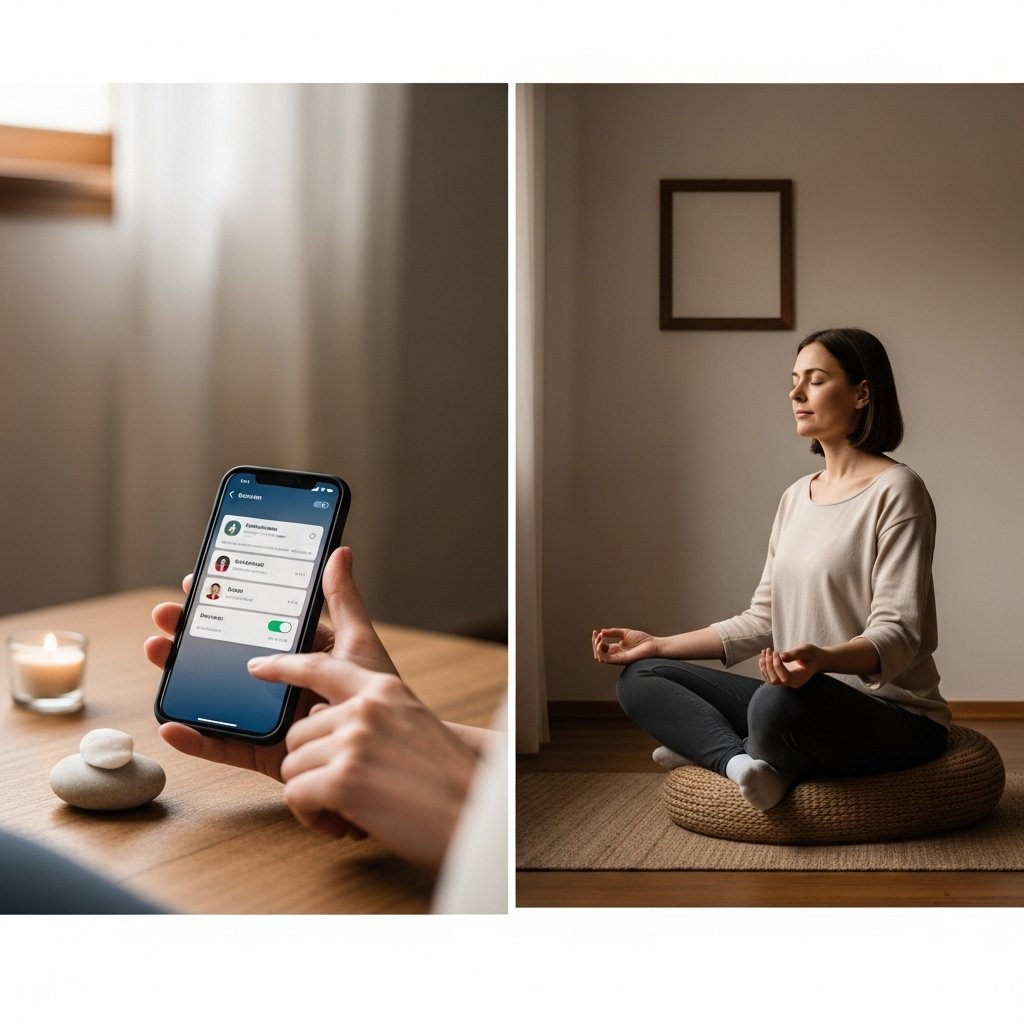
Every ping fractures your attention, and research suggests it can take over twenty minutes to fully refocus after an interruption. Most notifications are not urgent — they are just loud. Turning off everything except calls, messages from real humans, and true alarms hands your attention back to you.
Do a ruthless audit: open your notification settings and disable anything that is not from a person you know. Batch the rest — email and news can wait for two scheduled check-ins a day. The world will not end; it will just get quieter. Within days, the phantom urge to check fades, and your focus stretches longer than it has in years.
Spending Time In Nature

Time in green spaces measurably lowers stress hormones, blood pressure, and rumination — even twenty minutes in a local park counts. Nature does not ask anything of you. There is no feed to refresh, no performance to maintain, just trees doing their slow, unbothered thing while your nervous system downshifts.
You do not need a hiking trip. Walk part of your commute through the park, eat lunch on a bench, or take your evening stroll around the block instead of the treadmill. Leave the earbuds in your pocket sometimes and let the ambient sound in. Small, regular doses beat the occasional epic outing.
Keeping A Clean Workspace

Visual clutter competes for your attention whether you notice it or not — every stray paper and unwashed mug is a tiny unresolved task. A five-minute end-of-day reset (clear the desk, close the tabs, write tomorrow’s top three) gives your brain a clean signal that work is done and tomorrow is handled.
The payoff comes the next morning: you sit down to order instead of chaos, and starting feels effortless. This is less about minimalism as an aesthetic and more about reducing friction. Your environment is always shaping your behavior — a tidy desk quietly votes for a focused day.
Engaging In Consistent Movement

Forget punishing workouts you dread: the habit that changed my life was simply moving a little, every day, in ways I actually enjoy. A morning stretch, a midday walk, an impromptu dance while dinner cooks. Consistency beats intensity so thoroughly it is not even close — the body responds to regular signals, not occasional heroics.
Anchor movement to something you already do: stretch while the kettle boils, walk while you take calls, do ten squats before your shower. When movement stops being a workout and becomes just something your day includes, you stop negotiating with yourself about it. Mood, sleep, and energy all follow.
Practicing Active Listening

Most of us listen just enough to plan our reply. Active listening — full attention, eye contact, no phone in hand — is rarer and more powerful than it sounds. People can feel the difference instantly, and conversations become deeper, warmer, and more honest when someone is truly being heard.
Practice it in low-stakes moments first: with the barista, on a routine call, at family dinner. Put the phone face-down, ask one follow-up question, and resist the urge to fill silences. You will learn things about people you thought you knew — and they will remember how you made them feel.
Making Habits Stick When Motivation Fades
Motivation is a terrible foundation — it shows up late and leaves early. What works instead is design: stack new habits onto existing ones (water while coffee brews), shrink them until they are laughably easy (one page, one stretch), and shape your environment (phone out of the bedroom, book on the pillow). Make the good choice the easy choice.
And when you miss a day — you will — skip the guilt spiral. Research on habit formation shows that missing once has no measurable impact; it is the second miss that starts a slide. Aim for never missing twice instead of perfection. Self-compassion is not the opposite of discipline; it is what makes discipline sustainable.
The Quiet Power Of Small
None of these habits will change your life by Friday. That is precisely the point. Big transformations are just small habits, repeated until they become identity: you are someone who moves daily, reads nightly, protects their mornings. Start with one — the easiest one — and let it prove to you that change does not require an overhaul. The rat race will still be there tomorrow. You will just be meeting it on your own terms.