 Sarah Grey
The snack aisle is engineered to keep you eating. Bright packaging, bold natural claims, and ingredient lists that run to twenty items, many of them flavorings, preservatives, and refined starches you would never cook with at home. The alternative is simpler than it sounds: a short list of whole foods, a little weekend prep, and snacks that genuinely satisfy hunger instead of merely pausing it.
Homemade snacks win on three fronts. First, you control the salt, sugar, and oil, the three levers packaged food pulls hardest. Second, whole ingredients bring fiber, protein, and healthy fats that slow digestion and keep energy steady, while refined snacks spike blood sugar and leave you hungry an hour later. Third, real food simply tastes better. A roasted chickpea, a ripe banana, or a spoonful of good peanut butter needs no flavor laboratory to be delicious.
The eleven snacks below need no special equipment and minimal time. Most keep for days in the fridge or in a sealed jar, so a single prep session covers the workweek. Each one starts from recognizable ingredients, fruits, nuts, seeds, whole grains, dairy, and vegetables, and each delivers genuine nourishment along with flavor.
Roasted Chickpeas
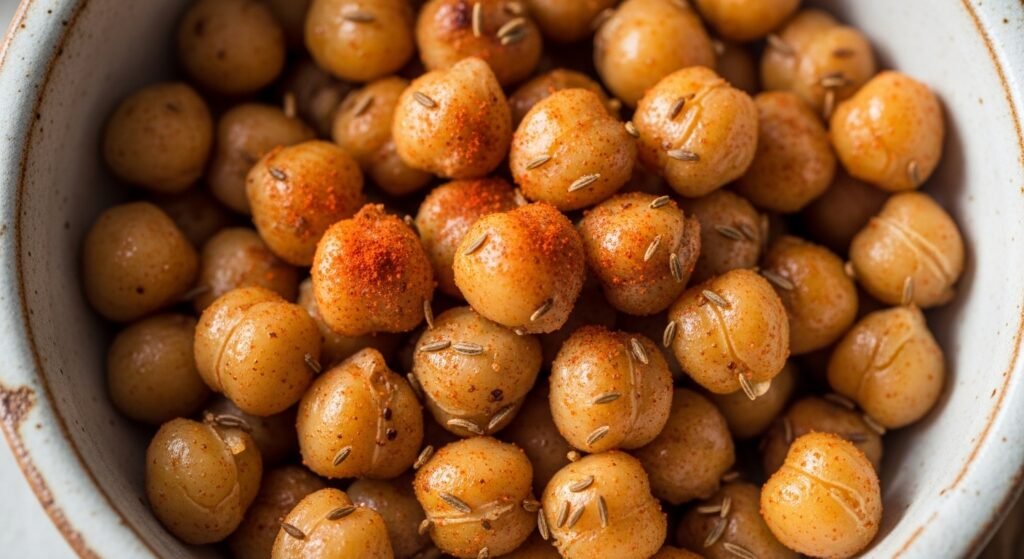
Roasted chickpeas are the crunchiest proof that healthy snacking needs no packet. Drain and rinse a can of chickpeas, or cook dried ones until tender, then dry them thoroughly, because surface moisture is the enemy of crispness. Toss with a spoon of olive oil, salt, cumin, and paprika, spread on a tray, and roast at 200 degrees Celsius (400 Fahrenheit) for 25 to 30 minutes, shaking the pan halfway through, until golden and crisp.
Nutritionally, they punch well above their weight. A cup of cooked chickpeas delivers around 15 grams of plant protein and 12 to 13 grams of fiber, according to USDA data, a combination that keeps you full far longer than chips or crackers. Store the cooled chickpeas in a loosely covered jar for up to four days, and re-crisp them in a hot oven for five minutes if they soften.
Banana Oat Energy Bites
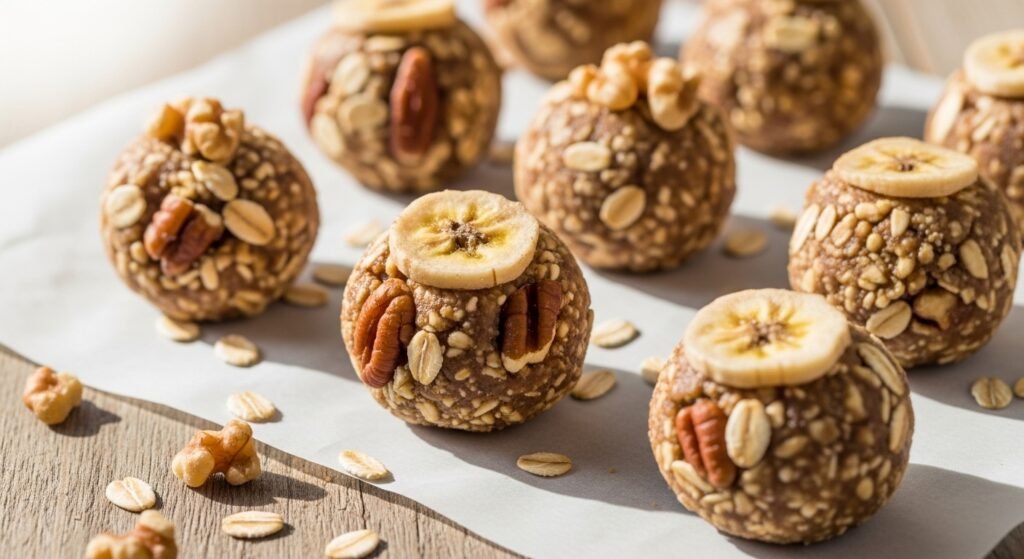
When bananas turn spotty, they are at their sweetest, which makes them perfect for no-bake energy bites. Mash two ripe bananas, stir in rolled oats until you have a thick dough, then fold in chopped nuts, a drizzle of honey, and a pinch of salt. Roll into small balls, chill for 30 minutes to firm up, and you have a grab-and-go snack with no oven required. A spoonful of cocoa or a few dark chocolate chips makes a welcome variation.
Oats deserve their health reputation. They are rich in beta-glucan, a soluble fiber so well studied for lowering LDL cholesterol that regulators in the United States allow an authorized health claim for it. Bananas add potassium, roughly 420 milligrams per medium fruit, plus natural sugars for quick energy. Keep the bites refrigerated in a sealed container for up to five days, and stick to two or three per snack so the natural sugars stay in a sensible portion.
Homemade Trail Mix
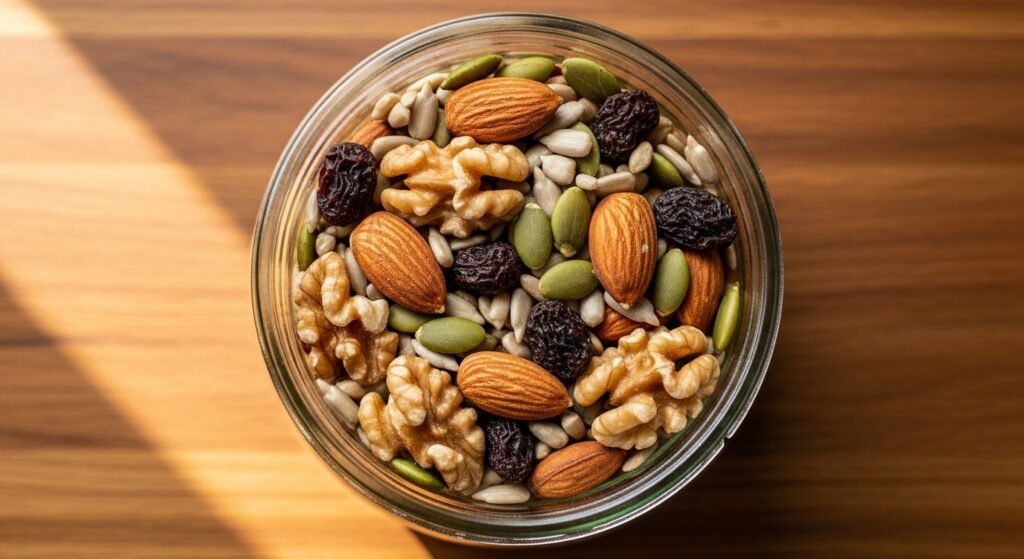
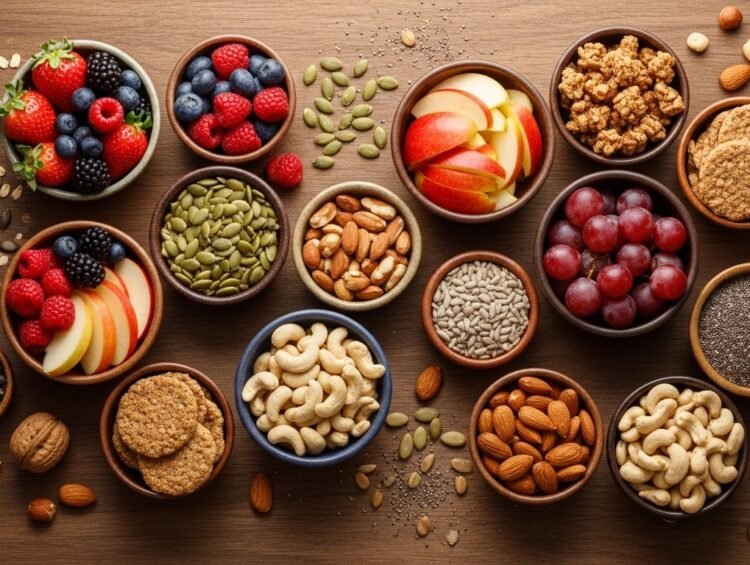
Store-bought trail mix is often candy in disguise, heavy on chocolate and sweetened dried fruit. Making your own takes two minutes and a simple ratio: two parts raw unsalted nuts, one part seeds, one part dried fruit. Almonds and walnuts, pumpkin and sunflower seeds, and a modest handful of raisins or chopped dates give you crunch, chew, and gentle sweetness in every handful. Toasting the nuts lightly in a dry pan deepens the flavor.
Nuts are among the most nutrient-dense snack foods available. Almonds supply vitamin E and magnesium, while walnuts are one of the best plant sources of alpha-linolenic acid, a plant omega-3 fat. Seeds add iron, zinc, and more fiber. The one caution is portion size: nuts are calorie-dense, so measure out a quarter-cup serving rather than eating from the jar. Stored airtight, homemade trail mix stays fresh for two weeks.
Greek Yoghurt with Fresh Fruit
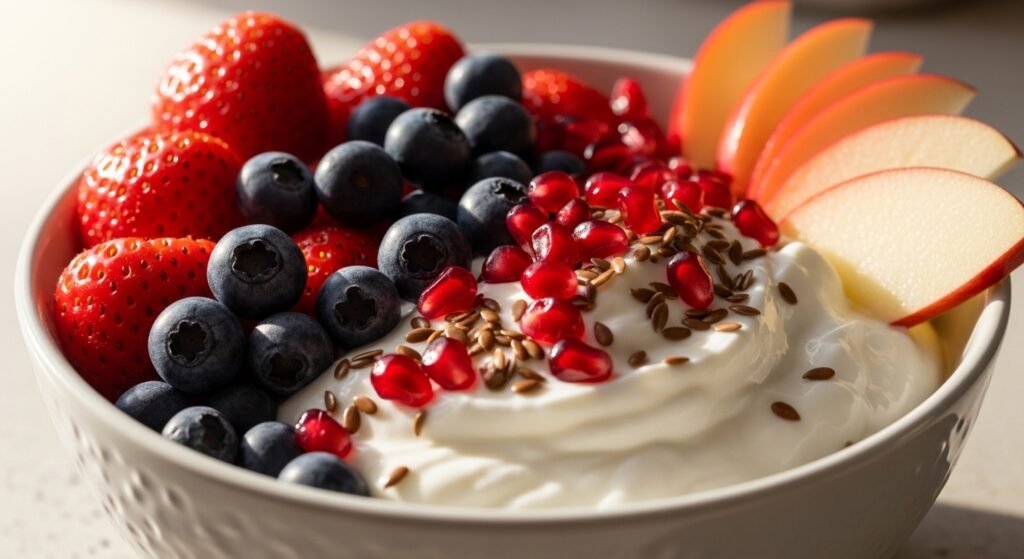
This is the simplest snack on the list and one of the most effective. Spoon plain Greek yoghurt into a bowl and top with whatever fruit is in season, berries, chopped apple, pomegranate seeds, or sliced mango. Finish with a spoonful of ground flaxseed for a subtle nuttiness. Always start with plain yoghurt: flavored versions can pack 15 to 20 grams of added sugar per serving, while you control the sweetness here with real fruit.
Greek yoghurt earns its place through straining. Removing the whey concentrates the milk solids, giving it roughly twice the protein of regular yoghurt, often 15 to 20 grams per serving, which makes it genuinely filling. It also delivers calcium, and varieties with live active cultures provide probiotics that support gut health. Flaxseed contributes additional fiber and plant omega-3s, rounding out a snack that works for breakfast, post-workout, or dessert.
Vegetable Sticks with Hummus
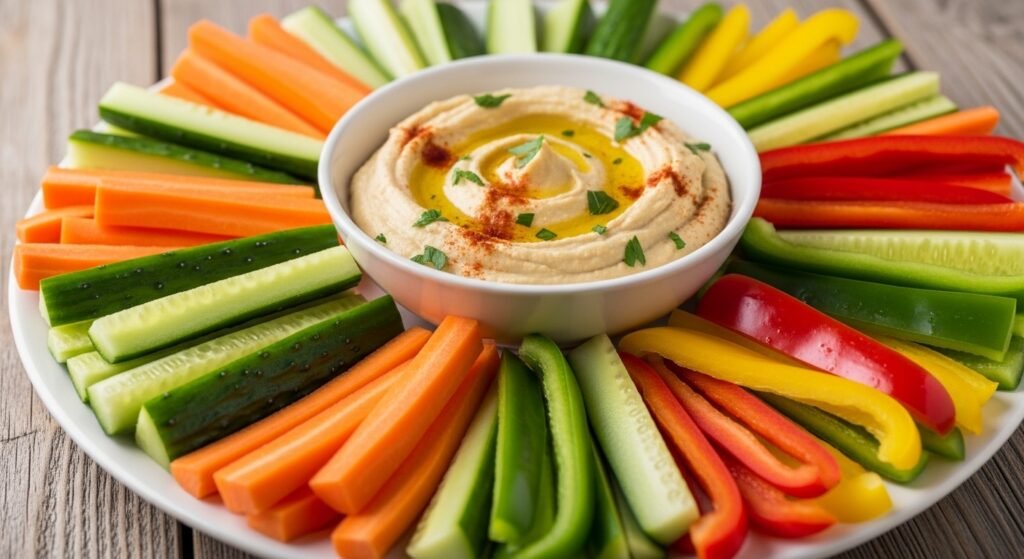
Homemade hummus takes five minutes and tastes nothing like the tubs from the store. Blend a can of drained chickpeas with two spoons of tahini, lemon juice, a garlic clove, olive oil, salt, and a splash of the chickpea liquid until silky. Serve with sticks of cucumber, carrot, bell pepper, and celery. The crunch of cold vegetables against creamy hummus is one of the most satisfying texture contrasts in snacking.
Tahini, a paste of ground sesame seeds, brings calcium and healthy fats to the blend, while the chickpeas add fiber and plant protein. The vegetables contribute volume, hydration, and vitamins for very few calories, which makes this an excellent high-volume snack when hunger is loud. A sensible portion is about a third of a cup of hummus. It keeps refrigerated for up to a week, and the flavor improves after a day as the garlic mellows.
Peanut Butter Apple Slices
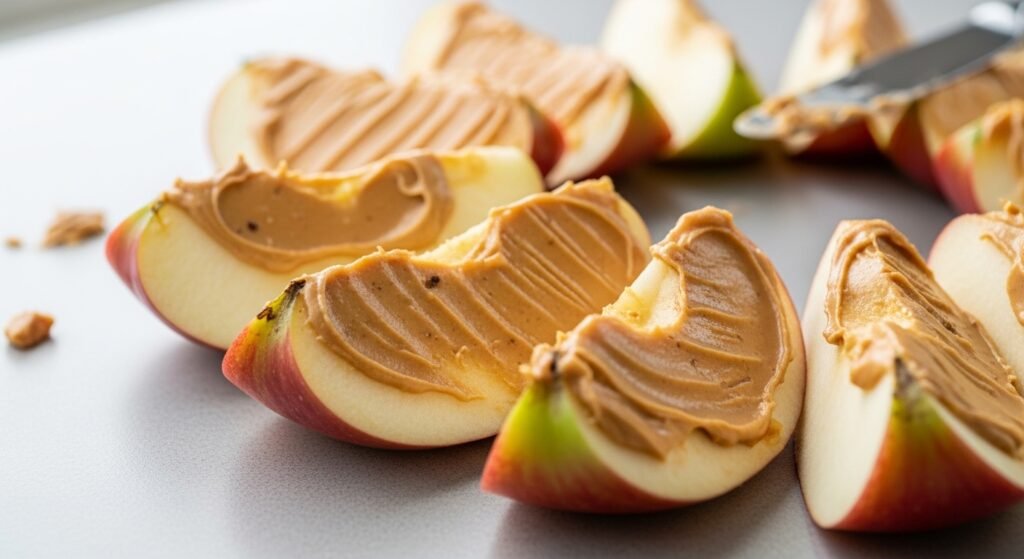
Few combinations are as dependable as apple and peanut butter. Slice a crisp apple into wedges, spread each with a thin layer of natural peanut butter, the kind whose ingredients list reads peanuts and salt, and finish with a pinch of cinnamon or a sprinkle of chia seeds. If you are packing them for later, a quick toss in lemon water keeps the slices from browning.
The pairing works because it balances its nutrients. Apple provides pectin, a soluble fiber, and natural sweetness, while peanut butter adds protein and monounsaturated fats that slow digestion and keep the snack satisfying for hours. Peanuts also supply niacin and magnesium. Choose peanut butter without added palm oil or sugar, and keep the spread to about two tablespoons so the snack stays balanced rather than becoming a peanut butter delivery system.
Baked Sweet Potato Chips
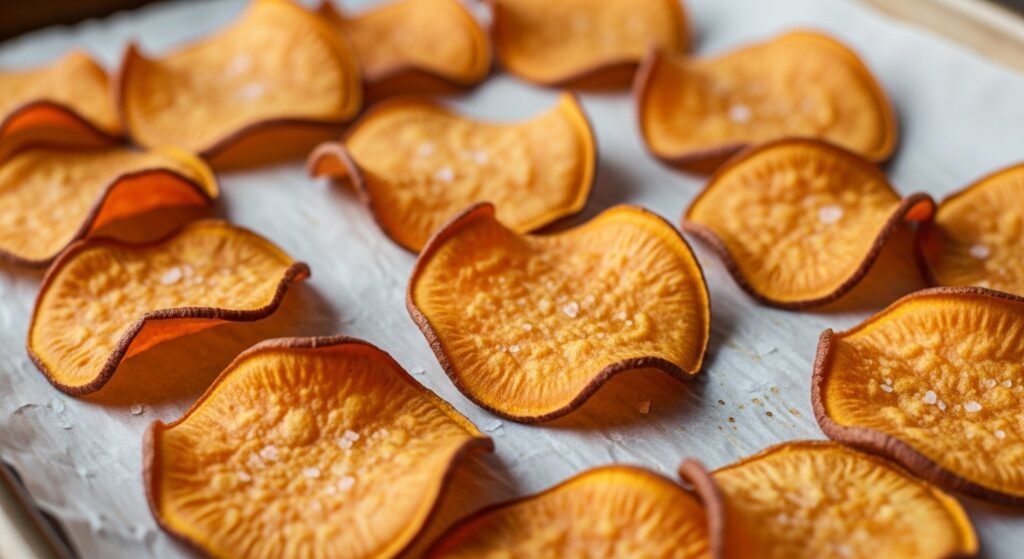
Crisp, salty, and deeply orange, these chips satisfy the exact craving that sends people to the vending machine. Slice sweet potatoes 2 to 3 millimeters thick, a mandoline makes this effortless, brush lightly with olive oil, and arrange in a single layer on a lined tray. Bake at 200 degrees Celsius (400 Fahrenheit) for 15 to 20 minutes, flipping once, until the edges curl and crisp. Finish with flaky sea salt while hot.
Sweet potatoes are one of nature’s best sources of beta-carotene, the pigment the body converts to vitamin A. A single medium sweet potato provides well over a full day’s vitamin A needs, along with a solid dose of fiber and potassium. Baking uses a fraction of the oil of deep-frying, which keeps the calorie count reasonable. Let the chips cool on a wire rack so steam escapes and they stay crisp, then store airtight for up to three days.
Cottage Cheese and Seeds Bowl

Cottage cheese has quietly become a favorite among nutrition-minded snackers, and a bowl of it takes seconds to assemble. Scoop fresh cottage cheese into a bowl, add a spoon of chia seeds, a few crushed almonds, halved cherry tomatoes, cracked black pepper, and a drizzle of olive oil for a savory version. Prefer sweet? Swap the tomatoes for berries and a drizzle of honey instead.
The standout nutrient here is casein, a slow-digesting milk protein that releases amino acids gradually, which makes cottage cheese an especially good evening snack. A serving typically brings 12 to 15 grams of protein plus calcium. Chia seeds can absorb up to 12 times their weight in water, forming a gel that adds fiber and plant omega-3s while making the bowl feel more substantial. Together they keep hunger away for hours.
Avocado Whole Grain Toast
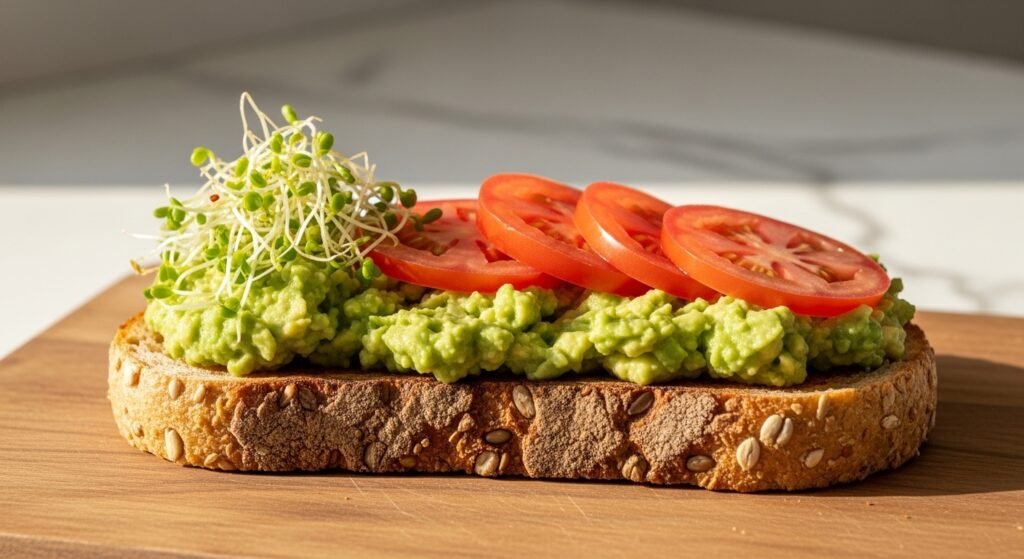
Avocado toast earned its cafe fame because it is genuinely good fuel. Mash a ripe avocado with lemon juice, salt, black pepper, and a pinch of chili flakes, then pile it onto well-toasted whole-grain or seeded bread. Add sliced tomatoes, sprouts, or a jammy soft-boiled egg to turn the snack into a light meal. Assemble just before eating, since avocado browns quickly once mashed.
Avocados are rich in monounsaturated fats, the heart-friendly kind also found in olive oil, and they deliver more potassium than a banana along with a good dose of fiber. Whole-grain bread adds B vitamins and additional fiber that white toast lacks. Look for bread whose first ingredient is a whole grain and that lists at least 3 grams of fiber per slice. This is a snack that eats like a small meal and keeps you going for hours.
Steamed Corn with Lime

Fresh corn needs very little help. Steam or boil the kernels for three to four minutes until tender and bright, then toss while warm with lime juice, chopped coriander, a pinch of salt, and a whisper of chili powder or roasted cumin. Served warm in a bowl, it is comforting yet light, with a sweet-tart flavor that feels far more interesting than plain boiled corn.
Corn is often mistaken for a mere starch, but it is botanically a whole grain, and it brings fiber and natural sweetness along with B vitamins. Its golden color comes from lutein and zeaxanthin, carotenoid antioxidants studied for their role in eye health. Lime juice adds vitamin C and brightness without any added sugar. This is street-food logic applied at home: simple seasoning turning a humble ingredient into something craveable.
Dates Stuffed with Nuts
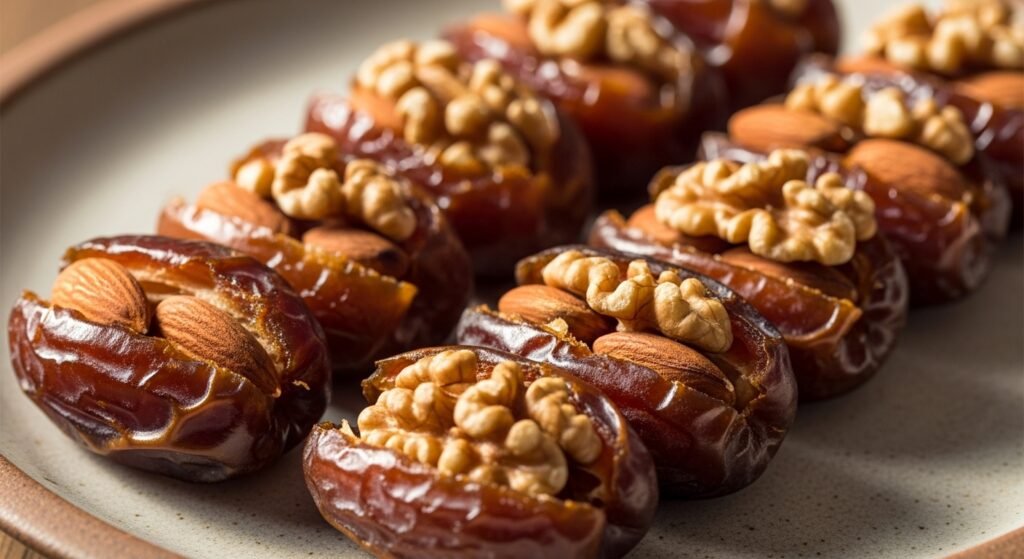
When a sweet craving hits, stuffed dates answer it honestly. Split soft Medjool dates, remove the pits, and tuck an almond or walnut half inside each one. A tiny pinch of flaky sea salt on top sharpens the caramel-like flavor, and a thin drizzle of dark chocolate turns them into a proper dessert. Two or three make a satisfying serving; they are rich, so a little goes a long way.
Dates sweeten with natural glucose and fructose rather than refined sugar, and crucially, they bring fiber, potassium, and magnesium along, which slows the sugar’s impact compared to candy. The nut inside adds protein and healthy fats that further blunt the glycemic response and add satisfying crunch. Medjool dates are the variety to buy: larger, softer, and more caramel-flavored than the drier Deglet Noor type.
Making It a Habit
None of these snacks requires a recipe book. They are formulas, and once you internalize the pattern, protein plus fiber plus healthy fat plus flavor, you can improvise endlessly. Keep the building blocks stocked: rolled oats, mixed nuts and seeds, canned chickpeas, plain yoghurt, eggs, and whatever fruit is in season. With those on hand, a wholesome snack is never more than ten minutes away.
A practical rhythm makes it stick. Spend thirty minutes on the weekend: roast a tray of chickpeas, mix a jar of trail mix, roll a batch of energy bites, and blend hummus. Portion everything into small containers so the healthy choice is also the easy choice. The result is a week of snacks that cost less than packaged equivalents and treat your body better. Real ingredients, honestly prepared, that is the whole philosophy.